Physical address:
128 City Road, EC1V 2NX, London,UK

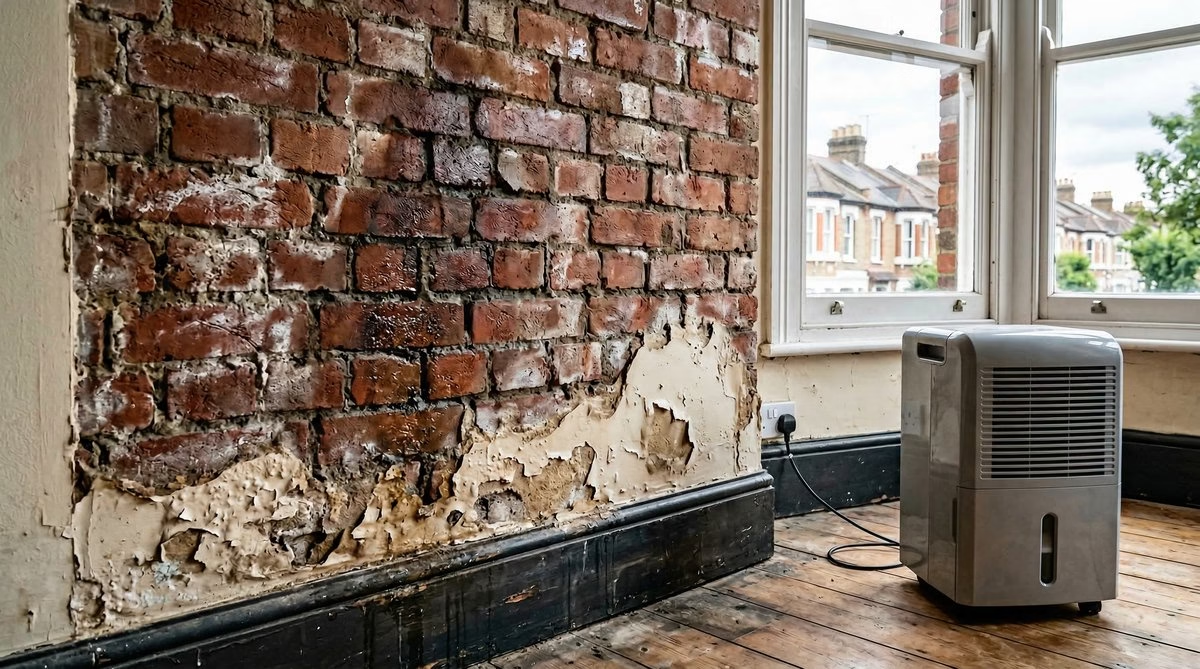
One of the most expensive phrases in UK property is “you’ve got rising damp”. Not because damp is harmless — but because that label often triggers the wrong treatment. We regularly see homeowners offered chemical injections, tanking, internal membranes, and even “dig up the whole floor”, when the real cause is penetrating rainwater, bridged DPCs, or condensation in a cold corner.
What ‘rising damp’ is — and why it’s often misdiagnosed
True rising damp is moisture from the ground moving up through masonry by capillary action. It can happen, but it’s not the only cause of low-level damp symptoms, and in many homes it’s not the main cause.
The reason misdiagnosis is common is simple: different damp mechanisms can create similar-looking symptoms — peeling paint, salt marks, crumbling plaster, and a musty smell. If a survey stops at the symptom, the “solution” becomes a product sale rather than a building-fabric plan.
- Rising damp: Ground moisture wicking up. Often linked to missing/failed DPCs or bridged DPCs due to high external ground levels.
- Penetrating damp: Rainwater getting in laterally through defects — leaking gutters, failed pointing, cracked render, defective copings.
- Condensation: Moist internal air condensing on cold surfaces — common in corners, behind wardrobes, and in rooms with poor ventilation/heating patterns.
- Plumbing leaks: Slow leaks can mimic damp, especially around bathrooms, kitchens, and heating pipework.
Tip: If the damp patch gets worse after rain, think penetrating damp first. If it gets worse in winter when heating patterns change, think condensation risk.
How we tell rising damp vs penetrating damp vs condensation
At Fixiz, we don’t start with a product. We start with a mechanism. That means looking at location, timing, and the building’s construction — especially in older London homes where solid walls and historic finishes are common.
Here are the practical checks we use to narrow it down quickly.
- External inspection: Gutters, downpipes, overflow pipes, pointing, render cracks, window sills, coping stones, and ground levels.
- Internal pattern reading: Is the damp uniform at low level (more like ground moisture), or localised near an external defect?
- Ventilation and heating behaviour: Are there extract fans, trickle vents, and consistent heating, or long cold periods with high indoor humidity?
- Material compatibility: Has a breathable wall been sealed with gypsum, cement, or vinyl paint, creating trapped moisture?
- Moisture measurement with context: Readings are useful, but only when interpreted with salts, temperature, and construction type in mind.
We also look for bridging. A perfectly good DPC can be bypassed by external ground levels, internal plaster taken down to the floor, or screeds that touch the wall. In those cases, you can inject as much as you like — you’re still giving moisture a pathway around the barrier.
Why chemical DPC and tanking sometimes fail (and sometimes make it worse)
Chemical DPC injections and internal tanking systems have a place, but they are not a universal answer. When the root cause is penetrating damp or condensation, injecting a DPC won’t stop water coming in from the side or forming on the surface.
On older solid walls, aggressive sealing can also move moisture elsewhere. The wall can’t evaporate through its face, so the moisture finds another route — higher up, into adjacent rooms, or into timber elements. That’s when you see mould, rotten skirtings, and recurring plaster failure.
- Wrong mechanism: Treating penetrating damp as rising damp leaves the true defect untouched.
- Bridging still present: High ground levels or internal finishes bypass the new barrier.
- Salts not managed: Old damp introduces salts that keep attracting moisture and damaging finishes.
- Breathability removed: Solid walls designed to dry outward are sealed, increasing long-term moisture retention.
Tip: If a proposed solution starts with “strip everything and inject”, but nobody has checked gutters, ground levels, and external defects, you’re buying a treatment before you’ve bought a diagnosis.
What a sensible ‘damp plan’ looks like for UK homes
Homeowners want certainty: “tell me what it is and how to fix it”. The honest truth is that damp is often multi-factor. The good news is that a structured plan still works — and avoids panic spending.
Our typical plan is staged, so you address the highest-likelihood, lowest-disruption fixes first.
- Stage 1 — external water control: Repair gutters/downpipes, reduce splashback, fix pointing, correct defective copings, and manage external ground levels.
- Stage 2 — airflow and heating: Improve extraction, background ventilation, and consistent heating patterns to reduce condensation load.
- Stage 3 — compatible reinstatement: Use breathable materials where required, and specify plaster systems that tolerate residual salts and moisture movement.
- Stage 4 — targeted barriers only if needed: Only after the mechanism is clear do we consider chemical DPC, membranes, or tanking — and we detail them properly.
This approach avoids the classic UK cycle: damp treatment, quick redecoration, damp returns, blame game, repeat.
How Fixiz helps — diagnosis first, then repairs that actually last
We’re a London-based construction company, so we see damp in the real world — alongside extensions, refurbishments, and conversions. That helps because we can fix the cause and the finishes, rather than sending you to three different trades with three different opinions.
- Whole-building view: We check external defects, internal finishes, ventilation, and bridging, not just the patch on the wall.
- Clear options: We explain what’s likely, what’s possible, and what’s not worth spending on yet.
- Proper reinstatement: We reinstate walls and floors using materials compatible with the property, so you don’t trap moisture.
- Documentation: You get a clear record of what was found and what was done — useful for future maintenance and resale.
FAQ — rising damp in the UK
Is rising damp real?
Yes, it can be. But many low-level damp symptoms in UK homes are caused by penetrating damp, bridging, or condensation. The mechanism matters more than the label.
Will a chemical DPC fix my damp?
Only if ground moisture rising is the main mechanism and bridging is resolved. If rainwater defects or condensation are the real cause, injections won’t fix the root problem.
Can I just line the wall with plasterboard and move on?
You can, but it can hide ongoing moisture and create mould in the void if not detailed properly. We treat lining as a designed system, not a quick cover-up.
What’s the first thing I should check?
Check gutters, downpipes, external ground levels, and ventilation. These are common causes and often cheaper to fix than internal “treatments”.
Ready to move from confusion to construction? Get in touch with Fixiz today for a no-pressure chat about your project and the fastest route to full compliance.