Physical address:
128 City Road, EC1V 2NX, London,UK

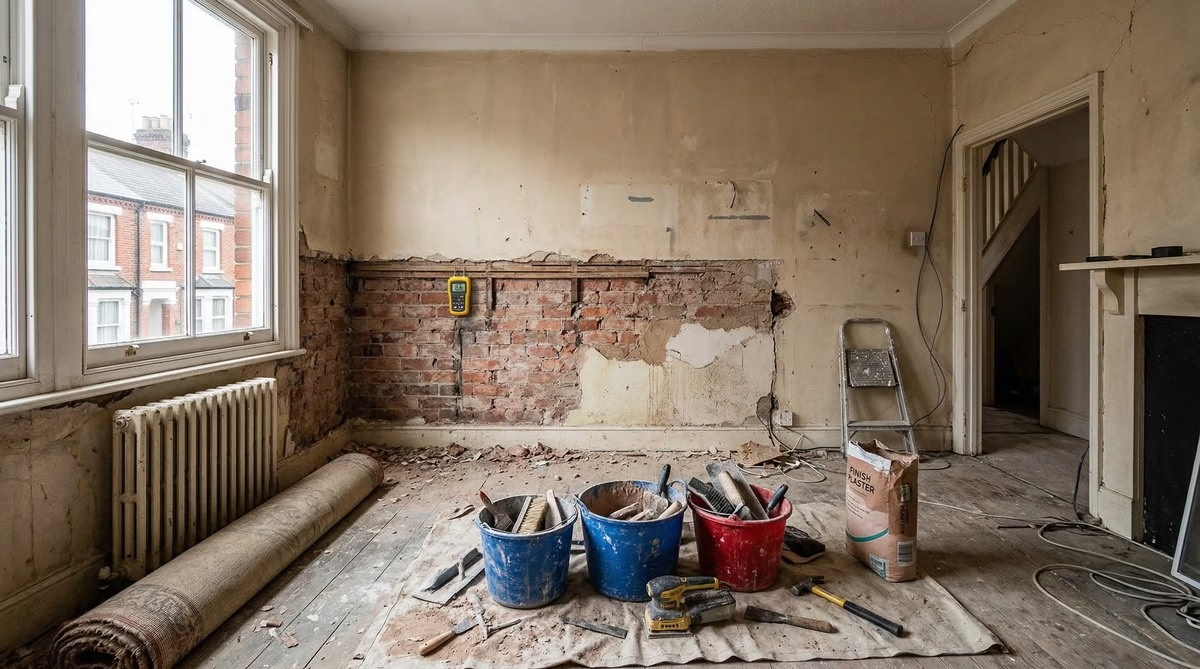
If you’re staring at a damp-treated wall and thinking “now what?”, you’re not alone. We often get called after a homeowner has paid for a chemical DPC and membranes, only to be hit with contradictory advice about plastering after damp proof course injection — dot-and-dab, hack off, lime, gypsum, tanking, “let it breathe”. The confusion is real, and the cost of getting it wrong is even more real.
What happens after damp proofing — and why plastering is where many projects fail
Damp proofing work is usually sold as the “fix”, but in practice it’s the start of a controlled drying and reinstatement process. The moment you close a wall with the wrong build-up, you can trap moisture, salts, or condensation — and the damp returns (or looks like it returns), even if the original moisture source has been reduced.
In UK homes, especially older London terraces and conversions, the wall construction matters. A solid brick wall behaves very differently from a modern cavity wall. If the property was built to manage moisture by allowing evaporation through lime mortar and breathable finishes, then covering it with dense modern materials can create the exact symptoms you’re trying to stop.
When we assess a “post-damp-proof” plastering job, we think in three layers: moisture source, moisture movement, and finish. That gives you a practical path through the noise.
- Moisture source: Is there still penetrating damp (guttering, ground levels, pointing), plumbing leakage, or condensation creating new moisture?
- Moisture movement: Can moisture evaporate safely, or have membranes/paints/boards created a trap?
- Finish: Is the chosen plaster/board system compatible with the wall type, and will it survive salts as the wall dries?
Tip: “Damp proofing” without external checks (rainwater goods, air bricks, sub-floor ventilation, ground levels) is like fitting a new lock on a door that doesn’t close — it might look done, but the problem keeps getting in.
Dot-and-dab vs hacking off — how we decide what’s appropriate
Homeowners hear dot-and-dab recommended because it’s fast, looks clean, and avoids messy removal. They also hear the opposite — “it must all come off back to brick” — because blown plaster, salts, and poor adhesion can ruin a skim coat later. Both statements can be true in different circumstances.
We decide based on evidence, not opinions. Here are the factors that actually matter.
- Condition of existing plaster: If it’s blown, crumbling, hollow-sounding, or salt-contaminated, keeping it is usually false economy.
- Wall moisture and salts: After damp treatment, salts can migrate to the surface. Dense gypsum finishes can fail if salts keep pushing through.
- Need for a cavity: A small service void can help, but a void can also become a condensation risk if the build-up is not designed correctly.
- Breathability requirement: Solid walls often benefit from breathable reinstatement. Sealing systems can be appropriate in some basement/garage contexts — but not as a default.
- Thermal bridging: Cold spots behind boards can trigger condensation that looks like “damp coming back”.
Dot-and-dab over damp-affected masonry is risky when the wall is still drying or contaminated with salts. It can work when the underlying structure is stable, moisture sources are fixed, and the system includes the right boards, adhesives, vapour control approach, and ventilation strategy. It is not a one-size-fits-all shortcut.
Materials that keep you safe — choosing the right plaster system for UK walls
Plaster choice is not just aesthetics. It’s how the wall manages moisture for the next 10–30 years. In London, we see a lot of properties where a previous “damp job” failed because someone reinstated with the wrong materials and sealed everything up.
As a rule, you want a system that matches the building. That means understanding whether the wall is meant to breathe, and whether you’re dealing with an area that’s naturally exposed to moisture (like a ground floor garage wall) versus a living room wall where moisture should be minimal once the cause is fixed.
- Lime-based plaster: Often a good option for older solid walls because it allows evaporation and is more forgiving during drying.
- Gypsum plaster: Common and smooth, but can be vulnerable if salts/moisture remain. Used safely when the wall is genuinely dry and stable.
- Renovating plaster systems: Designed to cope with residual salts and moisture movement — useful as a bridge between damp work and decorative finishes.
- Membranes and tanking: Sometimes appropriate in garages/basements, but can create failures if used where breathability is needed.
- Plasterboard linings: Can deliver a clean finish, but must be detailed to avoid condensation and hidden mould in the void.
Tip: If you’re being advised to “paint it with tanking” or “just board over it” without anyone checking gutters, external ground levels, air bricks, and ventilation, pause — that’s how damp problems get disguised rather than solved.
Common mistakes we see after a damp job — and how to avoid expensive repeat work
Most homeowners aren’t trying to cut corners. They’re trying to move on with life, and they’re stuck between trades who disagree. Here are the biggest mistakes we see — and what we do differently.
- Replastering too soon: Walls need time to dry. If you close them immediately, the finish becomes the drying surface — and fails.
- Ignoring ventilation: Mechanical extract in kitchens/bathrooms and good background ventilation reduce condensation that mimics “rising damp”.
- Sealing with the wrong paint: Vinyl paints can trap moisture. Breathable finishes are often safer on drying masonry.
- Not managing salts: Damp brings salts. If you don’t plan for them, they’ll plan for you — staining, blistering, and crumbling plaster.
- Confusing opinions with diagnosis: Five plasterers can have five preferences. A good approach starts with measurements and a building-fabric view.
We’re also careful with “DPC height” debates. A chemical injection line is not magic — it’s one part of a system. If the external ground level bridges the DPC, or if water is coming laterally through a defect, the injection line alone won’t stop symptoms. That’s why we treat the building as a whole, not as a single product installation.
How we handle post-damp plastering at Fixiz — a clear plan you can trust
When we take on a post-damp-proof reinstatement, our goal is simple: a finish that lasts, with evidence behind it. We keep it practical and transparent so you can make decisions confidently.
- Start with the cause: We check rainwater goods, external levels, pointing, plumbing, and ventilation — not just the internal symptoms.
- Measure moisture properly: We look for patterns and likely mechanisms (penetrating, condensation, or true ground moisture) before specifying materials.
- Choose compatible materials: Breathable systems for breathable walls; sealed systems only where appropriate and detailed correctly.
- Sequence the work: Strip where needed, allow drying time, then reinstate in layers that won’t trap moisture or salts.
- Finish with long-term thinking: The final paint and trims matter — we specify what won’t undo the work.
If you’ve been told three different things by three different trades, we’ll happily step in and give you a single, coherent plan. Our job is to reduce uncertainty — and stop you paying twice for the same wall.
FAQ — plastering after damp proofing
How long should I wait before plastering after a chemical DPC injection?
It depends on the wall thickness, moisture load, ventilation, and whether the external cause has been fixed. In practice, we plan for drying time and use systems that tolerate residual moisture rather than assuming a wall will be “bone dry” quickly.
Is dot-and-dab safe on walls that had damp?
It can be, but only when the substrate is stable, the moisture mechanism is understood, and the build-up is designed to avoid condensation and salt failure. We treat dot-and-dab as a system decision — not a default.
Should I use lime plaster in an older London house?
Often yes for solid-wall properties, because it supports evaporation and reduces the risk of trapped moisture. But we still check the specific wall, location, and moisture source before recommending it.
Why do plasterers say the damp proofing was done wrong?
Because they may be seeing symptoms without understanding the full specification, or they’ve had bad experiences with failed damp jobs. The right question is not “who’s right?” — it’s “what does the building need to dry safely and stay stable?”
Ready to move from confusion to construction? Get in touch with Fixiz today for a no-pressure chat about your project and the fastest route to full compliance.