Physical address:
128 City Road, EC1V 2NX, London,UK

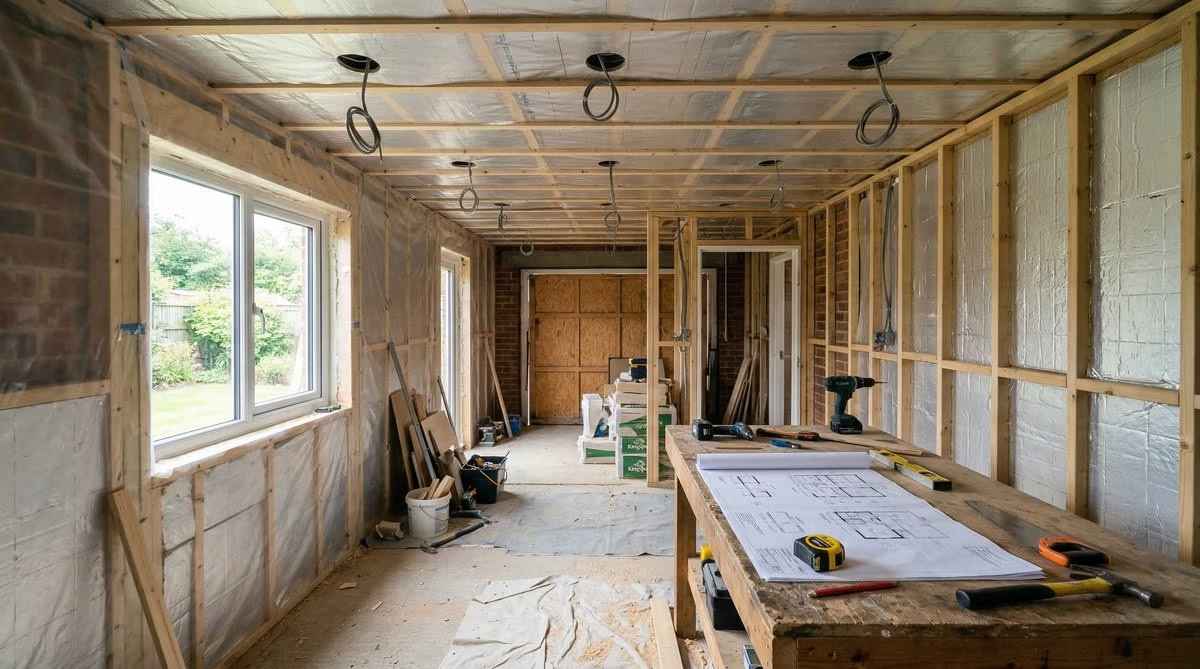
A garage conversion can feel deceptively simple — “insulate, board, add electrics, job done”. But the moment you create habitable space, you’re into garage conversion building control, fire separation, insulation targets, ventilation, and inspection timing. We’ve seen too many homeowners spend money twice because the details weren’t planned from day one.
What Building Control actually cares about in a UK garage conversion
Building Control isn’t there to make your life difficult. They’re there to verify that the converted space is safe, energy-efficient, and properly built. The issue is that many garage conversions start as a DIY “freshen up”, and only later become a proper room — at which point key elements are already hidden behind plasterboard.
In practice, Building Control focus on a few big outcomes: thermal performance, moisture control, fire safety, structure, and electrics. If you plan around those, everything becomes calmer.
- Thermal upgrade: Walls, floor, and roof/ceiling need insulation that meets modern expectations — and the detailing matters as much as the thickness.
- Moisture and condensation: Garages are often cold, uninsulated, and prone to damp. Your new build-up must avoid mould in corners and behind linings.
- Fire separation: If the garage is attached, the separation between the converted space and the rest of the house matters — and sometimes between the conversion and any remaining garage/storage area.
- Ventilation: Background ventilation and, where required, extract ventilation (especially if you add a shower room or utility).
- Electrics: Works must be designed and certified correctly (Part P) — not “tested later when it’s all closed up”.
Tip: A good conversion is designed like a small extension. The difference is you’re upgrading an existing shell — and that shell often has cold bridges, low headroom, and damp risks that extensions don’t.
Insulation vs headroom — the trap that catches almost everyone
The single biggest surprise is that insulation steals space. You need it on the floor, the walls, and often the ceiling. Each layer might only be 50–150mm, but together they can change how the room feels — and whether doors, windows, and ceiling heights still work.
We plan the build-up before work starts, because once you’ve set finished floor level and ceiling lining, everything else is locked in. Here’s what we check in a typical London garage conversion.
- Floor build-up: Insulation + membrane + board/screed + finished flooring. If you ignore this early, you can end up with steps, awkward thresholds, or too little headroom.
- Wall build-up: Single-skin garage walls need careful detailing. A quick insulated board can look fine, but can create condensation behind it if not designed correctly.
- Ceiling build-up: Insulating the ceiling reduces headroom. Insulating between rafters can be limited by rafter depth and ventilation requirements.
- Openings: New windows/doors need appropriate lintels, damp proofing, and thermal detailing around reveals.
When headroom is tight, we don’t just “use thinner insulation”. We look at alternative build-ups and where we can gain millimetres safely, without creating condensation or a non-compliant thermal envelope.
The inspections and evidence you need — don’t board over your proof
Many conversion headaches happen because the work is hidden too early. You can’t easily prove what’s behind a wall once it’s skimmed and painted. Building Control (and future buyers) want confidence that the upgrade was real.
We treat documentation as part of the build. It protects you.
- Pre-close photos: Insulation, membranes, fire-stopping, and structural elements photographed before boarding.
- Inspection timing: We schedule inspections at sensible points so you’re not waiting with a half-finished room.
- Product evidence: We keep records of insulation type/thickness and key components used.
- Electrical certification: We ensure certification is issued properly — not left as a “later problem”.
Tip: If you’re working with trades, agree the inspection points in writing. The fastest way to delays is “we’ll call Building Control when we’re done”.
Common garage conversion mistakes — and how to avoid rework
A garage is not a blank canvas. It’s often built differently from the rest of the house. That’s why a “normal room” approach can fail.
- Ignoring damp risk: Garages can have high moisture loads, cold walls, and bridged DPCs. We plan vapour control and ventilation instead of hoping paint will cope.
- Under-specifying insulation: Thin boards might feel “better than nothing” but often lead to cold corners and mould — and you’ll still pay to heat the space.
- Skipping fire details: Fire-rated plasterboard, protected steel, and correct door details matter, especially where the garage adjoins the house.
- Forgetting sound control: A converted garage used as an office or bedroom needs acoustic thinking — not just thermal upgrades.
- Not checking planning conditions: Some homes have historic planning conditions that restrict garage conversion or parking provision.
We also see confusion around “do I even need Building Regulations if it’s just a gym?”. If it’s genuinely just storage or occasional use, you might not be changing it into habitable space. But if you’re heating it, finishing it like a room, and marketing it as usable living space, you’ll want it done properly — for safety and for resale.
How Fixiz delivers a compliant, warm, and saleable garage conversion
Our approach is designed to keep your conversion calm and predictable. We don’t chase compliance at the end — we design for it at the start.
- Survey first: We check existing construction, moisture risk, headroom, and services before we promise a layout.
- Build-up design: We specify floor/wall/ceiling build-ups so you know what space you’ll actually end up with.
- Regulation planning: We plan inspection points, fire separation, ventilation, and thermal targets from day one.
- Clean communication: You get a clear scope, clear options, and decisions recorded — no fuzzy “extras” halfway through.
- Finish properly: We aim for a room that feels like part of the house — warm, bright, and comfortable.
FAQ — garage conversion building regs
Do I always need Building Regulations approval for a garage conversion?
If you’re creating a habitable room (office, bedroom, living space) and altering thermal elements, structure, electrics, or fire separation, Building Regulations usually apply. We advise getting it right for safety and to protect resale.
Will insulation reduce my ceiling height?
Yes. Insulation and finishes take space. That’s why we design the build-up early and look for the best performance without making the room feel cramped.
Can I keep part of the garage for storage?
Often yes, but it changes fire separation and detailing. We design the split carefully so the converted area still performs as a proper room.
What should I photograph for Building Control?
Insulation, membranes, fire-stopping, structural supports, and key service routes before they’re covered. Photos plus certificates make future questions much easier.
Ready to move from confusion to construction? Get in touch with Fixiz today for a no-pressure chat about your project and the fastest route to full compliance.