Physical address:
128 City Road, EC1V 2NX, London,UK

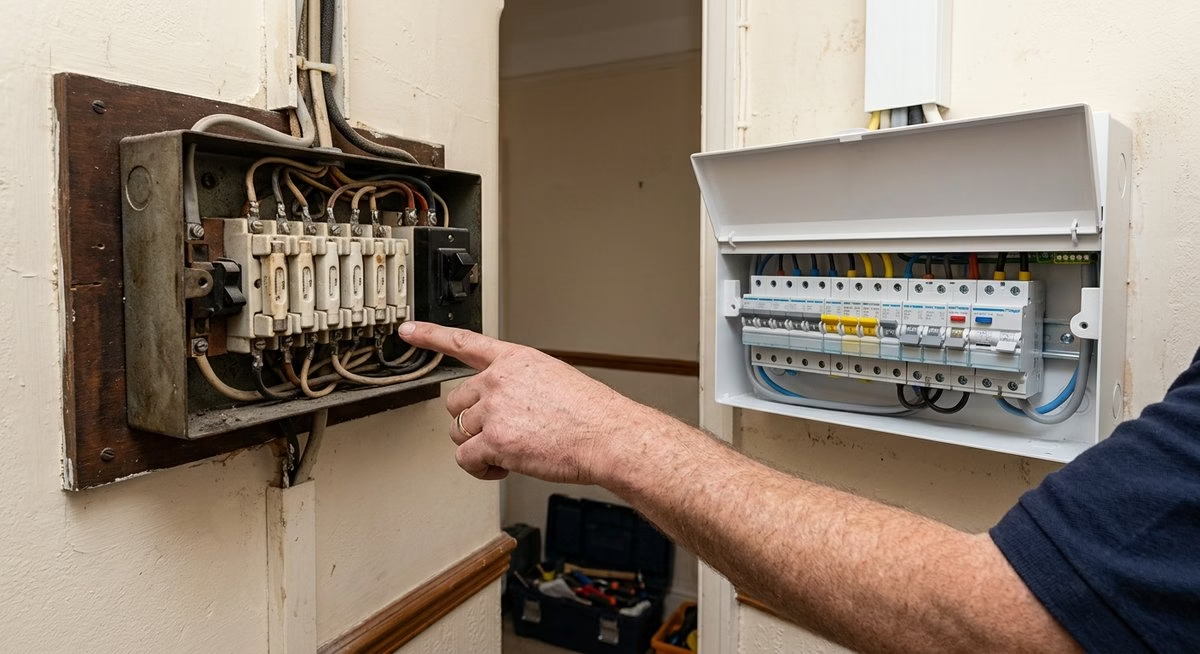
You’ve just received your EICR report — or an electrician has popped round for a minor job and casually mentioned that your fuse board “needs replacing.” Now you’re staring at a quote for several hundred pounds and wondering: do I need a new consumer unit UK regulations actually require, or is this an upsell? At Fixiz, we hear this dilemma from homeowners and landlords every week. The truth sits between genuine safety necessity and well-meaning (or profit-driven) recommendation — and understanding the difference can save you real money.
What Those EICR Codes Actually Mean for Your Consumer Unit
The classification codes on your EICR — C1, C2, C3, and FI — are often the trigger behind a replacement recommendation, but they don’t all carry the same weight.
- C1 — Danger Present: Immediate risk of electric shock or fire. Examples include exposed live wires, severe overheating at the consumer unit, or a missing blanking plate exposing live parts. A C1 makes your EICR Unsatisfactory, and the inspector should make it safe before leaving — often by isolating the circuit.
- C2 — Potentially Dangerous: Not immediately life-threatening, but could become dangerous if left. Common C2 findings include no RCD protection on socket circuits, missing earth bonding to gas or water pipes, or incorrectly rated circuit breakers. A C2 also makes the report Unsatisfactory, and landlords must arrange remedial work within 28 days.
- C3 — Improvement Recommended: This code causes the most confusion. A C3 means your installation doesn’t meet the very latest wiring regulations but is not dangerous. An older plastic consumer unit in good condition or a lighting circuit without RCD protection in a low-risk area are typical C3 observations. Crucially, a C3 alone does not make your EICR Unsatisfactory — your report can still pass.
- FI — Further Investigation Required: The electrician couldn’t fully assess something — perhaps an untraced circuit or a borderline test reading. An FI makes the report Unsatisfactory until the investigation is completed and any issue resolved.
Tip: If your EICR contains only C3 observations and the electrician is telling you that you “must” replace your consumer unit, pause. A C3 is a recommendation, not a requirement. It does not legally oblige you to do anything, and your property remains compliant for letting purposes with a Satisfactory report.
We’ve lost count of the number of times a homeowner has contacted us in a panic after being told their fuse board “failed” — only for us to review their report and find nothing but C3 codes. The language can feel alarming if you’re not used to reading these reports, which is why some firms use the wording to pressure you into unnecessary work.
When You Genuinely Need a New Consumer Unit
There are situations where replacing your consumer unit isn’t optional — it’s a safety imperative. Here’s when we’d tell any homeowner the work is genuinely needed.
- No RCD protection at all: If your consumer unit has no residual current device protecting your socket circuits, you lack the primary defence against electric shock. BS 7671 Regulation 411.3.3 requires 30mA RCD protection for socket outlets rated at 20A or below. This is a C2-level concern — a genuine safety issue, not an upgrade preference.
- Rewireable fuses: Old-style fuse boards with replaceable fuse wire predate modern circuit breakers entirely. Rewireable fuses can be fitted with the wrong wire rating, they don’t trip as quickly as MCBs, and they offer no earth fault protection. A board like this is typically decades old and overdue for replacement.
- Evidence of overheating or thermal damage: Scorch marks, melted plastic, discoloured wiring, or a burning smell indicate loose connections, overloaded circuits, or component failure — any of which can cause an electrical fire. This would be classified C1 or C2 on an EICR.
- Failed or damaged enclosure: Cracks, missing blanking plates, or physical damage allowing access to live parts inside the board is classified C1 — danger present.
- Inadequate earthing that can’t be remedied separately: If your earthing system is fundamentally incompatible with modern protective devices, a consumer unit change becomes part of a wider necessary upgrade.
In our experience at Fixiz, roughly half the consumer units we’re asked to assess genuinely need replacing — but the other half could serve safely for years with minor remedial work. A full replacement typically costs £450–£1,200 depending on specification, while addressing a specific C2 observation might cost a fraction of that.
When It’s an Upgrade Rather Than a Safety Necessity
There’s a meaningful difference between work that’s required for safety and work that’s recommended for improvement. Both have value, but only one is urgent.
A plastic consumer unit in good physical condition that was compliant when installed is typically rated C3 on an EICR. Current regulations (since January 2016) require consumer units in domestic premises to be non-combustible — metal, in practice. But that applies to new installations, not retrospectively to every existing board. Your plastic unit isn’t “illegal” — it simply doesn’t meet the latest standard.
Similarly, if your board has a dual RCD split-load configuration — circuits divided between two RCDs — it’s doing its job. A full RCBO board, where every circuit has individual residual current and overcurrent protection, is undeniably better — a fault trips only the affected circuit rather than half your house. But “better” and “necessary” aren’t the same thing, and the price difference is £150–£300 on parts alone.
Tip: If an electrician recommends an upgrade based purely on C3 observations, ask them to separate what’s required for safety from what’s recommended for improvement. A good electrician will happily explain the distinction.
We regularly carry out upgrades homeowners choose to do — extending the house, adding an EV charger, or simply wanting modern protection. The problem arises when an improvement is presented as an emergency, or when an electrician won’t complete a minor job unless you agree to a full board change that isn’t strictly necessary.
Additional Works That Affect the Price — and Which Are Legitimate
One of the biggest sources of quote shock is the list of “additional works” alongside a consumer unit replacement. Some are genuine regulatory requirements. Others are opportunistic add-ons.
- Main protective bonding: BS 7671 Regulation 411.3.1.2 requires gas pipes, water pipes, and other extraneous conductive parts to be bonded to the main earthing terminal. If bonding is missing, undersized, or broken by plastic pipe replacements, an electrician cannot certify a new consumer unit without correcting it. Legitimate cost: typically £200–£600.
- Meter tails upgrade: The cables between your meter and consumer unit must handle your installation’s maximum demand. Older properties sometimes have 16mm² tails where 25mm² is now required. If your tails genuinely need upgrading, it’s a necessary part of the work.
- Earthing improvements: On TT systems (common in rural areas), a deteriorated earth rod may need replacement — around £400–£800. On TN systems, undersized earth conductors or poor connections may need correction.
- Full circuit testing: Under BS 7671 and Part P, the electrician must verify the entire installation is safe before issuing an Electrical Installation Certificate. This covers insulation resistance, earth fault loop impedance, RCD trip times, polarity, and continuity on every circuit. Not optional — any quote that omits testing is a red flag.
- Circuit labelling: Every circuit must be clearly labelled with a circuit chart provided. A basic BS 7671 requirement, not a chargeable extra.
- Surge protection devices (SPDs): Regulation 443.4 requires surge protection unless a risk assessment justifies omission. Most new boards now include SPD provision as standard.
At Fixiz, we itemise every element of our quotes. If bonding or earthing work is needed, we explain what we found and why it must be addressed before certification. We’ve seen too many quotes where “additional works” appears as a single unexplained line item at £400 — that’s not transparent, and you shouldn’t accept it.
How to Compare Quotes and Avoid Unnecessary Scope
Getting three quotes is standard advice, but comparing consumer unit quotes isn’t as simple as picking the cheapest. Here’s what to look for.
- Board specification: Split-load or full RCBO? How many ways? SPD included? A basic 8-way split-load board is not comparable to a 14-way full RCBO board — yet both might simply say “new consumer unit.”
- Testing and certification: Every quote should include full circuit testing, an Electrical Installation Certificate (EIC), and Part P notification. The electrician must be registered with a competent person scheme (NICEIC, NAPIT, ELECSA, or similar) to self-certify. Without registration, you’ll pay £300–£500 separately for Building Control inspection.
- Caveats about additional work: A caveat like “subject to satisfactory test results” is a sign of honesty — it acknowledges that testing might reveal hidden issues. Ask what happens if faults are found: included, day rate, or quoted separately?
- Scheme registration: Ask for the registration number and verify it on the scheme’s website. Takes two minutes and confirms they can self-certify notifiable work.
- Scope boundaries: Check which EICR observations the replacement addresses. C3 codes only? That’s an improvement, not a requirement. C2 codes relating to the consumer unit? That’s a genuine deficiency.
Tip: Ask each electrician: “If I don’t replace the consumer unit, what’s the actual risk?” A trustworthy electrician will give a straight answer. Vague warnings about “not being compliant” are worth questioning.
What Certificates You Should Receive After the Work
Consumer unit replacement is notifiable work under Part P of the Building Regulations. Proper paperwork isn’t a nice-to-have — it’s a legal requirement. After the work, you should receive:
- Electrical Installation Certificate (EIC): The primary document, issued in accordance with BS 7671. It certifies the installation has been designed, inspected, and tested to current wiring regulations — including full test result schedules for every circuit, details of protective devices, and confirmation of earthing and bonding arrangements.
- Building Regulations Compliance Certificate: If your electrician is registered with a competent person scheme, they notify Building Control on your behalf and you should receive this within 30 days. Keep it safe — conveyancing solicitors routinely request it during property sales.
Do not accept a Minor Works Certificate for a full board change — that’s for smaller alterations like adding a socket. A complete consumer unit replacement requires a full EIC. If an electrician offers only a Minor Works Certificate, they’re likely cutting corners.
We’ve had clients discover years later — during a property sale — that their previous electrician never filed the Part P notification. Rectifying that retrospectively means paying for a new inspection and potentially further remedial work. Insist on proper certification from the outset.
How Fixiz Helps You Make the Right Decision
At Fixiz, we don’t pressure homeowners into work they don’t need. When we assess a consumer unit, we walk you through what we’ve found, separate safety requirements from improvements, and provide a clear, itemised quote.
If your board is fundamentally safe but could benefit from a future upgrade, we’ll tell you that — and note what to watch. If it genuinely needs replacing, we’ll explain exactly why, referencing specific EICR observations or test results. Every consumer unit we install comes with a full Electrical Installation Certificate, Part P notification, and a detailed breakdown of all test results.
Frequently Asked Questions
Does a C3 code on my EICR mean I have to replace my consumer unit?
No. A C3 classification means “improvement recommended” — it indicates your installation doesn’t meet the very latest regulations but is not dangerous. A report with only C3 observations is still classed as Satisfactory, and you’re under no legal obligation to carry out the recommended work. Many older plastic consumer units in good condition receive a C3 for not being metal — that doesn’t make them unsafe or require immediate replacement.
Is an electrician allowed to refuse to do minor work unless I upgrade my consumer unit?
An electrician can decline a job — that’s their professional judgement. However, for minor circuit alterations, a consumer unit replacement is not automatically required by BS 7671. The Minor Works Certificate covers only the work done. If your existing board has RCD protection and is in serviceable condition, a full upgrade is a recommendation, not a prerequisite. Get a second opinion if unsure.
What’s the difference between a split-load dual RCD board and a full RCBO board?
A dual RCD split-load board divides your circuits between two RCDs, each protecting a group of circuits. If a fault occurs, the RCD for that group trips — potentially cutting power to several circuits at once. A full RCBO board gives every circuit its own individual protection, so a fault trips only the affected circuit. RCBOs offer better selectivity and reduce nuisance tripping, but they cost more — typically £150–£300 extra on parts. Both configurations meet BS 7671 requirements; RCBO boards are simply a higher specification.
How long does a consumer unit replacement take?
A straightforward like-for-like replacement in a standard domestic property typically takes 4–8 hours, including full testing and certification. If additional works are needed — bonding, earthing corrections, tails upgrade — allow a full day. Your electricity will be off for most of the working time, so plan accordingly.
Can I keep my existing consumer unit and just add RCD protection?
Sometimes. If your board is in good physical condition and has space, it may be possible to retrofit an RCD or RCBO to specific circuits rather than replacing the whole unit. This can address a C2 observation without the cost of a full board change — but it depends on the age and configuration of your existing board.
What happens if I sell without a Building Regulations Compliance Certificate?
Conveyancing solicitors will flag the absence during the sale. Buyers may request a price reduction or ask you to obtain retrospective Building Control sign-off — typically £300–£500 for an independent inspection, plus any remedial work. It can delay or derail a sale.
Ready to move from confusion to construction? Get in touch with Fixiz today for a no-pressure chat about your project and the fastest route to full compliance.