Physical address:
128 City Road, EC1V 2NX, London,UK

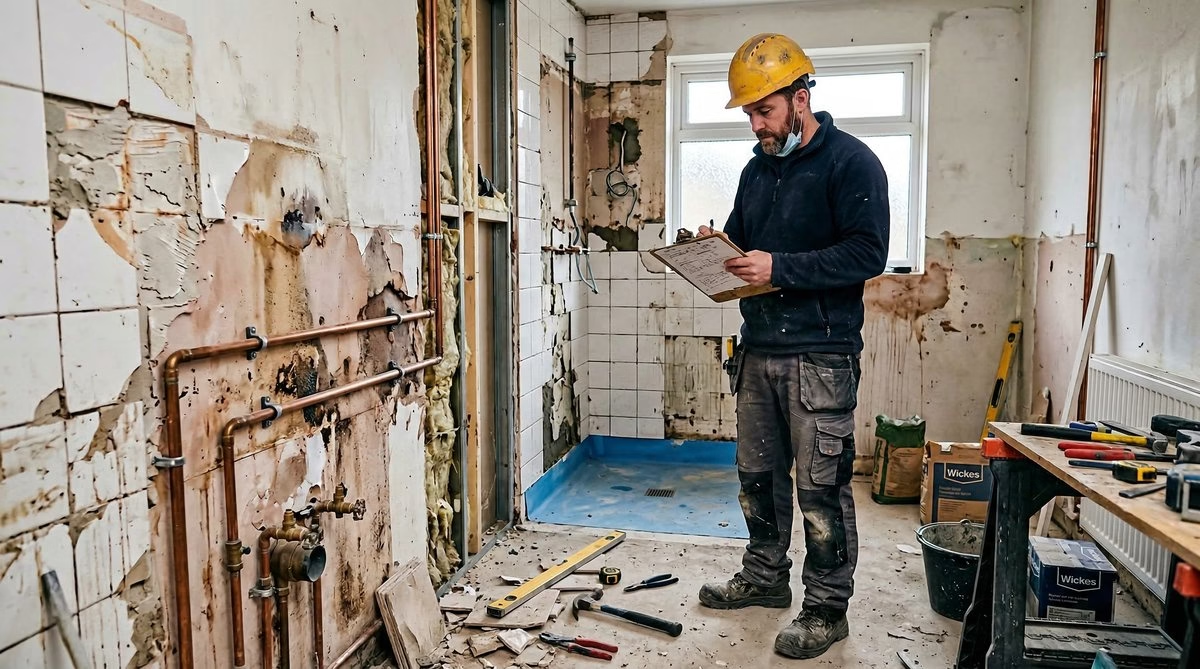
You signed off on a bathroom renovation quote, handed over the deposit, and watched the tiles arrive. Then the calls started. “We’ve opened up the wall and there’s damage.” “The moisture board we need isn’t in the quote.” “We’ll need to skim the whole ceiling — it’s an extra.” If this sounds familiar, you are dealing with one of the most common — and most avoidable — traps in home renovation: bathroom renovation builder extra costs after deposit UK. At Fixiz Ltd, we work across London every week, and we can tell you exactly how this pattern starts, how to stop it, and what a properly structured bathroom contract looks like before anyone picks up a tile cutter.
Why Bathroom Quotes Balloon — The Pattern Behind “Unforeseen” Extras
The word “unforeseen” does a lot of heavy lifting in the building trade. Ask a contractor why the quote has grown by 40% and you will hear it within seconds: unforeseen wall damage, unforeseen moisture ingress, unforeseen subfloor condition. The word is meant to sound neutral — as though the builder is simply a messenger delivering bad news from inside your walls. In reality, the vast majority of so-called bathroom renovation builder extra costs after deposit UK homeowners encounter are entirely foreseeable by any experienced tradesperson who conducts a proper pre-work survey.
We took over a stalled bathroom renovation in Clapham last year where a client had been quoted £6,200 for a full wet room conversion. By the time her original contractor downed tools mid-project, she had paid £9,800 — a 58% overrun — and the room still had no floor tiles and no working shower. Every single extra that had been invoiced related to conditions a thorough survey would have flagged: a compromised joist beneath the shower tray, crumbling plaster behind the basin wall, and a soil pipe that needed rerouting. None of it was genuinely unforeseen. It was simply never looked for.
The mechanics of quote ballooning typically follow a recognisable sequence:
- A contractor wins the job on a competitive headline price, keeping allowances vague or absent.
- A deposit — often 25 to 50% — is collected, shifting the balance of power away from the homeowner.
- Work begins, the room is stripped out, and “discoveries” are communicated verbally with urgency.
- The homeowner, now mid-project with a gutted bathroom, authorises extras under pressure.
- The final bill looks nothing like the original quote, and there is little recourse because approvals were given verbally.
Secondary drivers of cost creep include supply allowances set artificially low. A quote might include “wall tiles — allowance £300” when any London tile supplier will tell you a mid-range bathroom requires £600 to £900 once adhesive, grout, and wastage are factored in. When you exceed the allowance — and you almost always will — the difference becomes an extra. The same applies to sanitaryware, waterproofing membranes, underfloor heating matting, and extractor fans. A well-constructed quote sets allowances that reflect real market pricing, not figures designed to make the headline look attractive.
What a Proper Quote Should Include From Day One — Scope, Allowances, and Exclusions
A bathroom renovation quote is only as useful as the detail it contains. A two-page document listing “strip out, first fix plumbing, tiling, second fix, decoration” is not a quote — it is an outline. It gives the contractor maximum flexibility to add extras and gives you almost no protection when the bill escalates. Here is what a properly constructed bathroom renovation quote must contain before you sign anything or hand over a deposit.
The scope of works section should describe every task in plain language, including:
- Strip-out of the existing suite and disposal of waste materials.
- Substrate preparation — plaster removal, wall levelling, or boarding as required.
- Tanking or waterproofing system to wet areas, with product name and specification stated.
- Installation of all sanitaryware and shower enclosures, with named make and model.
- First and second fix plumbing, including any identified rerouting of pipework or soil stack.
- First and second fix electrics, including extractor fan and shaver socket.
- All tiling, with stated square metreage and allowance per square metre.
- Plastering or skimming works to any surfaces disturbed during first fix.
A client in Hackney came to us after receiving three quotes for a bathroom overhaul ranging from £7,500 to £14,000. The cheapest contained no allowances at all — the contractor told her verbally that “materials are extra.” The most expensive included a named sanitaryware range, a waterproofing specification, and a per-item breakdown. We helped her understand that the cheapest quote was not a budget — it was a floor — and that the actual cost once materials were added would likely exceed the most expensive quote. She chose the contractor with the most detailed documentation, and her project completed on budget.
Exclusions should be listed explicitly. Legitimate exclusions in a bathroom quote include structural works beyond the immediate scope and asbestos removal if suspected. What should not appear in the exclusions list is a blanket carve-out for “any unforeseen works” without a corresponding obligation to obtain written approval and agreed pricing before proceeding. If you see language that says the contractor can proceed with unforeseen works at a day rate without prior approval, that clause alone is reason to negotiate or walk away.
How to Handle Variations Mid-Project — Written Approval, Pricing, and Your Right to Say No
Even with the most thorough pre-work survey and the most detailed contract, genuine variations can arise in bathroom renovations — a previously unknown rotten timber, a soil pipe in an unexpected position, lead pipework that must be replaced to comply with current regulations. These situations require a clear, contractually sound response, not a panic decision made under pressure with your bathroom in pieces.
The single most important principle is this: no variation should be authorised verbally, and no extra work should begin without a written variation order that includes a description of the additional works, the agreed price, and your signature. A reputable contractor will have a variation order process built into their workflow. If yours does not, you can create one yourself — a simple email exchange where you write “I authorise the following additional works at the following price” and the contractor confirms. That email thread is your record.
You also have the absolute right to say no to a proposed variation, or to request a second opinion before authorising it. The test is straightforward: would any experienced builder, conducting a proper pre-work survey in that type of property, have identified this issue? If the answer is yes, the cost should arguably sit with the contractor, not with you.
We were called in to assess a situation in Islington where a contractor had presented a homeowner with a £3,200 mid-project variation for “extensive moisture damage behind the shower wall.” When we inspected the photographs, the damage was consistent with standard moisture levels any surveyor would have flagged in a Victorian terrace. The original contractor had not conducted a pre-work survey. We helped the homeowner negotiate the variation down to £900 — the reasonable cost of additional waterproofing material and one day’s labour — on the basis that the survey obligation had not been met.
When a genuine variation is agreed, price it as specifically as you would price the original contract. “Day rate plus materials” contains no ceiling and no incentive for efficiency. Request a fixed price wherever possible. Keep a running log of all variations throughout the project: date, description, agreed price, and your authorisation. By the end of the renovation you should be able to reconcile the final invoice line by line against the original quote plus the signed variation log. Any item on the final invoice that does not appear in one of those two places is disputed.
Payment Staging That Protects You — Deposits, Milestones, and Retention
The structure of your payment schedule is one of the most powerful tools you have to keep a bathroom renovation on track. Money is leverage — not in an adversarial sense, but in the straightforward sense that a contractor paid in advance has less incentive to complete work efficiently. The payment schedule should reflect the natural milestones of the project and the value delivered at each stage.
Deposits are standard and legitimate. A deposit of 10 to 20% on contract signing is reasonable — it covers material ordering costs and confirms your commitment. A deposit of 50% or more before any work starts is a significant risk. For milestone payments, a sensible structure for a bathroom renovation looks like this:
- Deposit — 15 to 20% on contract signing, covering initial material procurement.
- First milestone payment — on completion of first fix plumbing and electrics, before walls are closed.
- Second milestone payment — on completion of waterproofing and tiling, before sanitaryware is installed.
- Third milestone payment — on practical completion, once the bathroom is fully functional.
- Retention release — 5 to 10% of total contract value, held for 30 days after practical completion and released on satisfactory snagging.
Retention — holding back a small percentage until snagging is resolved — gives the contractor a clear financial incentive to return and resolve defects promptly. Some contractors will resist retention clauses. A contractor who refuses any retention on a project of £5,000 or more is implicitly telling you they are not confident in their own snagging record. Never release a milestone payment in advance of the milestone itself. Release it when you can walk the room and confirm the work meets the specification — this is normal commercial discipline, and a professional contractor will expect it.
How Fixiz Prices Bathroom Renovations — Detailed Scope, Honest Allowances, No Surprises
When we quote a bathroom renovation in London, we start with a site visit that takes a minimum of 45 minutes. During that visit we use a moisture meter on all walls that will be tiled or waterproofed, inspect the subfloor condition through any accessible hatch, review the existing plumbing configuration for soil stack constraints, and photograph every surface we will be working on. This step is what allows us to produce a quote that means something.
Our quotes are itemised by trade and by task. Every material allowance is calculated on a named product with a real market price, stated square metreage, and a named wastage percentage. If we include a tile allowance at £45 per square metre, we state the number of square metres we have measured and show the arithmetic. If you choose tiles that cost more, the difference is a variation — but the allowance was set to reflect a realistic mid-market option, not an artificially low figure.
We also include a risk section in our quotes — a short written summary of conditions we could not fully inspect during the site visit, along with our experienced assessment of the likelihood and probable cost range of any issues. This is not a blanket exclusion clause. It is our honest professional judgement, stated upfront so that you can budget for contingency before work starts rather than being surprised after the wall comes down.
A customer in Wandsworth asked us to quote for a bathroom in a 1930s semi-detached that had not been touched since the 1990s. Our site visit flagged a high moisture reading on the shared party wall and a spongy floor section adjacent to the original cast iron soil pipe. We included both in the risk section with a cost range for remedial works if needed. When we opened up, we found exactly what the moisture meter suggested — minor penetrating damp from a missing lead flashing. The remedial cost fell within the range we had stated. The client told us it was the first time she had felt in control of a renovation rather than at the mercy of one. Our payment schedule is milestone-based as standard practice, every variation is processed through a written variation order, and retention is built into every contract.
Frequently Asked Questions
Is it normal for a bathroom renovation to cost more than the original quote?
Minor variations of 5 to 10% above the original quote can occur on well-planned bathroom projects, particularly in older London properties. However, overruns of 20% or more signal that the original quote was under-surveyed or deliberately structured to win on a low headline price. A properly surveyed and itemised quote should deliver the final bill within a 10% tolerance in the vast majority of cases. If your contractor is citing overruns well above that, request a detailed written explanation of each variation and compare it to the original scope.
What should I do if a builder demands more money mid-project and refuses to continue without payment?
Do not pay immediately under pressure. Ask for the variation to be put in writing with a full description and price before you authorise anything. If the contractor refuses to provide written pricing, that refusal is itself a significant warning sign. Review your contract for the dispute resolution process — most reputable contracts include one. If the contractor is a member of the Federation of Master Builders, that body has a dispute resolution service. In extreme cases where a contractor abandons a part-completed bathroom without justification, seek advice from Citizens Advice or a solicitor specialising in building disputes.
What extras are genuinely legitimate versus what should have been in the original quote?
Legitimate extras are works that could not reasonably have been identified during a professional pre-work survey — for example, a buried drain in an unexpected location or concealed structural damage behind multiple layers of historic cladding. Works that should always be included in any professional bathroom quote include standard waterproofing and tanking, moisture board installation to wet areas, typical plaster preparation behind tiles, standard soil pipe configurations, and disposal of stripped-out materials. If your contractor is charging extras for any of these standard items, the original scope was never adequate.
How much deposit is reasonable to pay for a bathroom renovation in London?
A deposit of 10 to 20% of the total contract value is reasonable and standard. Some contractors on larger projects may request a staged initial payment to cover a specific long-lead-time material order — this is acceptable if the specific items and their costs are itemised. A deposit request of 30 to 50% or more before any work begins is above industry norms and carries meaningful financial risk if the contractor becomes insolvent or underperforms. Always confirm that your contractor holds current public liability insurance before making any payment.
Ready to move from confusion to construction? Get in touch with Fixiz today for a no-pressure chat about your project and the fastest route to full compliance.