
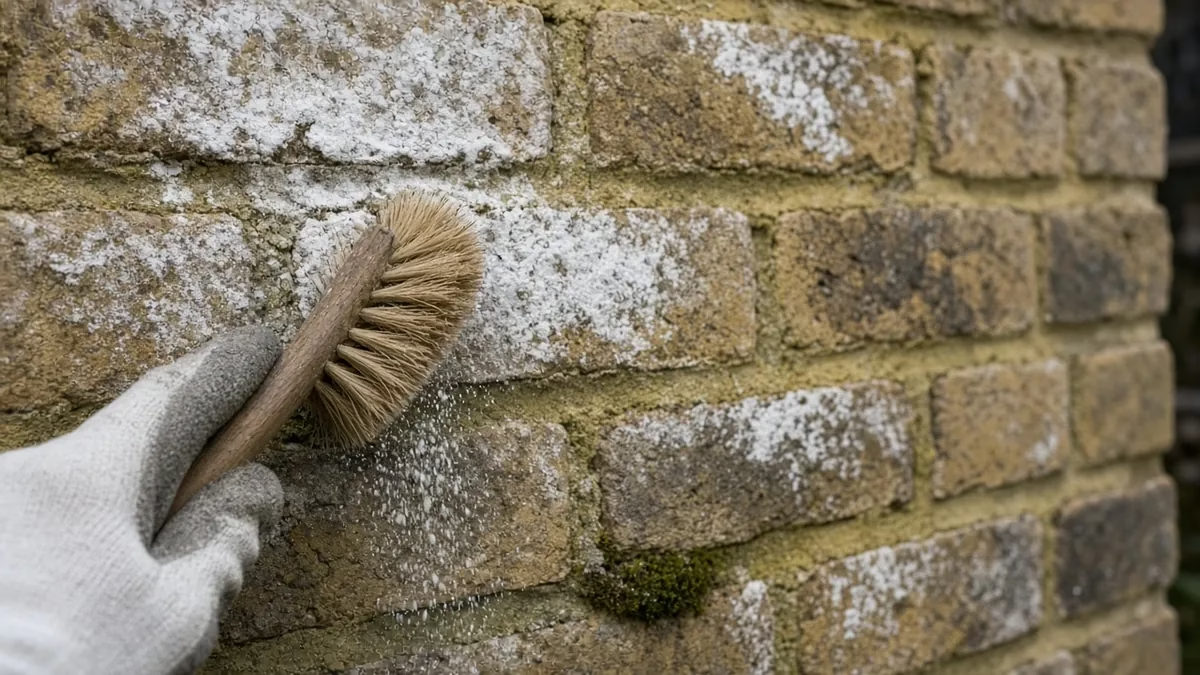
A white, powdery or fluffy deposit on a wall is easy to spot and hard to ignore. Outside, it shows as a chalky bloom on the brickwork. Inside, it pushes paint off the plaster, often low down, around a chimney breast or on a freshly plastered wall. This is efflorescence: salts left behind when water moves through a wall and evaporates from the surface. It isn’t the problem itself, but it tells you water has been moving through that wall, and where.
Here’s what efflorescence on walls means, when it’s harmless, when it points to damp that needs fixing, and how to clean it off without making it worse.
What efflorescence is
Bricks, mortar, plaster and the ground all contain soluble salts. When water soaks into a wall, it dissolves some of those salts and carries them towards the surface. As the water evaporates, the salts crystallise and are left behind as a white or off-white deposit. The Society for the Protection of Ancient Buildings’ guide to the control of dampness describes efflorescence as a sign “that water has passed through a material”.
So the useful question isn’t “how do I get rid of the white stuff?” but “where is the water coming from, and has it stopped?”
Efflorescence vs hygroscopic salts: why the difference matters
SPAB’s guide makes a distinction that’s worth knowing:
- Efflorescent salts, usually sulfates, are unsightly but seldom hygroscopic, so they don’t pull moisture out of the air. Once the wall dries and the deposit is brushed off, they’re usually just a cosmetic issue.
- Hygroscopic salts, such as chlorides and nitrates, absorb moisture from the air when it’s humid. They can keep plaster damp even after the original source of water has been dealt with, and they’re associated with long-term rising damp and with old chimney flues.
A practical clue: if a patch looks damper, darker or sticky on muggy days and drier on crisp, dry days, hygroscopic salts may be involved. If it’s a dry, powdery deposit that you can brush off, it’s more likely ordinary efflorescence. A proper damp inspection can confirm which you’re dealing with.
Common causes, outside and in
New brickwork or a new extension
New bricks and mortar hold a lot of construction water. As it dries out, efflorescence often appears on the outside face, especially on walls exposed to the weather. House builder Redrow’s guidance on efflorescence on new homes describes it as a natural, temporary part of the drying process. If it keeps coming back year after year, though, the wall is still getting wet from somewhere.
New plaster
Fresh plaster dries by losing water from its surface, and salts can come with it. A fluffy deposit on a newly plastered wall in its first months is common. If it appears only after rain, or keeps growing, look for a water source behind it.
Rain getting into the wall
On older solid brick walls, efflorescence on the inside often follows penetrating damp: defective pointing, a leaking gutter or downpipe, a failed chimney flashing or a cracked render. Typically it’s worse after heavy rain and in patches rather than a neat line. Our guides on damp that appears when it rains and cement render and damp cover the usual entry points.
Ground moisture at the base of the wall
A band of salts along the bottom of a wall can come from moisture rising from the ground, from a damp-proof course that’s been bridged by paving or soil, or from splashback. SPAB notes that rising damp “is usually much less of a problem than commonly supposed”, so it’s worth ruling out the simpler causes first. See a patio higher than the damp proof course and rising vs penetrating damp.
Chimney breasts
SPAB explains that hygroscopic salts can be deposited inside chimney flues by combustion gases and remain long after a flue is disused, causing damp patches on the plaster around the chimney breast. Our guide to damp on an unused chimney breast deals with that situation.
A leak that has dried out
After a pipe or roof leak is fixed, salts sometimes appear as the wet plaster dries. If the deposit doesn’t come back once the wall is dry, it was a one-off.
How to remove efflorescence the right way
- Fix the water source first. SPAB’s advice is to tackle the sources of dampness before trying to remove salts. Otherwise they’ll just come back.
- Let the wall dry. A wall that’s been wet for a long time can take a long time to dry out, particularly thick solid masonry.
- Brush or vacuum it off dry. SPAB recommends repeatedly brushing or vacuuming away crystalline deposits on plain walls. Don’t wash it off with water: you’ll dissolve the salts and push them back into the wall, and they’ll reappear as it dries.
- Don’t seal it in. Painting over salts with a non-breathable paint, or covering the wall with an impermeable coating, tends to trap moisture and push the problem elsewhere.
- Replaster only when it’s dry. Where plaster is heavily contaminated, removing and replacing it can be an option, but SPAB warns that if it’s replaced before the wall has dried out, the new plaster is likely to become contaminated by salts left in the wall. Our guide to plastering after damp proofing covers material choices.
On external brickwork, a stiff dry brush in dry weather is usually enough, and rain often washes light deposits away over time. Avoid harsh acid cleaners unless a specialist has confirmed they’re suitable for the brick, as they can damage the face and mortar.
When to get the wall looked at
- The deposit keeps coming back after you’ve brushed it off.
- Paint or plaster is blistering, crumbling or falling away.
- The patch is growing, or gets worse after rain.
- There’s a tide mark, a musty smell, or skirting boards and floorboards nearby are affected; see damp skirting boards.
- You’ve been quoted for a chemical damp-proof course on the strength of salts alone. Salts tell you water has moved, not why. Read is chemical DPC injection worth it? first.
Frequently asked questions
Is efflorescence a sign of damp?
It’s a sign that water has passed through the wall. On new brickwork or new plaster that’s often just drying out. If it keeps coming back, there’s an ongoing source of moisture to find.
Is efflorescence harmful?
The deposit itself is usually harmless and mostly cosmetic. The damp behind it can damage plaster, paint and timber, and hygroscopic salts can keep a wall damp.
Should I wash efflorescence off with water?
No. Brush or vacuum it off dry. Water dissolves the salts and carries them back into the wall.
Will efflorescence go away on its own?
On new brickwork it usually fades as the wall dries and weathers. Inside, it will keep returning until the source of moisture is fixed and the wall has dried.
White salts on your walls?
We trace where the water is coming from, inside and out, before recommending any treatment, so you don’t pay to fix the wrong problem. See our damp survey service and damp proofing in London, request a quote and project review, call 020 7971 1318 or message us on WhatsApp.
General information only. Sources checked on 17 November 2026.