
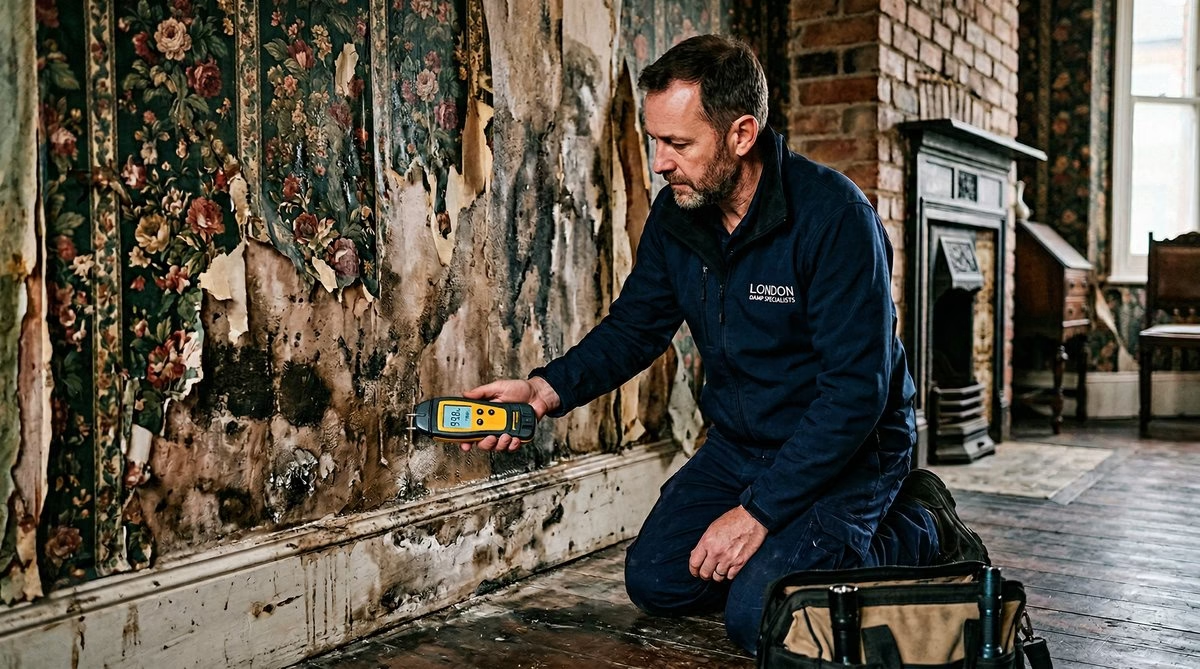
Damp and mould are no longer just a comfort issue for tenants — for a growing number of UK landlords they are now a legal deadline. Following the tragic death of two-year-old Awaab Ishak from prolonged exposure to mould in his family’s Rochdale home, the government introduced Awaab’s Law to force landlords to investigate and fix damp and mould hazards within strict, legally binding timescales.
If you let property in London or anywhere in the UK, this guide explains what Awaab’s Law actually requires, who it applies to, the timescales you cannot afford to miss, and — most importantly — the practical steps that keep you compliant and protect your tenants. The single biggest risk is not the law itself; it is misdiagnosing the damp and “fixing” the wrong thing while the clock runs down.
What is Awaab’s Law — and why it exists
Awaab’s Law was introduced through the Social Housing (Regulation) Act 2023. It sets out legally enforceable timeframes within which landlords must investigate and remedy reported hazards — with damp and mould as the first priority. The principle is simple: once a hazard is reported, a landlord can no longer let it drift for months. They must act, in writing, to a schedule.
The rules are being introduced in phases from late 2025, starting with damp, mould and emergency hazards, and widening to other health-and-safety hazards over the following years. Because the exact timescales are being rolled out in stages, you should always check the current MHCLG guidance for the figures that apply on the date a report reaches you.
Which landlords does Awaab’s Law apply to — and when
Awaab’s Law applies first to social landlords (councils and housing associations) as an express term written into every social tenancy. If you are a registered provider, these duties already bite.
Private landlords are next. Through the Renters’ Rights Bill, the government has confirmed its intention to extend Awaab’s Law duties to the private rented sector. In practice that means if you let property privately, you should be preparing now — the direction of travel is clear, and the standard of “investigate promptly, fix quickly, keep records” is one every responsible landlord should already meet. Ignoring a damp complaint until the next inspection is exactly the behaviour the law is designed to end.
The timescales landlords need to know
The phase-one framework centres on three clocks that start the moment a tenant reports a potential damp or mould hazard:
- Investigate quickly. You must investigate a reported hazard within a set number of working days — not weeks — and establish whether a significant risk exists.
- Report back in writing. Within a few working days of concluding the investigation, you must give the tenant a written summary of what you found and what you intend to do.
- Begin the fix. Where a significant hazard is confirmed, you must start remedial work within a short, defined window — and emergency hazards must be made safe within 24 hours.
The precise day-counts are being finalised and phased in, so treat these as the shape of your obligations and confirm the current numbers before you rely on them. The takeaway does not change: speed and documentation are now legal requirements, not good manners.
Damp and mould: why misdiagnosis is the biggest compliance risk
Here is the trap most landlords fall into. A tenant reports black mould in a bedroom corner. The landlord sends someone to wipe it down and repaint, ticks the box, and moves on. Three weeks later the mould is back, the tenant escalates, and now the landlord has both an unresolved hazard and a paper trail showing a failed “fix.”
The reason it comes back is almost always that the wrong cause was treated. Most black mould is driven by condensation — too much moisture in the air, too little ventilation, and cold surfaces where that moisture settles. But it can also be penetrating damp, rising damp, or a hidden leak, and each demands a completely different remedy. Paint over a ventilation problem and you have solved nothing. To stay compliant you have to know which problem you actually have — which is exactly what a proper diagnosis delivers.
A landlord’s practical action plan for a damp or mould report
When a report lands, work through these steps — they keep you both compliant and out of the “fixed it twice” cycle:
- Log it immediately, with the date. Your timescales start now. Record when the tenant reported it and how.
- Get an independent diagnosis fast. Book a professional damp survey that identifies the true cause — condensation, penetrating, rising, or a leak — using calibrated moisture readings, not guesswork.
- Put the findings in writing to the tenant. A clear written summary of cause and plan is now part of the law, and it is your best evidence later.
- Fix the cause, not just the symptom. That might mean improving ventilation (extractor upgrades or a PIV unit), repairing failed pointing or guttering, tracing a leak, or targeted damp-proofing — guided by the survey, not a salesperson.
- Keep every record. Reports, photos, moisture readings, invoices and dates. If your compliance is ever questioned, this file is your defence.
Tenants also have a part to play in condensation cases — ventilation and heating habits matter — but the legal duty to investigate and remedy sits with the landlord, so lead the process rather than waiting.
How Fixiz helps landlords stay compliant
Fixiz provides independent, honest damp surveys across North London — we tell you the real cause, even where no chemical treatment is needed, so you never pay to fix the wrong problem. Our reports give you exactly what Awaab’s Law expects: a clear diagnosis, photographic evidence, calibrated moisture readings and a written summary of recommended works with indicative costs — usually within 48–72 hours. Where remedial work is required, from ventilation improvements to damp-proofing and re-plastering, our in-house team can carry it out and document it properly.
If a tenant has reported damp or mould and the clock is running, get in touch with Fixiz today for a no-pressure chat and a fast survey booking.
FAQ — Awaab’s Law and damp
Does Awaab’s Law apply to private landlords?
Initially it applies to social landlords, written into social tenancies. The government has confirmed its intention to extend Awaab’s Law duties to the private rented sector through the Renters’ Rights Bill, so private landlords should prepare to meet the same standard.
How quickly do I have to act on a damp and mould report?
Once a hazard is reported you must investigate within a set number of working days, provide a written summary shortly after, and begin remedial work within a defined window — with emergency hazards made safe within 24 hours. Confirm the current phased figures in MHCLG guidance.
Is black mould always the tenant’s fault for not ventilating?
No. While condensation from everyday living is a common cause, mould can also result from penetrating or rising damp, a leak, or building defects the landlord is responsible for. That is why an independent diagnosis matters before you assign blame or a fix.
Can I just repaint over the mould to meet the deadline?
Painting over mould treats the symptom, not the cause — it will usually return and can count as a failed remedy. Awaab’s Law is about genuinely removing the hazard, which means addressing the underlying moisture source.
What evidence should I keep to prove compliance?
Keep the report date, your survey findings and photos, moisture readings, the written summary sent to the tenant, and invoices with completion dates. A complete file is your best protection if compliance is challenged.
How fast can Fixiz survey a rental property?
We can usually carry out a damp survey anywhere in North London within 48–72 hours, giving you a clear written diagnosis and action plan so you can meet your timescales with confidence.