
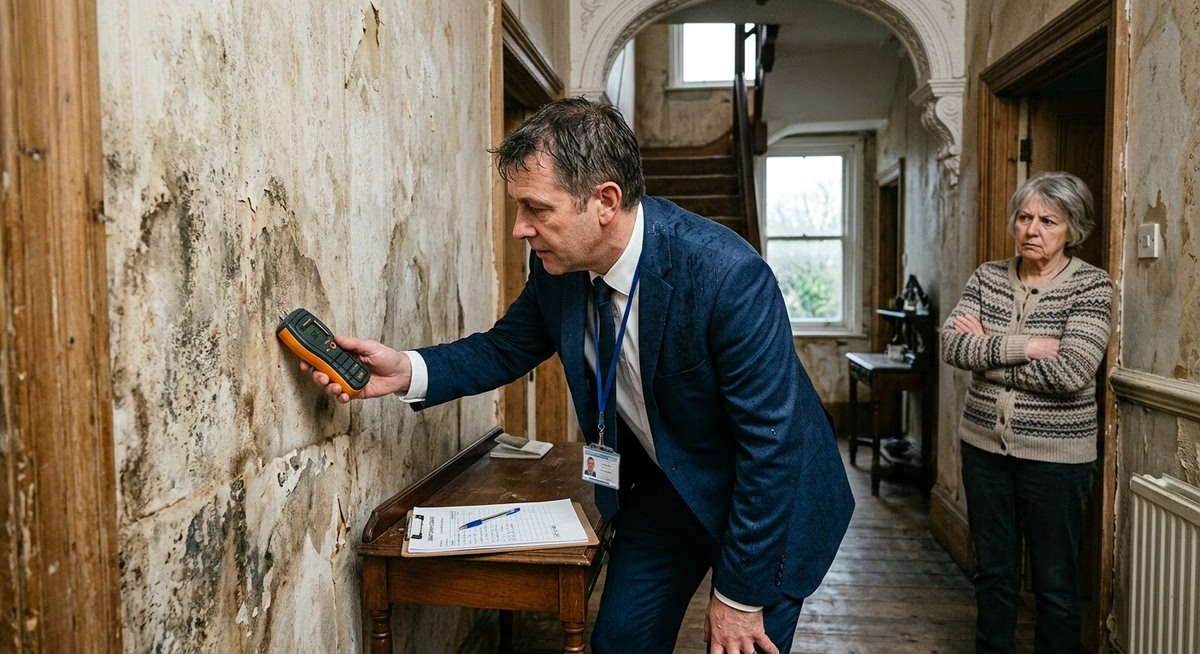
If you’ve got tide marks, peeling paint, or mouldy corners, you’re not alone—and you’re right to want a straight answer. The biggest frustration we hear is: “Everyone tells me it’s rising damp, but the ‘treatment’ didn’t work… so what is it actually?” Damp is one of those property problems where the wrong diagnosis leads to wasted money. In this guide we’ll show you how we approach a proper damp inspection—so you fix the cause, not just the symptom.
Why damp keeps coming back—misdiagnosis is the real enemy
Damp doesn’t behave randomly. It follows patterns—after rainfall, at cold bridges, around plumbing runs, or at the base of walls where moisture can track up. The problem is that many homeowners get offered a one-size-fits-all solution (often chemical injections or quick sealants) before anyone has properly confirmed what type of damp they’re dealing with.
We take a different approach. Before we recommend any remedial work, we want to know which of these is actually happening: penetrating damp from outside, condensation driven by moisture and ventilation, or genuine rising damp (which is far less common than many people think, especially when there’s another explanation).
- Cost waste: Paying for the wrong fix doesn’t just waste money—it delays the right solution and allows damage to spread.
- Health worry: Mould and damp can affect comfort and wellbeing, so people feel urgent pressure to “do something” quickly.
- Trust issues: Conflicting opinions from contractors, surveyors and online forums leave homeowners stuck in indecision.
- Hidden sources: Plumbing leaks, bridging of damp-proof courses, or gutter failures can be subtle but persistent.
Tip: If someone proposes a treatment in the first 10 minutes without checking ventilation, external levels, rainwater goods, and moisture patterns, pause. A good diagnosis takes method and evidence.
Rising damp vs penetrating damp vs condensation—how to tell the difference
You don’t need to become a damp expert, but you do need to understand the basic categories—because the solutions are totally different. A proper inspection is about matching symptoms to a cause, then checking that cause with measurements and visual clues.
Here’s how we explain it to homeowners in plain English, with the common signs that help you narrow it down.
- Rising damp: Typically shows as low-level moisture that appears to rise from the ground, often with salts and a distinct “tide mark”. It can be linked to a failed or bridged damp-proof course or high external ground levels.
- Penetrating damp: Usually localised and often worse after rainfall. Common routes include defective roofing, cracked render, damaged pointing, leaking gutters, and failed window seals.
- Condensation: Often appears as surface mould in corners, behind furniture, or on cold external walls. It’s driven by humidity, poor ventilation, and cold surfaces (thermal bridging) rather than water coming through the wall.
In London homes, it’s common to see more than one factor at once—say, a gutter leak causing a damp patch and condensation causing mould elsewhere. That’s why a “single label” diagnosis can be misleading.
What a proper damp inspection should include (and what it should produce)
A real damp inspection is not just a glance at the wall. It’s an investigation that looks for root causes and creates a clear plan. A good survey should tell you what’s happening, why it’s happening, and what order to fix things in—so you’re not spending money blindly.
When damp and mould surveys are done properly, they investigate moisture ingress, condensation drivers, ventilation failures, plumbing defects and building fabric issues. They also record evidence—because evidence stops the debate and lets you make decisions.
- Moisture testing: Readings at different heights and locations to understand whether moisture is tracking from the ground or entering at a point.
- Thermal assessment: Identifying cold bridges and insulation gaps that drive condensation and mould.
- Humidity and ventilation review: Checking whether the home can remove moisture from cooking, bathing and drying clothes.
- External inspection: Roofs, gutters, brickwork, render, pointing, ground levels, drainage and window seals—often the true source of “mystery damp”.
- Photographic evidence: Clear photos and notes so you can compare “before” and “after” and hold works accountable.
Tip: Ask for a written diagnosis that separates symptoms from causes, and lists remedial actions in priority order. “Inject DPC” without a root cause is not a plan.
Common damp ‘treatments’ that fail—and why
Homeowners often call us after they’ve already tried to fix damp. Sometimes they’ve redecorated repeatedly, sometimes they’ve installed a dehumidifier, and sometimes they’ve paid for chemical treatment. The frustration is real—because the damp returns, and the room starts to look and smell the same again.
These are the common failure points we see when damp persists.
- Decorating over damp: Paint and filler can hide a problem for a few weeks, but moisture will break through again.
- Ventilation ignored: If condensation is the driver, sealing a wall or changing plaster won’t solve it—airflow and moisture management will.
- External defects unfixed: A leaking gutter or cracked render can feed moisture continuously. Internal works won’t win that battle.
- DPC bridging: High external ground levels, internal screeds, or plaster bridging can bypass the damp-proof course even when it exists.
- Mixed causes missed: Fixing one issue (like ventilation) won’t solve a separate penetrating leak, and vice versa.
How Fixiz handles damp—root cause first, disruption second
We focus on clarity and control. Our job is to help you stop guessing, then deliver the right remedial works with minimal disruption. That usually starts with a methodical inspection, then a written plan that prioritises the simplest fixes first—like external repairs and ventilation—before any invasive internal work.
We’re London-based, so we’re used to the quirks of Victorian terraces, converted flats, and modern builds. Each has typical damp patterns, and we tailor the approach rather than forcing a generic treatment.
- Evidence-led diagnosis: We identify the damp type(s) and the root causes before recommending works.
- Practical scope: You get a clear list of actions, in order, with the reasoning behind each one.
- Quality repairs: When repairs are needed—brickwork, pointing, gutters, ventilation, internal finishes—we deliver them to a proper standard.
- Long-term prevention: We don’t just dry the wall—we reduce the conditions that created damp in the first place.
FAQ—damp inspection and diagnosis
How do I know if it’s rising damp or condensation?
Look at pattern and location. Rising damp is typically low-level and can show salt deposits and tide marks, while condensation often creates surface mould in corners and behind furniture. A proper inspection uses moisture readings, ventilation assessment and external checks to confirm.
Why didn’t the last damp treatment work?
Usually because the root cause wasn’t fixed. If the true driver is a gutter leak, poor ventilation, or a bridged DPC, internal treatments alone won’t solve it. Damp is a systems problem—your fix must match the cause.
Should I run a dehumidifier?
A dehumidifier can help manage symptoms, especially with condensation, but it shouldn’t replace fixing defects or improving ventilation. Think of it as temporary support, not the cure.
What should I expect from a professional damp inspection report?
You should expect a clear diagnosis, evidence (readings and photos), the likely causes, and a prioritised list of remedial works. Without that, you’ll struggle to make confident decisions.
Ready to move from confusion to construction? Get in touch with Fixiz today for a no-pressure chat about your damp issues and the fastest route to a dry, healthy home.