
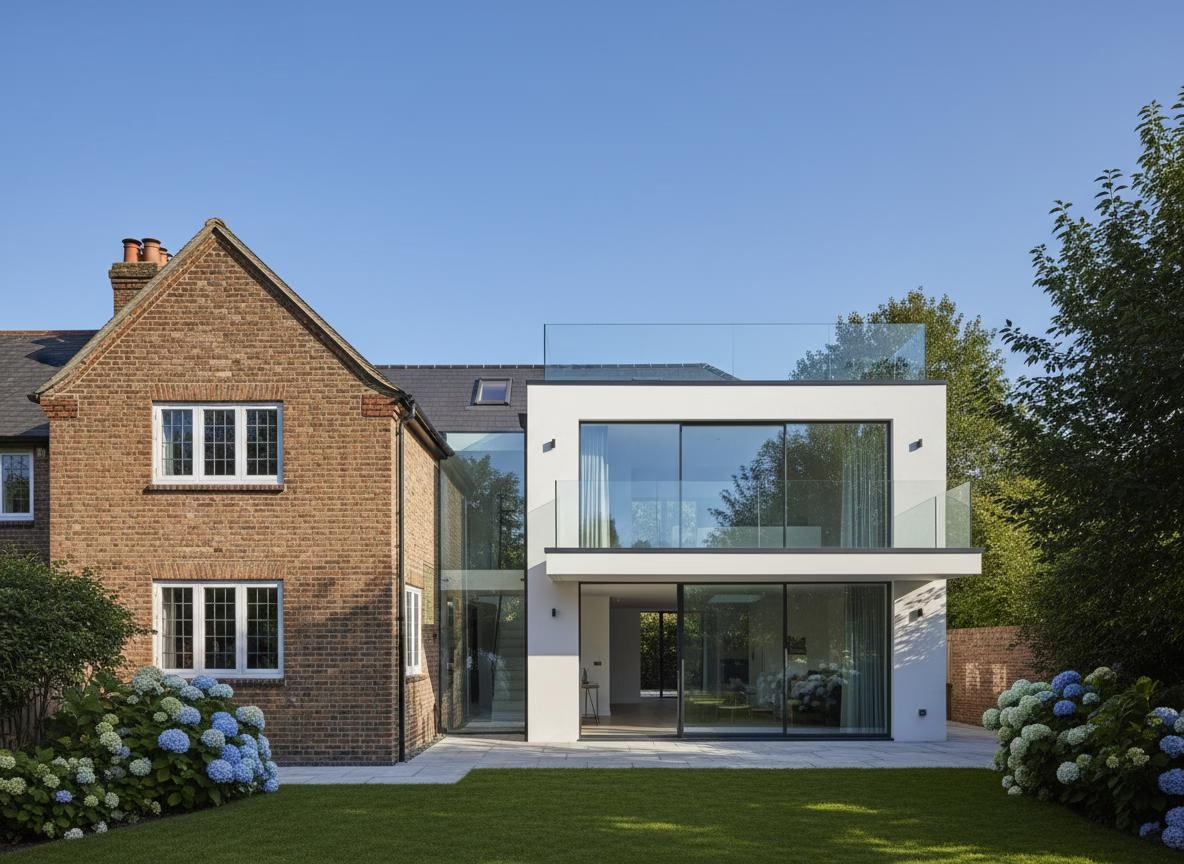
Planning a rear or side extension is exciting—until you hit the phrase Party Wall Act and everything suddenly feels legal, slow and expensive. The biggest pain point we see is confusion: “Do we need a notice? What if the neighbour ignores it? Can they stop our extension?” If you’re asking those questions, you’re in the right place. We’ll explain the process in plain English and show you how we keep projects moving without falling out with the neighbours.
What the Party Wall Act is—and why it catches homeowners out
The Party Wall etc. Act 1996 applies in England and Wales and is separate from planning permission. That separation is exactly why people get caught out. You can have planning approval (or be within permitted development) and still need to follow the Party Wall process if your work affects a shared wall, boundary, or nearby foundations.
Homeowners often discover this late—after they’ve booked builders or paid deposits—because it feels like “paperwork” rather than construction. But if you skip it, the consequences can be real, including disputes and delays.
- Double-process confusion: People assume planning approval covers everything, then get blindsided by a second legal procedure.
- Neighbour sensitivity: Even reasonable neighbours can become anxious when digging starts near their foundations.
- Timeline risk: Notices, responses, and surveyor appointments can add weeks if you haven’t planned for them.
- Damage fear: Neighbours worry about cracks and movement, and you worry about being blamed for pre-existing issues.
Tip: Think of the Party Wall process as project management, not conflict. Done early, it’s often routine. Done late, it becomes stressful.
When you need a Party Wall notice for an extension
You generally need to notify your neighbour if your work involves a shared wall or structure, building on/at the boundary, or excavating near their foundations. Many rear extensions on terraced and semi-detached homes trigger the Act because the foundations are close to the boundary and excavation depths can be significant.
If you’re unsure, don’t guess. It’s better to confirm early than to start works and discover you should have served notice.
- Working on a party wall: Cutting into or altering a shared wall, including for beams and structural supports.
- Building at the boundary: New walls on or near the line between properties.
- Excavation nearby: Digging foundations close to a neighbour’s property, which can be within a few metres depending on depth.
What happens after you serve notice—consent, dissent, or silence
Here’s where homeowners worry. They imagine the neighbour can simply say “no” and the project is over. In reality, the Act is a dispute-resolution framework. Your neighbour can’t veto lawful work, but they can influence the process and require protections that affect timing and method.
After notice is served, the neighbour can consent, dissent, or fail to reply. Silence is common—and it’s not the end of the world, but it does change the process.
- Consent: If they agree in writing, you can proceed after the notice period with no surveyor required.
- Dissent: If they disagree, surveyor(s) are appointed to produce a Party Wall Award that sets rules for the works.
- No reply: If there’s no response within 14 days, the law treats this as dissent and the surveyor route still happens.
- Surveyor appointment problems: If a neighbour won’t engage, the process can continue, including appointing a surveyor on their behalf so you’re not stuck indefinitely.
Tip: Don’t treat “no reply” as personal. Many neighbours ignore paperwork because they don’t understand it. A calm conversation and a clear drawing often unlocks cooperation.
Why Party Wall disputes delay extensions—and how to reduce the risk
The delay usually isn’t the surveyor writing a document. It’s the time lost because the process starts too late, drawings aren’t clear, or the neighbour feels surprised. You can reduce the risk by communicating early and presenting a professional plan that shows you’re taking their property seriously.
From our experience, the projects that move fastest are the ones where homeowners treat neighbour relations as part of the build—not an admin chore.
- Start early: Allow time for notice periods and potential surveyor appointments before your target start date.
- Share drawings: Neighbours respond better when they can see exactly what is being built and where.
- Offer reassurance: Explain how dust, access and working hours will be managed—most objections are practical, not hostile.
- Document condition: A schedule of condition protects both sides by recording existing cracks and finishes before work starts.
Who pays, who is liable—and what about access?
Homeowners worry that the Party Wall Act will force them to pay endless fees, or that a neighbour will use it to make demands. There are rules. The process is designed to allow development while protecting adjoining owners.
As the building owner (the person doing the works), you typically carry responsibility for ensuring the process is followed and for making good any damage caused by the works, even if the damage comes from a contractor. Access can also be required in some situations, but it must follow the legal notice requirements and be limited to what’s necessary.
- Damage liability: If your works cause damage, you’re responsible for putting it right or compensating for loss.
- Surveyor role: The surveyor(s) can specify protective measures and how works should be carried out to reduce risk.
- Right of entry: Access to a neighbour’s land can be allowed when necessary for the notifiable works, with notice (except emergencies).
- Unnecessary inconvenience: The adjoining owner has rights not to suffer unnecessary disruption—so good site management matters.
How Fixiz keeps Party Wall compliance practical (and neighbour-friendly)
At Fixiz, we’re builders—but we’re also problem-solvers. Our job is to keep your extension moving while reducing risk for everyone involved. That means planning the Party Wall timeline into the programme, helping you communicate clearly, and ensuring the build method protects adjoining property.
We don’t replace a party wall surveyor, but we work alongside the process so the technical side and the paperwork side stay aligned.
- Programme planning: We build realistic lead times into the schedule so the Party Wall process doesn’t derail your start date.
- Clear scope: We provide clear information about excavation, structure, and sequencing so neighbours and surveyors aren’t guessing.
- Site discipline: Good housekeeping, dust control and respectful working hours reduce complaints and build trust.
- Protection-first build: We focus on temporary works, monitoring and careful sequencing to minimise the risk of movement and damage.
FAQ—Party Wall Act for house extensions
Can my neighbour stop my extension under the Party Wall Act?
No—the Act is not a veto. It’s a process that ensures your neighbour is notified and protected. They can require reasonable safeguards, and the process can affect timing and method, but it doesn’t automatically prevent lawful works.
What if my neighbour ignores the Party Wall notice?
If they don’t reply within 14 days, the law treats it as dissent and surveyor(s) are appointed to produce a Party Wall Award. The process can still proceed even if your neighbour is unresponsive.
Will the Party Wall process delay my extension?
It can if you start it late. If you plan early, share drawings, and communicate well, many projects proceed with minimal delay. Build the notice period into your schedule from the beginning.
Who is responsible if there’s damage to my neighbour’s property?
The building owner is responsible for making good damage caused by the works or compensating for loss, even if the contractor caused it. A schedule of condition helps everyone agree what was pre-existing and what is new.
Ready to move from confusion to construction? Get in touch with Fixiz today for a no-pressure chat about your extension and the fastest route to a smooth, neighbour-friendly build programme.