
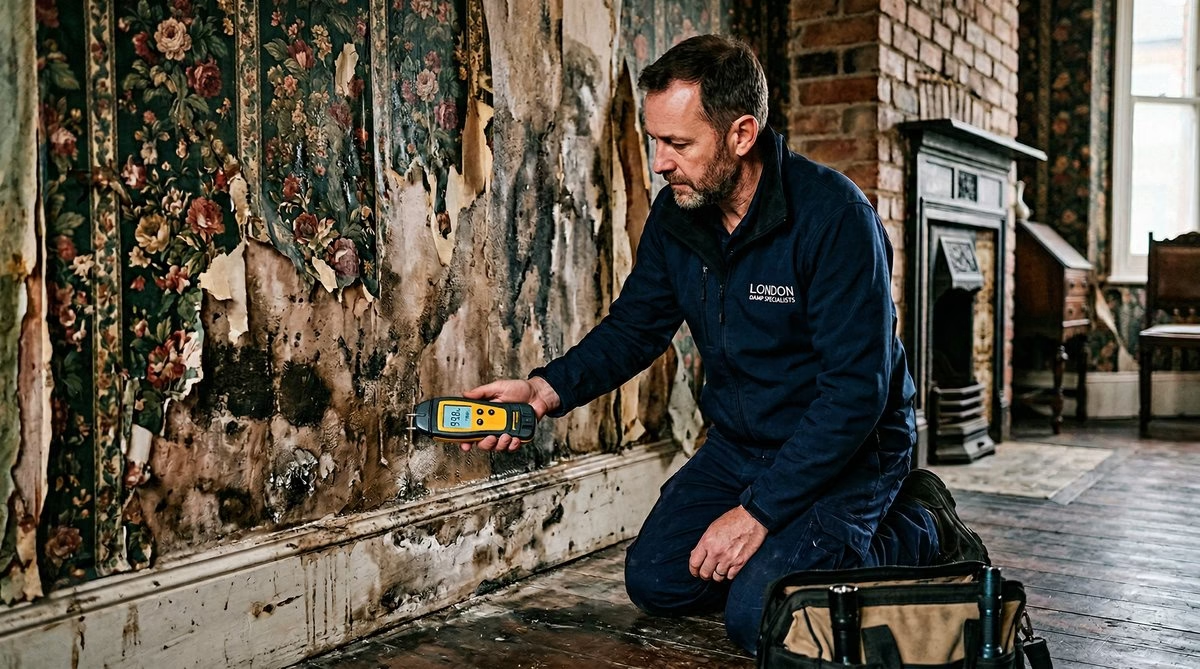
If you have battled condensation and black mould, you have probably come across PIV — positive input ventilation — sold as a near-magic box that dries out your whole house. Sometimes it genuinely transforms a home; other times it is money spent on the wrong problem. So does PIV actually stop condensation? Honestly — yes, when condensation is the real issue. The key is knowing when that is true.
What PIV is and how it works
A PIV unit is usually fitted in the loft (or as a wall unit in flats). It draws in fresh, filtered air and gently pushes it into the home, creating a slight positive pressure. That pressure continuously displaces the stale, moisture-laden air that causes condensation, pushing it out through natural gaps in the building. Instead of humid air sitting against cold walls and windows and turning to water, it is diluted and moved out. Running costs are low and maintenance is minimal.
Does it actually stop condensation?
For condensation-driven mould — misty windows every morning, black mould in corners, wardrobes and around window reveals, a persistently damp, stuffy feel — PIV is often highly effective. By lowering the overall humidity in the home, it tackles the root of surface condensation across the whole property rather than one room at a time. Many homeowners see a real difference within weeks.
When PIV is the wrong fix
Here is the honest part. PIV only addresses condensation. It will do nothing for:
- Penetrating damp from defective pointing, render, guttering or a leaking roof.
- Rising damp from a failed or bridged damp-proof course.
- Plumbing or roof leaks pushing water into the structure.
Fit a PIV unit to a home that actually has penetrating damp and you will have spent money while the real problem carries on. That is why a proper diagnosis should always come before you buy any single solution.
The pros and cons
Pros: treats the whole house, low running cost, low maintenance, and effective against condensation and the mould it causes. Cons: it can feel draughty or cool if poorly specified or set up (good units temper the incoming air), it needs a suitable loft or a wall-unit alternative in flats, and — crucially — it is useless against non-condensation damp. It is a tool, not a cure-all.
Get a diagnosis first
The smart order is always: diagnose, then treat. If a survey confirms your problem is condensation, PIV (alongside better extraction and heating habits) is often an excellent, cost-effective answer. If it finds penetrating or rising damp, your money is far better spent fixing that at source.
How Fixiz helps
Fixiz carries out independent damp surveys across North London and will tell you honestly whether condensation is your real problem — and whether PIV, improved extraction or other ventilation is the right answer. Where it is, we can supply and install it; where it is not, we fix the actual cause. Get in touch with Fixiz today for a no-pressure chat and a survey.
FAQ — PIV and condensation
Does PIV really work for condensation?
Yes. For condensation-driven mould, PIV lowers whole-house humidity by continuously replacing moist stale air with fresh air, and is often very effective.
Will PIV fix rising or penetrating damp?
No. PIV only addresses condensation. Rising damp, penetrating damp and leaks need their own specific repairs.
Does a PIV unit make the house cold or draughty?
It can if poorly specified or set up. Good units temper the incoming air and are set to the right flow rate to avoid a noticeable draught.
Can I have PIV in a flat with no loft?
Yes. Wall-mounted PIV units are designed for flats and homes without a suitable loft space.
Should I get a survey before installing PIV?
Definitely. A survey confirms whether condensation is your real problem, so you don’t spend money on PIV when the issue is actually penetrating or rising damp.