
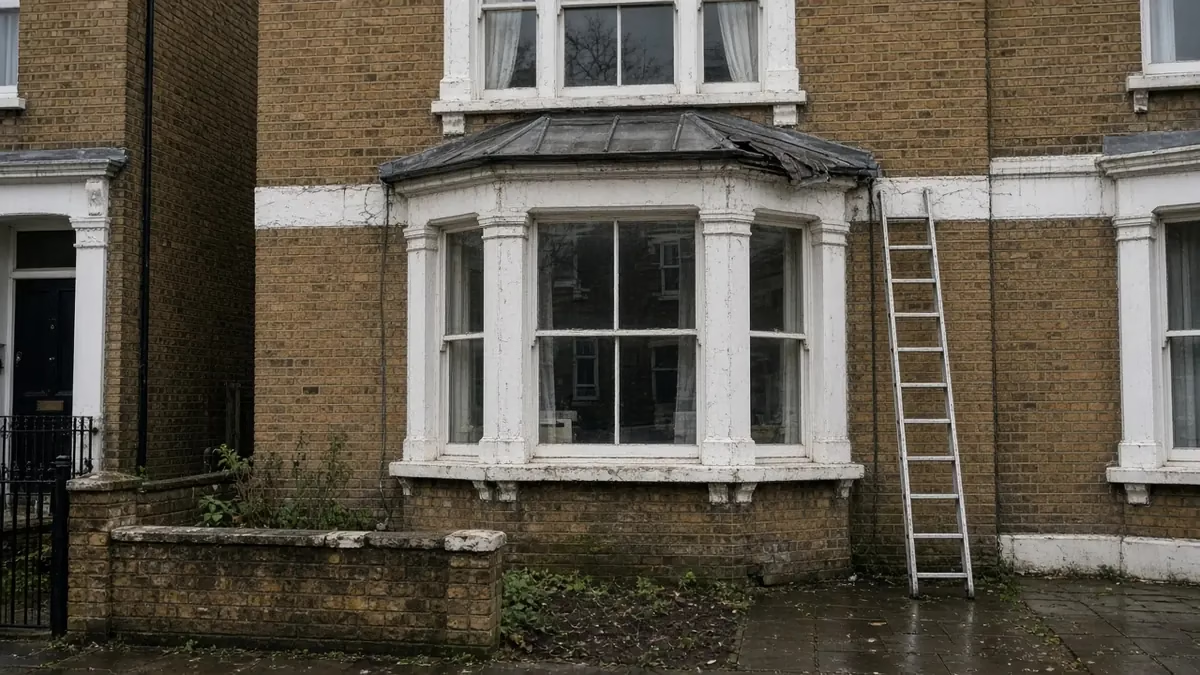
Bay windows are one of the things people love about London’s Victorian and Edwardian houses. They’re also one of the places damp likes to show up: a damp patch under the window board, peeling paint on the bay walls, a musty corner where the curtains hang, or a stain on the ceiling just inside the bay.
Because a bay has its own small roof, its own sills and its own joints with the main wall, damp there can come from several different directions. This guide walks through the usual causes, how to narrow them down, and what a sensible inspection should look at before anyone quotes for treatment.
Why bays are prone to damp
A bay window is a small projecting structure attached to the front of the house. Compared with a flat wall, it has more junctions, more exposed surfaces and more details that rely on maintenance to keep water out. Historic England’s guidance on assessing damp makes the general point that the source of moisture needs to be identified before choosing a remedy, because different sources need different solutions (Historic England: Assessing Damp in Historic Buildings). That’s especially true for bays.
The usual causes, from the top down
1. The bay roof
Many bays have a small roof covered in lead, felt or slate. Leaks commonly occur where that roof meets the main wall, at the flashing, or through splits and worn coverings. Water that gets in here often shows as a stain on the ceiling inside the bay, or damp at the top of the bay walls, typically after heavy or wind-driven rain. If the bay roof also collects water from the gutters above, a blocked or overflowing gutter can make things much worse.
2. Sills and window heads
Stone or render sills are meant to throw water clear of the wall. If a sill is cracked, has lost its drip groove underneath, or has open joints, water can run back into the masonry below. Damp just below the window board, or on the wall under the window inside, often points here.
3. Window frames and seals
Rotten timber, failed putty or sealant, or gaps between the frame and the masonry let water in at the edges of the window. This often shows as damp at the reveals, the sides of the window opening, rather than in the middle of the wall.
4. The junction between the bay and the main house
Cracks where the bay meets the main wall can let rain in. Cracking can also be a sign of movement, which is a structural question as well as a damp one. If you can see cracks at the junction, ask for them to be assessed rather than simply filled.
5. Condensation on cold surfaces
Bays have a lot of glass and a lot of exposed wall compared with the size of the floor area inside. These surfaces run colder than the rest of the room, and heavy curtains can trap moist air against them overnight. Condensation tends to show as mould in corners, on window reveals and behind curtains, worse in winter and in rooms with drying washing or poor ventilation. Our guide on rising vs penetrating damp explains how to tell the main types apart.
6. Ground level and the floor void
At the bottom of the bay, check the ground outside. If soil, a planter or paving has built up against the wall, or air bricks under the bay are blocked, the base of the wall and the floor void can stay damp. This is sometimes mistaken for rising damp, when the problem is actually ground levels or ventilation under the floor.
Reading the clues yourself
Before anyone visits, a few weeks of observation can save a lot of guesswork:
- Where? Ceiling inside the bay, top of the walls, under the sill, window reveals, or skirting level?
- When? After heavy rain, after wind from a particular direction, or mostly on cold winter mornings?
- What does it look like? Tide marks and staining suggest water coming in. Black mould spots in corners and on reveals suggest condensation. White crystalline deposits suggest salts.
- What’s outside? From the pavement, look at the bay roof, the gutters above it, the sills and the joint with the main wall.
Take dated photos. They’re very useful evidence for whoever inspects it.
What a sensible bay window damp inspection should cover
A good inspection works from the outside in, following the clues:
- bay roof covering and flashings, and the gutters and downpipes discharging nearby;
- sills, drips and window heads;
- window frames, putty and the seal between frame and masonry;
- cracks at the bay-to-house junction, and whether they need a structural view;
- ground levels, paving and air bricks at the base of the bay;
- inside: the pattern of damp, ventilation of the room and signs of condensation.
The professional principles behind this approach, establishing the cause before choosing a treatment, are set out in the joint position statement from RICS, Historic England and the Property Care Association on investigating moisture in traditional buildings.
Typical repairs, matched to the cause
- Bay roof leaks: repairing or renewing the covering and flashing; clearing or repairing gutters above.
- Sills: repairing cracks and restoring a drip, or replacing a failed sill.
- Frames: repairing timber, renewing putty and resealing the frame-to-wall joint.
- Junction cracks: getting the cause of the movement assessed, then repairing.
- Condensation: better ventilation, keeping curtains clear of the glass at night, managing moisture from cooking and drying clothes, and improving cold surfaces where practical.
- Ground and floor void: lowering ground levels, clearing air bricks and keeping the base of the wall free.
Once the source is fixed, wet plaster needs time to dry out before redecoration, and badly damaged plaster may need replacing. A chemical damp-proof course is designed for rising damp. It won’t stop water coming in through a bay roof, a sill or a frame, so be cautious about any quote that leads with injection for damp that’s clearly up at window or ceiling height. Our guide on whether a damp proofing quote is inflated covers what a proportionate quote looks like.
Damp and health
Government guidance on damp and mould says everyone is vulnerable to the health impacts of damp and mould, and that people with certain health conditions, children and older adults are at greater risk of more severe effects (GOV.UK: Understanding and addressing the health risks of damp and mould in the home). It’s another reason to deal with the cause rather than repainting over it.
Frequently asked questions
Why is there damp under my bay window?
Common causes are a cracked or poorly detailed sill, gaps around the window frame, water entering from the bay roof or flashing, or condensation on cold surfaces behind curtains. The location and timing of the damp usually narrow it down.
Why does my bay window ceiling have a water stain?
A stain on the ceiling inside the bay often points to the bay roof: the covering, the flashing where it meets the main wall, or overflowing gutters above.
Is damp in a bay window rising damp?
Damp at window or ceiling height isn’t rising damp. Damp at the base of the bay can have several causes, including high ground levels and blocked air bricks, so it needs diagnosing before any treatment.
Can condensation cause damp in a bay window?
Yes. Bays have large areas of glass and exposed wall that run cold, and curtains can trap moist air against them. Mould on reveals and in corners, worse in winter, is a common sign.
More reading: how to spot damp when viewing a property and why your house smells damp when it rains.
Damp around a bay window in London?
We’ll trace the damp from the outside in and explain the cause before recommending any work. Read more about damp in London homes, book a damp survey in North London, request a project review, or call 020 7971 1318.
General information only. Sources checked on 7 November 2026.