
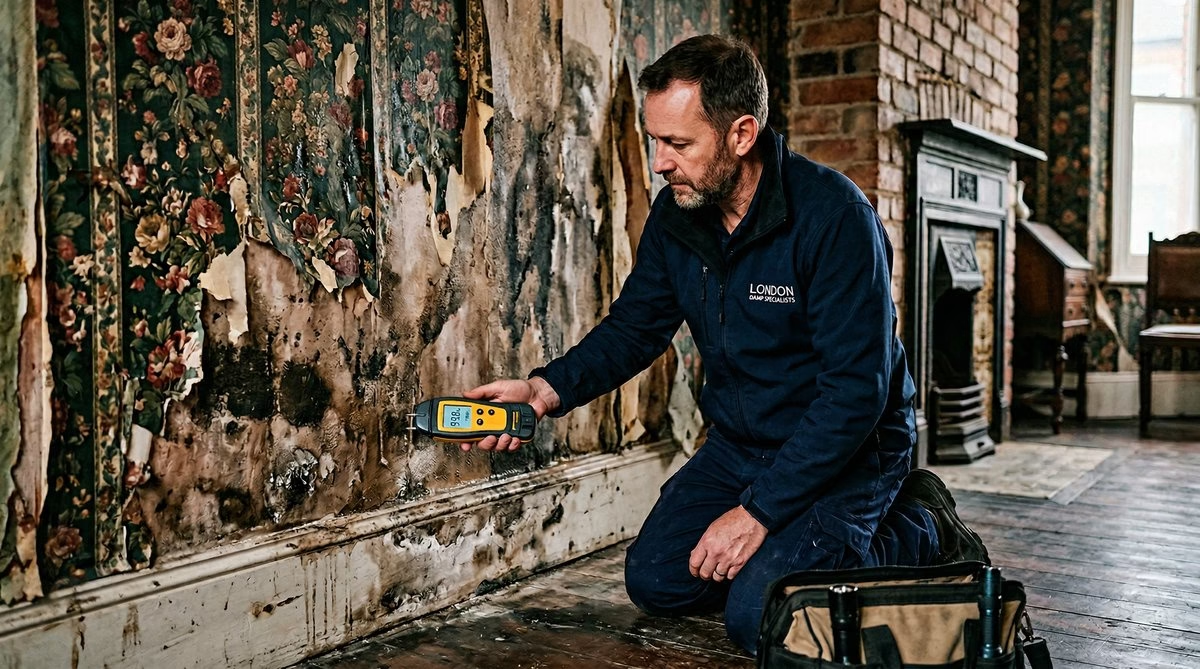
It seems illogical: you move into a brand-new flat, and within months there is condensation on the windows and black mould creeping into corners. Surely a new home should be dry? In fact, modern new-builds are prone to condensation precisely because they are built so well — airtight and highly insulated, with nowhere for everyday moisture to escape. Here is why it happens and how to fix it without blaming yourself.
Why airtight new homes trap moisture
Older houses were draughty, and those draughts constantly (if wastefully) removed moist air. New-builds are sealed tight to save energy — excellent for heating bills, but it means the water vapour from cooking, showering, drying clothes and simply breathing has nowhere to go. Add the “drying-out” moisture from fresh plaster, screed and paint that a new building releases in its first year or two, and humidity climbs fast. When that moist air meets a cooler surface, it condenses.
Is it the building’s fault or yours?
Usually neither, entirely. It is the combination of a sealed building and normal living, sometimes made worse by ventilation that was never commissioned properly. Many new flats have mechanical ventilation (MEV or MVHR) that is switched off, set too low, or never balanced — so the system meant to remove the moisture is not doing its job. That is a building issue worth raising with your developer or management company.
The practical fixes that work
- Check the ventilation system is on and working. Extract fans and MVHR units must run continuously at the right rate. A quick professional check often solves the problem at a stroke.
- Ventilate daily — trickle vents open, brief window airing, and always run extractors during and after showers and cooking.
- Manage moisture at source — lids on pans, and avoid drying washing on radiators without ventilation.
- Keep gentle background heat so surfaces stay above the temperature at which condensation forms.
- Get a survey if it persists to rule out a genuine defect and confirm it is condensation, not a leak or cold bridge.
When to bring in a professional
If mould keeps returning despite good habits, an independent damp survey confirms whether it is simple condensation, a ventilation fault, or a building defect such as a cold bridge — and gives you evidence to take to a developer under warranty. Treating the cause beats repainting over mould every spring.
How Fixiz helps
Fixiz surveys condensation and damp across North London, checks whether ventilation is doing its job, and installs improved extraction or PIV where needed — telling you honestly whether the fix is a habit change, a ventilation tweak or a building issue. Get in touch with Fixiz today for a no-pressure chat and a survey.
FAQ — new-build condensation
Why does my brand-new flat have condensation?
New-builds are airtight and well-insulated, so everyday moisture cannot escape as it did in draughty older homes. Combined with drying-out moisture from fresh materials, humidity rises and condenses on cooler surfaces.
Is condensation in a new-build a defect?
Not usually in itself, but ventilation that is switched off, set too low or never commissioned is a fault worth raising with your developer or managing agent.
How do I stop condensation in a new flat?
Ensure the ventilation system runs correctly, ventilate daily, manage moisture at source, and keep gentle background heat. A survey helps if it persists.
Should I report it to the developer?
Yes, if the ventilation system is not working or there is a cold bridge. An independent survey gives you evidence to raise it under warranty.
Will it go away on its own?
The drying-out phase eases after the first year or two, but without adequate ventilation, condensation from daily living will continue.