
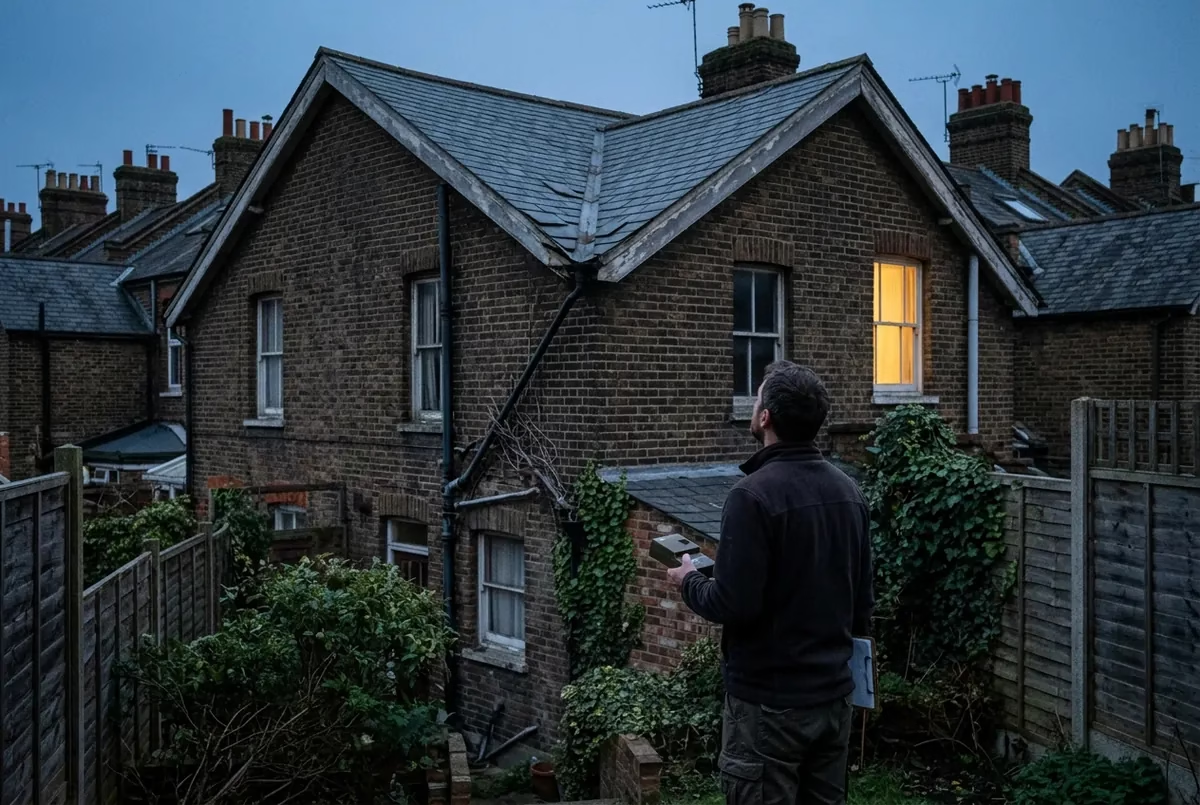
You go up into the loft to measure for a conversion and find small dark droppings along the ridge, or a neighbour mentions bats flying around the roofs at dusk. It’s a common worry for London homeowners: does a bat in the loft mean the conversion can’t go ahead, or that you’ll face months of delay?
In most cases it means the project needs the right survey, the right timing and possibly a licence, planned in from the start. What you must not do is carry on regardless, because bats and their roosts are protected by law whether or not your loft conversion needs planning permission.
Why bats matter legally, even under permitted development
Government guidance is unambiguous: all bat species, their breeding sites and resting places are fully protected by law. It lists “insulating or converting a loft”, “repairing or replacing a roof” and “using insecticides or treating timber” among the activities that can harm bats.
According to the same guidance, you break the law if you, among other things:
- deliberately capture, injure or kill bats;
- damage or destroy a breeding or resting place;
- obstruct access to their resting or sheltering places;
- intentionally or recklessly disturb a bat while it’s in a structure or place of shelter.
The guidance says the penalties can include up to 6 months in prison and an unlimited fine. Importantly, a roost is protected whether or not bats are there at the time. The Bat Conservation Trust explains that bats often return to the same roosts each year, so roosts are protected all year round.
Many London loft conversions are built under permitted development rather than with a planning application (see planning permission vs permitted development). That changes who checks your project, but it doesn’t remove the wildlife law. If bats are present, you’re responsible for avoiding harm, with or without a planning officer asking for a survey.
Signs you might have bats
Bats don’t build nests or chew through timber. They use gaps that are already there: under lifted slates or tiles, behind fascias and bargeboards, at the ridge or in gaps around the felt. Possible signs include:
- droppings in the loft, often collecting below a particular gap or along the ridge (the Bat Conservation Trust explains how to tell them apart from other droppings);
- bats seen leaving the roof around sunset, or returning at dawn. The Trust notes that bats are seen more often in the summer months, May to September.
Don’t try to confirm it by disturbing anything or handling bats. The Trust warns that hibernating bats are very vulnerable to disturbance, and that mothers with young in the summer maternity season must not be disturbed. If you’re unsure, the government guidance points householders to the National Bat Helpline, run by the Bat Conservation Trust, for free advice. It notes that the helpline can’t advise on building works that need planning permission; for a conversion, you’ll normally need an ecologist.
What a bat survey involves
If there’s a realistic chance of bats, the next step is a survey by a suitably qualified ecologist. Government guidance suggests finding one through the CIEEM or Environmental Data Services directories. The survey shows what type of bats, how many and how they use the roof, so the work can be planned to avoid harming them.
Natural England’s advice for planning decisions describes survey work that can include roost inspection and recording bats emerging from or re-entering the building. It says surveys must be carried out in the most recent, appropriate season. Watching for bats emerging or re-entering only works when they’re active, which the Bat Conservation Trust puts mainly in the summer months, so the calendar matters: if you leave the survey until the builder is ready to strip the roof, you may be waiting months for the right window. Ask your ecologist early what can be done now and what has to wait.
Councils may also ask for a survey with a planning application, for example for a mansard or a roof extension that needs consent. The same Natural England advice lists buildings with uneven roof tiles, large roof timbers, cracks and crevices, and roofs that warm in the sun, among those likely to contain roosts.
If bats are found: licences and timing
Finding bats doesn’t automatically stop a loft conversion. The guidance says that in many cases you should be able to avoid harming bats or damaging or blocking their roost. Depending on the survey, that might mean:
- timing the roof work to avoid sensitive periods, such as maternity and hibernation seasons;
- keeping the roost and its access points in place, for example by designing around a section of the roof;
- changing working methods, such as hand-stripping certain areas under an ecologist’s supervision.
If harm can’t be avoided, you’ll need a licence before the work starts. Natural England’s guidance on bat mitigation licences lists loft conversions, roof replacements and extensions as “home improvements”. It says you should only apply when the start date of the work is within 3 months, and the application includes a method statement and work schedule prepared with your named ecologist. Ecologists registered for certain class licences may be able to use those for lower-impact cases instead of an individual licence.
This is why bats belong in the design and programme, not as a surprise on site. Your ecologist’s recommendations can affect the roof structure, the position of dormers and rooflights, how the roof is rebuilt around any roost that’s kept, and the date your builder can start stripping.
Things to be careful with during the build
- Timber treatment. Government guidance lists insecticides and timber treatment as activities that can harm bats. Check any treatment product with your ecologist before use.
- External lighting. The guidance also mentions lighting that lights up a roost entrance. Think about where new outside lights will point.
- Insulation and membranes. Where a roost is kept, the ecologist may specify how the roof is built around it. Settle this before you choose between a warm or cold roof build-up (see warm roof vs cold roof).
- If bats appear mid-job. Stop work in that area and get ecological advice before continuing.
Frequently asked questions
Can I do a loft conversion if I have bats?
Often yes, but you need a survey by a qualified ecologist and you must avoid harming bats or their roost. If that isn’t possible, you need a Natural England licence before work starts.
Do I need a bat survey for a permitted development loft conversion?
Permitted development means no planning application, so the council may not ask for one. But the wildlife law still applies. If there’s a reasonable chance of bats, a survey is the way to show you’ve planned to avoid harm.
Can bats be removed from a loft?
Not by you or your builder. Disturbing bats, or damaging or blocking access to a roost, is an offence unless it’s covered by the appropriate licence and done under expert advice.
Does a bat survey delay a loft conversion?
It can if it’s left late, because some surveys can only be done at certain times of year. Booking an ecologist at the design stage is the best way to protect your programme.
Planning a loft conversion in London?
We’ll raise wildlife checks alongside the structural and building regulations questions at the start, so surveys and timing are built into the programme rather than discovered on the scaffold. See our loft conversion service in London, read about loft conversion building regs, request a project review, or call 020 7971 1318.
General information only. We are builders, not ecologists: bat surveys, mitigation and licences must be handled by a suitably qualified and licensed ecologist. Sources checked on 10 November 2026.