
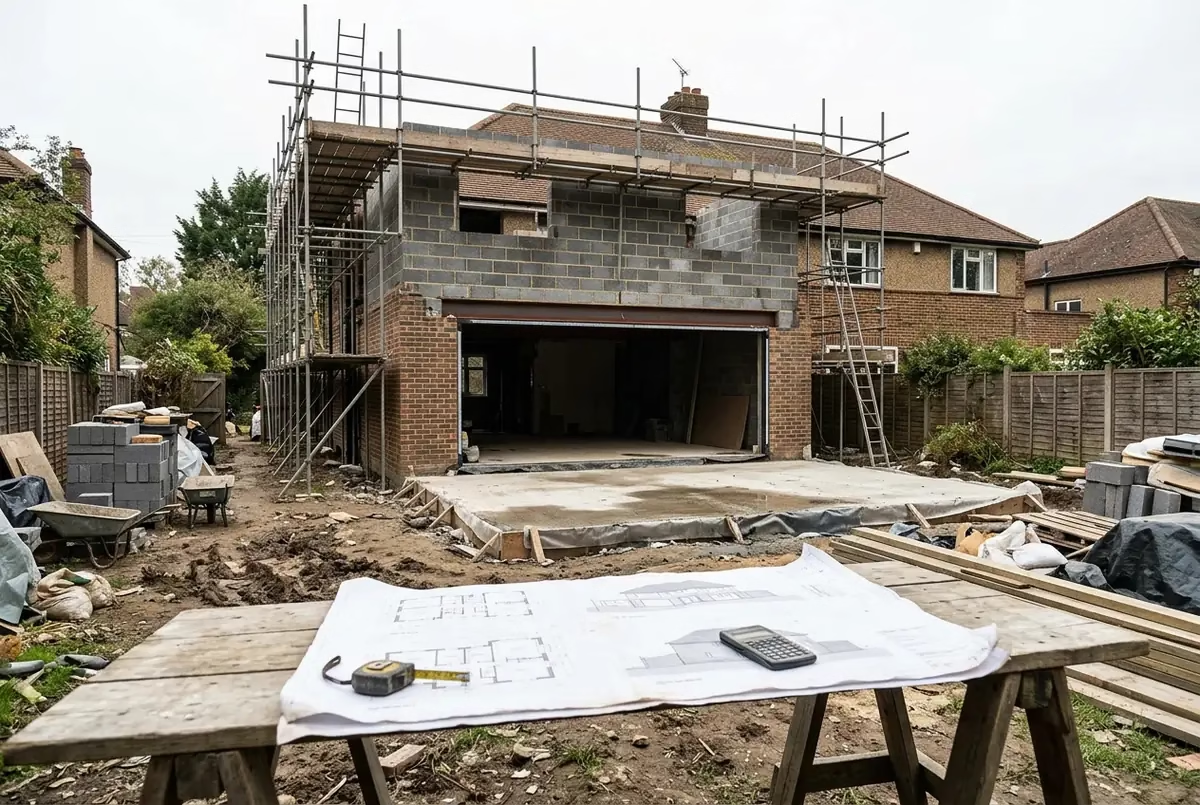
Planning permission comes through for your extension, and with it a letter mentioning the “Community Infrastructure Levy”. Or a neighbour tells you they were sent a bill after building a big rear and side extension. For London homeowners this causes real anxiety, because London has a Mayor of London levy and many boroughs charge their own levy on top, both set per square metre.
The good news is that most householders extending their own home never pay CIL. The bad news is that the exemption for larger extensions isn’t automatic: it depends on the size of the extension and on paperwork that must be done before work starts. Get the order wrong and you can lose the exemption.
What CIL is, in one paragraph
The Community Infrastructure Levy is a charge councils can set on new development to help pay for local infrastructure. It only applies where the council has adopted a charging schedule. Government guidance explains that London is the only place where two levels can charge: the Mayor and the borough. In London the borough collects both. The Mayor’s current charging schedule (in force since 1 April 2019) sets three zones, at £80, £60 or £25 per m² depending on the borough, before indexation; borough rates come on top and each council publishes its own.
Rule 1: under 100 square metres, no CIL
Government guidance says that development of less than 100 square metres of gross internal area does not pay the levy, unless it creates a new dwelling (the “minor development exemption”). It confirms that residential extensions under 100 m² that aren’t part of a development creating a new home are already exempt on this basis. There’s nothing to claim.
Most single-storey rear and side return extensions in London fall well under that size. Where people get caught out is with combined projects: a wraparound extension plus a first-floor extension, or an extension combined with a new basement. Measure the total new internal floor area in the scheme, not just the bit you think of as “the extension”, and ask your designer to confirm the figure.
Rule 2: 100 square metres or more, claim the exemption before you start
If your extension adds 100 m² or more, it’s potentially liable in any council that charges CIL. But government guidance says people who extend their own homes are exempt, provided they meet the criteria in regulations 42A and 42B of the CIL Regulations:
- the house must be your principal residence;
- you must have a “material interest” in it, meaning the freehold or a lease with more than 7 years left;
- the extension must enlarge the house and not create an additional dwelling.
The crucial part is the process. The guidance says the claim must be made to the collecting authority (your borough) before development commences, on the Residential Extension Exemption Claim, known as Form 9. The Planning Portal’s version of Form 9 adds that the claim lapses if development starts before the council has told you its decision. In plain terms: send the form, wait for the written decision, then start.
For residential extension exemptions, government guidance confirms there is no requirement to submit a commencement notice (regulation 67(1A)). That’s different from a residential annex, where a commencement notice is required.
What about permitted development extensions?
CIL isn’t only about planning permission. The guidance says the levy may also be payable on permitted development, and that where development goes ahead under a general consent such as the General Permitted Development Order, the developer normally has to send a notice of chargeable development. That requirement does not apply to development under 100 m² or where the residential extension exemption has been granted.
So if you’re building a large extension under the larger home extension (prior approval) route, the same logic applies: if it’s 100 m² or more, sort out the CIL position with the council before starting. Our guide to 6-metre rear extensions and prior approval covers the planning side.
The situations where the exemption doesn’t help
- You start early. Digging foundations before the council has confirmed the exemption can mean the full charge applies. Agree with your builder that no work counting as “commencement” happens until the decision arrives.
- Retrospective permission. Government guidance says developments consented retrospectively under section 73A can’t get relief or exemption, apart from the minor development exemption. Building first and applying later is a bad idea for many reasons, and CIL is one of them.
- It’s not your main home. The exemption is for owner-occupiers extending their principal residence. A landlord extending a rental property, or a developer, doesn’t qualify.
- It creates a new home. An extension that forms a separate dwelling isn’t a “residential extension” for this purpose. Annexes have their own exemption (Form 8), with a 3-year claw-back if the annex is let or sold separately. If you’re thinking of renting out a converted outbuilding or garage, read garage conversion annexe rules first.
A simple checklist before you start on site
- Ask your designer for the gross internal area of all new floorspace in the scheme.
- Check your borough’s CIL page to confirm it charges CIL and how it wants forms submitted.
- If the total is 100 m² or more, download Form 9 from the Planning Portal CIL forms page and submit it before any work starts.
- Keep the council’s written decision with your planning permission and building control paperwork.
- Tell your builder the agreed start date only after the decision has arrived.
CIL is one cost line among several. For the wider budgeting picture, see house extension cost per m².
Frequently asked questions
Do I pay CIL on a house extension?
Usually not. Extensions under 100 m² that don’t create a new home are exempt automatically. Larger extensions to your own main home can be exempt too, but only if you claim on Form 9 and get the council’s decision before starting work.
Is the 100 m² measured externally or internally?
The threshold is based on gross internal area. Ask your architect or designer to measure it from the drawings.
Do I need a commencement notice for a residential extension exemption?
No. Government guidance says a commencement notice isn’t required for a residential extension exemption. It is required for a residential annex exemption.
Can I claim the exemption after work has started?
No. The claim must be made, and decided, before development commences. Otherwise the claim lapses.
Planning a house extension in London?
We’ll flag the floor area early so you know whether CIL paperwork is needed before anything starts on site. See our house extension service in London, request a project review, or call 020 7971 1318.
General information only, not legal or tax advice. CIL rules and forms can change and each borough has its own procedures; always confirm with your council’s CIL team. Sources checked on 10 November 2026.