
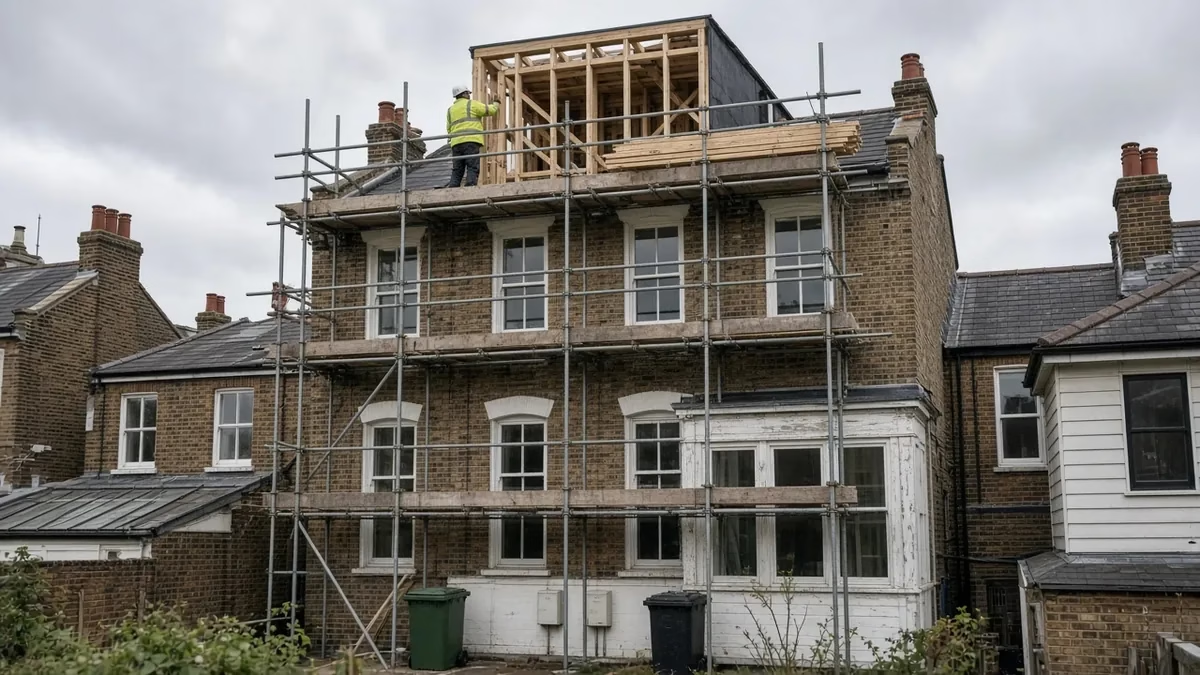
A lot of London’s top-floor flats sit right under an empty roof space. In converted Victorian and Edwardian houses, from Hackney to Haringey, that loft can look like the obvious way to gain a bedroom. But a loft conversion in a leasehold flat is a very different project from one in a house you own outright. Before anyone talks about dormers or steels, you have to answer two questions: do you own the loft, and will the freeholder let you build in it?
Here’s the order to tackle things in, what each step involves, and where projects usually get stuck.
Step 1: Find out who owns the loft
Your lease defines what you own, known as the “demise”. Many leases of top-floor flats don’t include the roof or the roof space. Wandsworth Council, for example, says most of its leases for top-floor properties exclude the loft space, and solicitors who deal with these cases make the same point about private leases. Using the loft for storage for years doesn’t make it yours.
Check three things:
- The lease wording. Does the description of the flat include “the roof space”, “the loft” or “the roof”? Or does it stop at “the ceilings” or “the joists”?
- The lease plan. Is the loft edged or hatched as part of your flat?
- The Land Registry title for your flat and for the freehold, so you know exactly who the freeholder is.
If the wording is unclear, get a solicitor to read it. Unclear ownership is a problem not only now but when you sell or remortgage, because a buyer’s lender will want certainty.
Step 2: If the loft isn’t yours, you’ll need to acquire it
Where the loft is outside your demise, the freeholder would normally have to agree to grant you the space, usually through a variation of your lease or a new or supplemental lease that adds it. The freeholder doesn’t have to agree to sell, and will usually want a payment (a premium) for the space and its legal and valuation costs covered.
As one published example, Wandsworth Council says it may consider selling loft space to its leaseholders only together with a licence to convert it, and lists its current valuation and legal costs on its purchasing loft space page. Private freeholders set their own terms, so treat any figure as specific to that landlord.
If you have a share of the freehold, the process can be friendlier, but the lease still has to be changed properly. An informal letter from the other flat owners is not a substitute for a lease variation that a future buyer or lender will accept.
Step 3: Get the landlord’s consent for the works
Even if the loft is already in your lease, most leases restrict alterations, especially structural ones. The Leasehold Advisory Service explains that a lease might ban alterations, allow them with written permission, or allow them only under a formal licence. If consent is needed, get it in writing before work starts, and expect the licence to set conditions, such as approving your contractor and seeing proof the work meets building regulations.
LEASE also notes that a landlord may charge a premium for structural alterations, and gives “converting your loft and adding a skylight or dormer in the roof” as an example. Where a lease says improvements need consent, section 19(2) of the Landlord and Tenant Act 1927 says that consent is not to be unreasonably withheld, but the landlord can still ask for a reasonable sum for any damage or loss in value and for its legal and other expenses. If the lease prohibits the alteration outright, or the loft isn’t yours, that section doesn’t help. This is an area where you need a solicitor’s advice on your particular lease.
Expect the freeholder, or its managing agent, to ask for drawings, structural calculations, a method statement, your contractor’s insurance details, and the planning and building control position before granting a licence.
Step 4: Planning permission
This catches many flat owners out. The Planning Portal says permitted development rights that apply to many projects for houses do not apply to flats. So a rear dormer that a house next door might build under permitted development will normally need a planning application if you live in a flat. Rooflights and other changes to the roof are also worth checking with the council.
Many London streets are in conservation areas, where councils look closely at roof alterations, particularly on the front slope. Our guide to dormer, hip-to-gable and mansard conversions explains the main types, and head height options covers what to do if the roof is low.
Step 5: Building regulations
A loft conversion needs building regulations approval whether you live in a house or a flat. The Planning Portal lists what the regulations cover, including the strength of the new floor, the stability of the structure, safe escape from fire, safe stairs and reasonable sound insulation between the conversion and the rooms below.
In a flat, fire safety and sound are usually the harder parts. The new room has to have a safe escape route through your flat, and the conversion mustn’t weaken the fire separation between your flat, the common parts and the flat below. Building control will look at the whole route, not just the new room. Our guides to loft conversion building regs, fire doors and loft soundproofing go into more detail.
Step 6: Party wall notices and the neighbours
If the work affects a party wall with the house next door, or involves cutting into it for steels, the Party Wall etc. Act 1996 is likely to apply. In buildings split into flats, the freeholder and leaseholders of neighbouring flats can each count as owners who need notice. Our guide to party wall agreements for loft conversions covers flats and leaseholders in detail.
Remember the flat below, too. The works will be noisy and will happen directly over their ceilings. Talking to them early, agreeing working hours and protecting the common hallway goes a long way.
Other things to sort out before work starts
- Your mortgage lender. Many mortgage conditions require the lender’s consent before structural alterations or a change to the lease. Check your mortgage terms.
- Buildings insurance. In most flats the building is insured through the freeholder’s policy. Ask the freeholder or managing agent to tell the insurer about the works before they start.
- Service charge share. If the flat gets bigger, the lease variation may change your share of the building’s costs.
- Access and scaffolding. Scaffold usually goes on shared or neighbouring land, so it needs agreeing in the licence.
A sensible order of work
- Read the lease and title, and get a solicitor’s view on ownership of the loft and the alterations clause.
- Get an early feasibility visit to check head height, structure and a realistic stair position.
- Approach the freeholder in writing with an outline proposal.
- Agree heads of terms for any purchase of the loft and the licence.
- Apply for planning permission and building regulations approval.
- Serve party wall notices.
- Complete the lease variation and licence, then start work.
Some steps can run in parallel, but starting work before the lease and licence are in place is the most common way these projects turn into disputes.
Frequently asked questions
Can I do a loft conversion in a leasehold flat?
Often yes, but only if the loft is included in your lease or you acquire it from the freeholder, and you have the freeholder’s written consent for the works, plus planning permission and building regulations approval.
Does a top-floor flat own the loft?
Not automatically. Many leases exclude the roof space. Check your lease wording and lease plan.
Do I need planning permission for a loft conversion in a flat?
Usually, if the roof is altered, for example with a dormer. Permitted development rights for houses don’t apply to flats.
Can the freeholder refuse a loft conversion?
The freeholder doesn’t have to sell space it owns. Where the loft is yours and the lease only requires consent for improvements, consent shouldn’t be unreasonably withheld, but conditions and reasonable costs can be required. Get legal advice on your lease.
Thinking about converting the loft above your flat?
We can visit to check whether the roof, structure and stair position work, and give you drawings and information to take to your freeholder and solicitor. See our loft conversion service in London, request a quote and project review, call 020 7971 1318 or message us on WhatsApp.
General information for England only, not legal advice. Your lease and title decide your rights; take advice from a solicitor. Sources checked on 17 November 2026.