
Your offer has been accepted, the survey report lands, and there it is: “High moisture readings were recorded to the lower walls. Further investigation by a damp specialist is recommended.” But the walls looked dry on the viewing. There’s no mould, no tide mark, no smell. Now you’re wondering whether you’re about to buy a damp problem, whether you should walk away, and who you should call next.
This guide is for London buyers in exactly that position. It covers what that line in the report does and doesn’t tell you, what to ask the surveyor, what a proper follow-up investigation should include, and how to use the result before you exchange.
What the survey line is really telling you
An RICS Home Survey is a visual inspection. RICS explains that Level 1 and Level 2 surveys don’t remove secured panels or similar features, and that a Level 3 survey is aimed at larger, older, altered or run-down properties (RICS: types of home survey). In other words, the surveyor can note signs and take readings, but usually can’t open things up to find a cause.
When a report recommends further investigation, RICS says it means the surveyor hasn’t been able to assess that part of the property fully, either because it’s hidden or inaccessible, or because it needs specialist knowledge. The report should then describe the affected element and why investigation is needed, say when it should be done, and give a broad indication of who should do it.
So a “high readings” note is a flag, not a diagnosis. It tells you something is worth looking at more closely. It doesn’t tell you the wall is wet, or what kind of problem it is.
Why readings can be high on a wall that looks dry
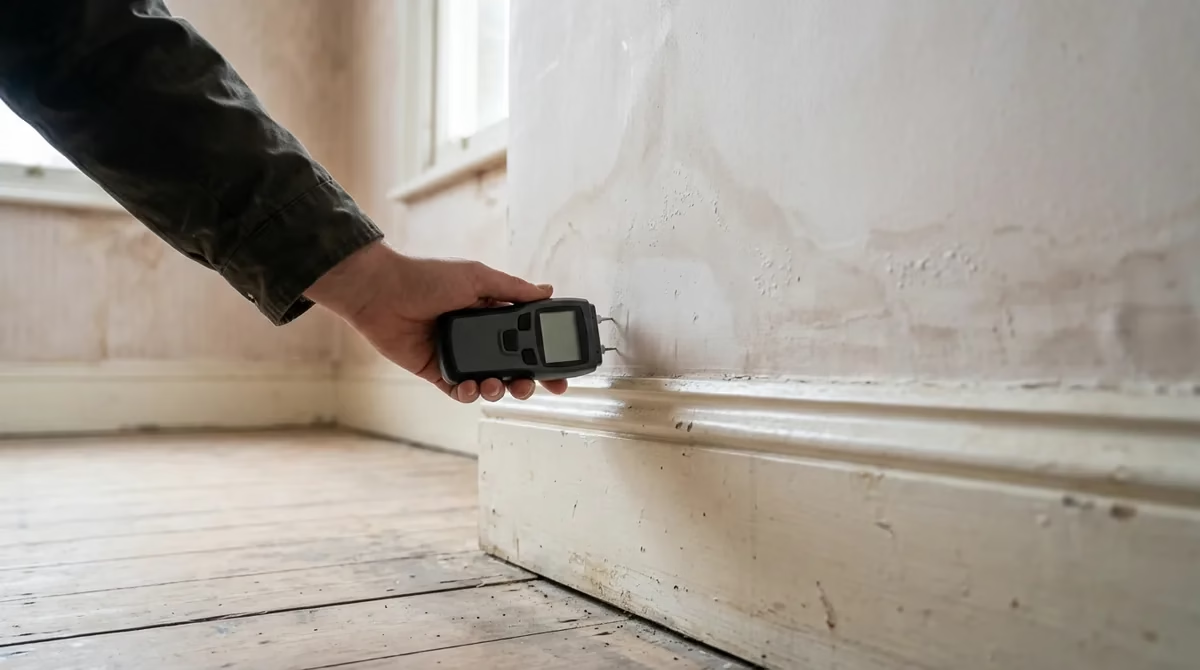
Most surveyors use handheld electrical meters. Historic England research found that these meters are typically calibrated for timber, so they’re unreliable when used to measure moisture quantitatively in brick, stone or plaster, and that all the meters tested were affected by salts and metal near the surface (Historic England: assessing moisture in porous building materials). In an older London house, a high reading on a dry-looking wall can come from salts in old plaster, foil-backed lining paper, metal beads or cables, as well as from genuine moisture.
We won’t repeat the whole meter debate here. Our guide to free damp surveys and pressure-selling covers it in detail. The practical point for a buyer is simple: a reading on its own isn’t enough to justify treatment, and it isn’t enough to dismiss the issue either.
Step 1: Ask your surveyor these questions
Before you book anyone else, go back to the surveyor who wrote the report. They’re usually happy to clarify, and the answers will make the follow-up investigation cheaper and better targeted.
- Exactly where were the readings taken? Which walls, which rooms, what height above the floor?
- Was there any visible evidence? Staining, salts, blown plaster, decay in skirtings or floor timbers, or nothing at all?
- What did the outside look like at that point? Ground or paving levels against the wall, gutters and downpipes, render, pointing, airbricks.
- Did you see the subfloor or any part of it? In houses with suspended timber floors, the void matters.
- What do you think the likely causes are, and what would you want ruled out?
- What kind of specialist do you recommend, and how urgent is it?
Step 2: What a proper follow-up investigation should include
The professional framework for investigating moisture in traditional buildings is the 2022 joint position statement from RICS, Historic England and the Property Care Association (Investigation of moisture and its effects on traditional buildings). Its core message is diagnosis before treatment. For a buyer, a useful follow-up report should:
- Look at the building, not just the wall. External defects, ground levels, drainage, rainwater goods, ventilation and how the house is used.
- Explain the readings. Say whether they’re likely to reflect real moisture, salts, or interference, and how they reached that view.
- Use more than one method where it matters. For example, checking for salts, or taking samples from within the wall for analysis, rather than relying on surface meter readings alone.
- Identify a likely cause (or say clearly if it can’t be established without opening up).
- Recommend proportionate repairs linked to that cause, in order of priority, with what’s essential separated from what’s optional.
- Include photos and a plan showing where readings and samples were taken.
Be wary of any “report” that’s really a quote: a page of readings, a diagnosis of rising damp and a price for injection, with no cause explained. Our article on damp survey vs damp proofing quote explains the difference, and chemical DPC injection: is it worth it? explains why injection isn’t the default answer.
Who should do it?
Ask anyone you’re considering whether they also sell treatments, and how they keep diagnosis separate from selling. That includes us: we carry out damp surveys and also do remedial work, so our survey gives you a written report with photos and the likely cause first, and if work is needed it is quoted separately and itemised, so you can compare it with other contractors.
You’ll need the seller’s permission to access the property, and possibly to take small samples. Ask your estate agent to arrange it early.
Step 3: Use the result before you exchange
Timing matters. You can usually renegotiate or withdraw before exchange of contracts. After exchange, you’re committed. RICS recommends getting quotes from at least two experienced contractors for any repairs a survey identifies before you make a legal commitment to buy, and then approaching the seller about the price.
Once you have a clear report, your options are typically:
- Proceed as agreed if the cause is minor: a blocked gutter, a high flower bed against the wall, a leaking pipe.
- Renegotiate the price using the report and written quotes.
- Ask the seller to carry out specific repairs before completion, with your solicitor’s help on what evidence to require.
- Walk away if the problem is bigger than you’re prepared to take on.
If you’re buying with a mortgage and the lender’s valuer has also flagged damp, the lender may want its own conditions met. That’s a different process, covered in our guide to mortgage retentions for damp. And if you’re still at viewing stage on other properties, how to spot damp when viewing a property may help.
Frequently asked questions
My survey found high damp readings but the walls look dry. Should I worry?
Not yet. Handheld meters can read high because of salts or other interference as well as real moisture. Treat it as a reason to investigate further, not as a diagnosis.
Should I pull out of the purchase because of damp readings?
Not on readings alone. Get the cause investigated and any repairs quoted before exchange, then decide whether to proceed, renegotiate or withdraw.
Who pays for a damp investigation when buying a house?
As with the main survey, it is usually the buyer who commissions and pays for it. You’ll need the seller’s permission for access, and for any sampling.
Is a damp and timber report the same as a damp survey?
The names vary. What matters is the content: a clear cause, how the readings were interpreted, and proportionate repairs, not just a treatment quote.
Buying in North London and need a follow-up damp investigation?
We’ll look at the area your surveyor flagged and the building around it, and explain what’s causing the readings before any work is discussed. Book a damp survey in North London, read more about damp in London homes, request a project review, or call 020 7971 1318.
General information only, not legal or financial advice. Speak to your conveyancer about contract timing. Sources checked on 9 November 2026.