
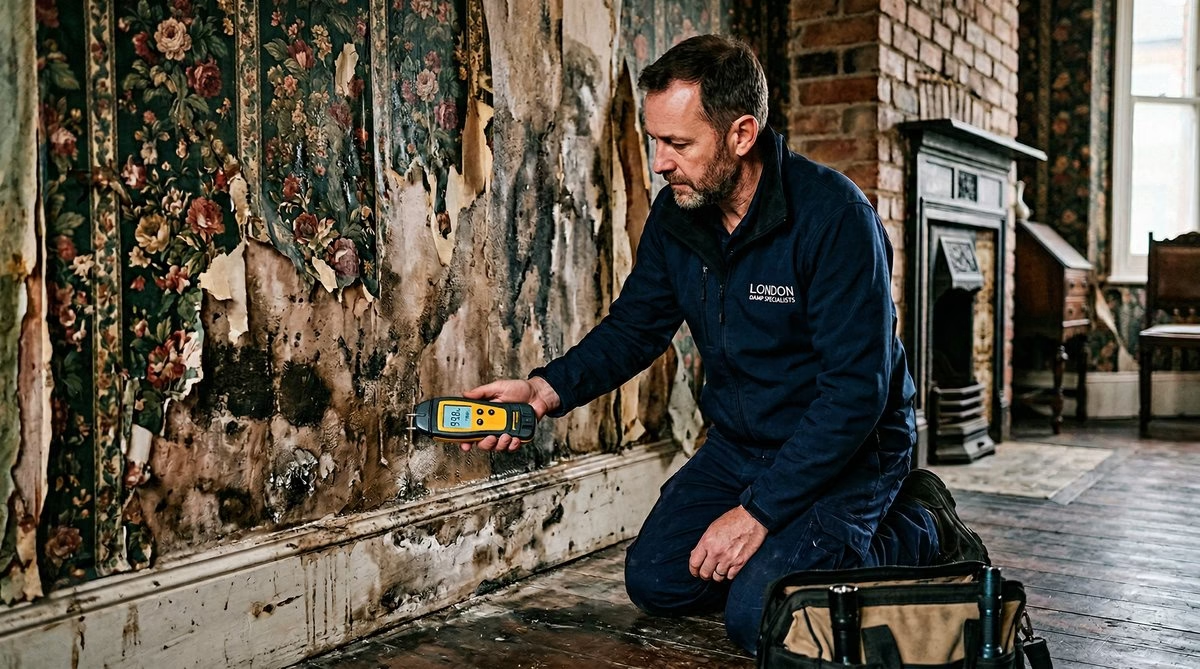
Cavity wall insulation is sold as a way to keep your home warmer and your bills lower — and in the right property, it does exactly that. But a significant number of UK homeowners find the opposite: within a year or two of having their cavity filled, damp patches, black mould and cold, clammy walls start to appear. If that is happening to you, the insulation itself may well be the cause — and the good news is you have clear routes to put it right.
This guide explains why cavity wall insulation causes damp, how to tell whether your insulation is the culprit, the guarantee that may cover the fix, and the sensible order to tackle it.
Why cavity wall insulation causes damp
A cavity wall is built as two leaves of brick with a gap between them. That gap exists for a reason: it stops rainwater that soaks the outer leaf from reaching the inner wall. Fill it badly, or fill the wrong property, and that protection breaks down. There are three common failure modes:
- Bridging. If insulation slumps, clumps or is poorly installed, it can create a physical path for moisture to travel across the cavity to the inner wall — showing up as penetrating damp patches on internal walls.
- Wrong property, wrong exposure. Homes on exposed, rain-battered elevations were often never suitable for cavity fill. Driving rain saturates the outer leaf and the wet insulation carries moisture inward.
- Cold spots and condensation. Gaps and voids in the fill leave patches of cold wall where warm, moist air condenses — the classic trigger for black mould in corners and behind furniture.
How to tell if the insulation is the cause
Damp has several possible causes, so the key is not to assume. Signs that point towards cavity wall insulation include: damp that appeared after the fill was installed; patches on external-facing walls rather than internal ones; problems that are worse on the weather-facing side of the house; and cold, patchy walls. A proper diagnosis uses a borescope inspection — a small camera through a drilled hole — to see the actual state of the fill inside the cavity, along with calibrated moisture readings. That is the only way to be certain before anyone starts extracting insulation or replastering.
Your CIGA guarantee: the route many people miss
Most professionally installed cavity wall insulation in the UK is covered by a 25-year CIGA guarantee (Cavity Insulation Guarantee Agency). If your insulation was installed under that scheme and is causing damp, you may be able to claim to have it inspected, extracted and the problem remedied at no cost. Check your paperwork for a CIGA certificate first — it is worth pursuing before you pay for private works. An independent survey report strengthens any claim by evidencing the cause.
How to fix damp caused by cavity wall insulation
The right fix follows the diagnosis, but it usually runs in this order:
- Diagnose properly with a borescope and moisture survey to confirm the insulation is the cause and to what extent.
- Extract the insulation where it is wet, bridging or unsuitable — the cavity is cleared so it can dry.
- Address the outer leaf — repointing, render repair or masonry treatment so wind-driven rain no longer saturates the wall.
- Let the wall dry, then make good — treat any mould and replaster affected internal areas once the moisture has gone.
- Improve ventilation to deal with any condensation element and stop it returning.
The mistake to avoid is replastering or repainting over the damp while the wet insulation stays in the wall — it always comes back.
How Fixiz helps
Fixiz carries out independent damp surveys across North London and will tell you honestly whether your cavity wall insulation is the cause — using borescope inspection and moisture readings, not guesswork. If it is, we will point you to your CIGA guarantee where one applies, and where remedial work is needed we handle extraction, external repairs, mould treatment and replastering with the moisture problem fixed at source. Get in touch with Fixiz today for a no-pressure chat and a fast survey.
FAQ — damp and cavity wall insulation
Can cavity wall insulation really cause damp?
Yes. Poorly installed, slumped or unsuitable cavity fill can bridge the cavity or hold moisture against the inner wall, causing penetrating damp, cold spots and condensation.
How do I know if my insulation is the problem?
Tell-tale signs are damp appearing after the fill was installed, patches on external-facing and weather-facing walls, and cold patchy walls. A borescope inspection confirms it.
Will removing the insulation fix the damp?
Where the fill is wet, bridging or unsuitable, extracting it and letting the wall dry usually resolves the damp — combined with repairing the outer leaf and improving ventilation.
Is the fix covered by a guarantee?
Often, yes. Most professionally installed cavity wall insulation carries a 25-year CIGA guarantee that can cover inspection, extraction and remedy. Check for a CIGA certificate.
Can I just replaster over it?
No. Replastering while wet insulation remains in the cavity treats the symptom, not the cause, and the damp will return.