
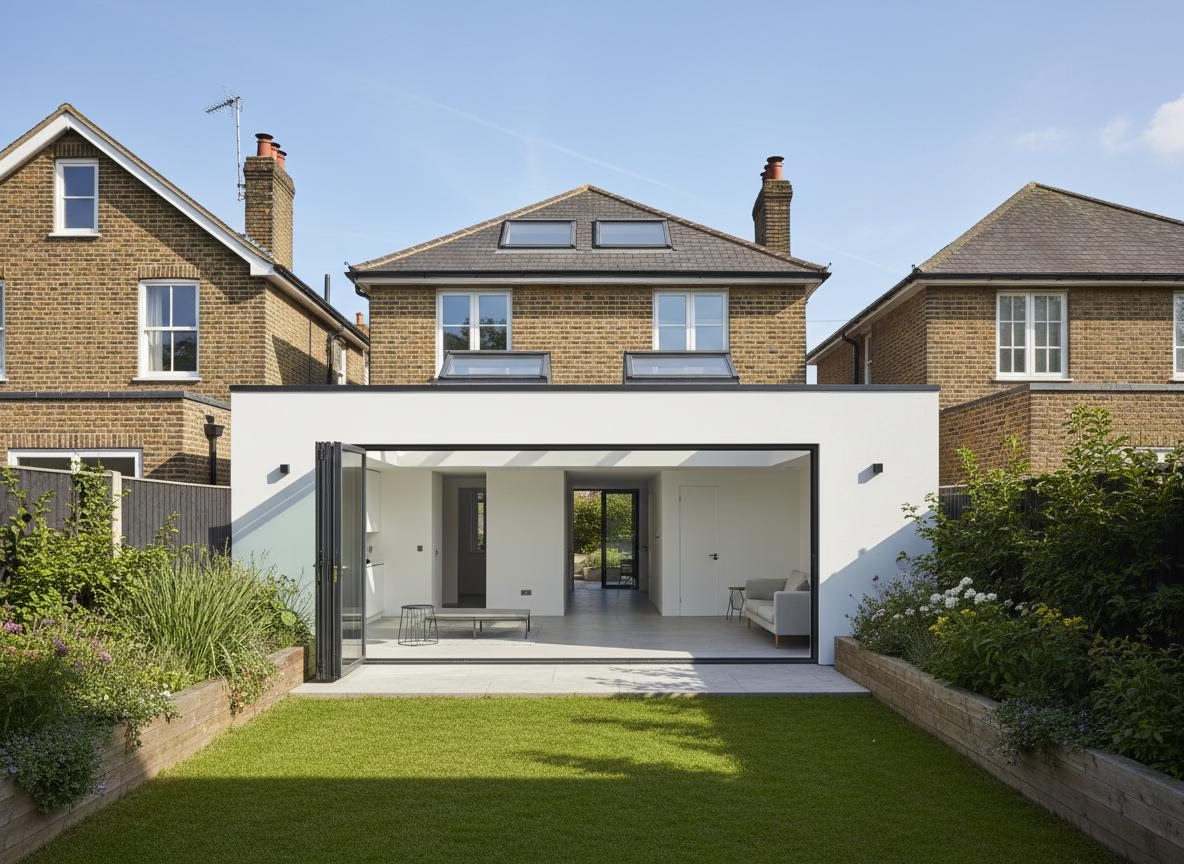
You have your extension designed, your planning sorted and your builder booked — and then someone mentions the drain running under your garden. If a public sewer sits beneath or close to your proposed extension, you may need a build-over agreement from your water company (Thames Water across most of London) before a single brick is laid. Miss it, and you risk delays, extra cost, or problems when you come to sell. Here is what you need to know.
What is a public sewer — and why it matters
A public sewer is a drainage pipe that serves more than one property. Since 2011, most of these shared pipes were transferred to the water companies, which means the drain crossing your garden may well be Thames Water’s responsibility even though it is on your land. If you build over or near it, they need to be satisfied that they can still access and maintain it, and that your foundations will not damage it. That is the whole point of a build-over agreement.
When you need a build-over agreement
As a rule of thumb, you will need to engage with the water company if your extension will be built directly over a public sewer, or within around three metres of one. Building Regulations require this to be dealt with, and building control will expect to see it addressed. If the only drains involved serve your property alone and connect nowhere else, they are private and a formal agreement generally is not required — but you should always confirm rather than assume, because getting it wrong is expensive to unpick later.
The Thames Water build-over process
The process usually runs like this:
- Check for a sewer. A drainage search or asset location plan shows whether a public sewer runs through your plot.
- Apply to Thames Water with your plans, submitting either a self-certified (lightweight) build-over or a full application depending on the sewer’s size, depth and proximity.
- Assessment. They review foundation design and access. A CCTV survey of the sewer before and after works may be required.
- Conditions or approval. They may impose conditions — protecting the pipe, keeping an access route, specific foundation designs — or, occasionally, refuse a build directly over a major sewer.
Building near a manhole or a large-diameter sewer is more involved than a small shared pipe, so identify what you are dealing with early.
Costs and delays — and how to avoid them
A straightforward self-certified build-over is inexpensive, but a full application, CCTV surveys and any special foundation design add cost and, more importantly, time. The single biggest mistake homeowners make is discovering the sewer late — after design and planning — and having to redraw foundations or reposition the extension. Check for public sewers at the design stage and the whole thing becomes a manageable bit of paperwork rather than a crisis.
How Fixiz helps
At Fixiz we flag drainage and public sewers early, when we survey your property for a house extension. We design foundations to suit, handle the build-over application and any conditions alongside your Building Regulations, and coordinate surveys so the sewer never becomes the thing that stalls your build. Get in touch with Fixiz today for a no-pressure chat and a free survey.
FAQ — build-over agreements
When do I need a build-over agreement?
Generally when your extension is built directly over, or within about three metres of, a public sewer — a drain serving more than one property. It is dealt with under Building Regulations.
How do I know if there’s a public sewer on my land?
A drainage search or asset location plan from the water company shows public sewers crossing your plot. It is best checked at the design stage.
Can Thames Water refuse to let me build over a sewer?
They can impose conditions or, for major or deep sewers, occasionally refuse a build directly over the pipe. Most small shared sewers can be built over with the right foundation design.
How long does a build-over agreement take?
A self-certified build-over is quick and cheap; a full application with CCTV surveys and special foundations takes longer, which is why it should be started early.
What happens if I build without one?
You risk enforcement, difficulty selling, and liability if the sewer is damaged or needs access. It is far cheaper to deal with it before you build.