
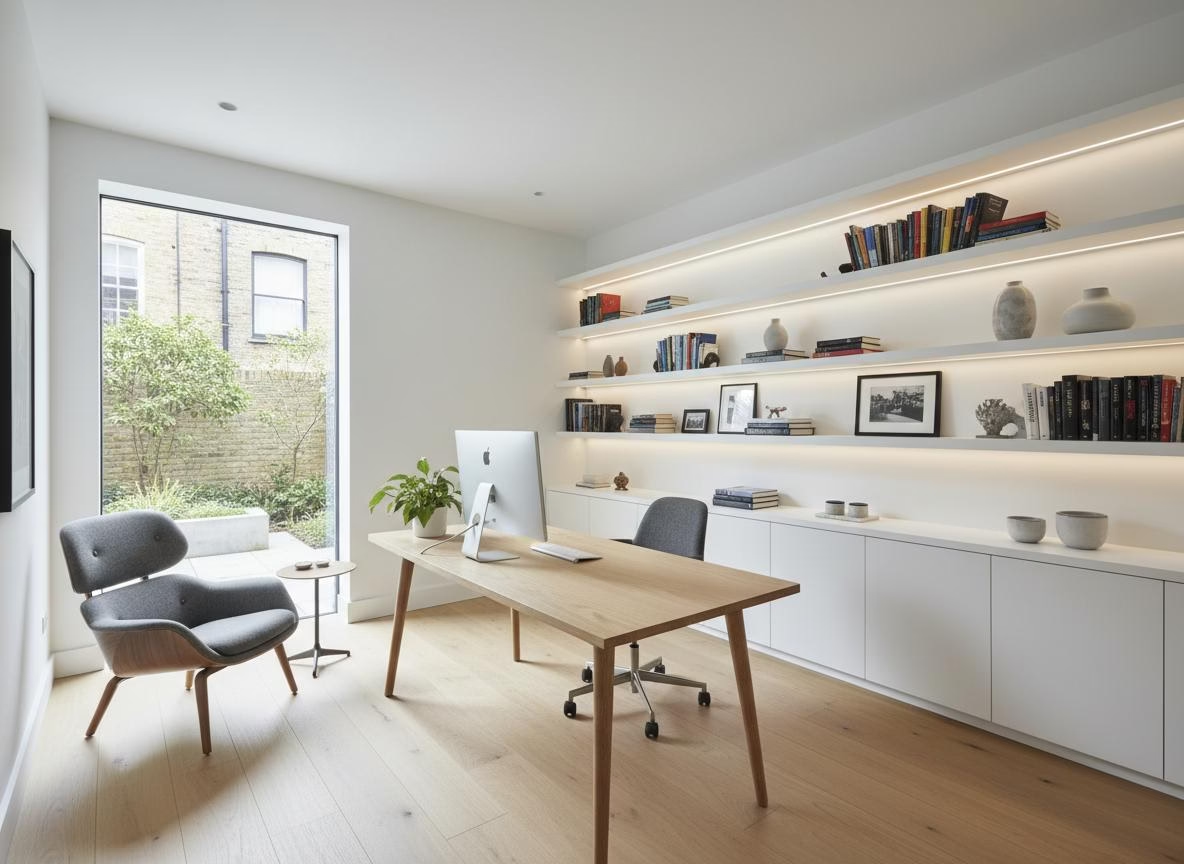
If you’re weighing up a garage conversion, the first worry we hear in London is blunt: “Will we regret giving up the garage once the novelty wears off?” We get it—on paper it’s ‘unused space’, but in real life it’s often where the pram, bikes, tools, freezer, paint tins and Christmas boxes live. In this guide we’ll show you how we help homeowners decide with confidence—so the finished room feels like an upgrade, not a compromise.
Start with the real trade-off—parking, storage and daily life
A garage conversion can be brilliant value, but only if it solves a problem you actually have. The biggest regrets we see usually come from underestimating what the garage was doing for the household—then trying to replace that function in more expensive ways later (like adding a shed, redoing the driveway, or living with clutter forever).
We start every project by mapping how you use the space today and what will change after the conversion. That sounds simple, but it prevents the classic “we didn’t think about that” moments that hit once the plaster is dry.
- Parking reality: If you currently rely on covered parking, ask whether you have enough off-street space without the garage—and what your road is like at 7pm on a weekday.
- Storage replacement: If the garage is mostly storage, decide where those items will go before you convert—loft boarding, built-in cupboards, a garden store, or a part-conversion that retains a lockable bay.
- Access and mess: Garages often take the ‘dirty’ jobs—DIY cutting, muddy bikes, paint prep. If you lose that, do you need a utility room, boot room, or a dedicated workbench area elsewhere?
- Noise and privacy: If the garage shares a wall with a neighbour or sits right on the front elevation, think about sound insulation and privacy—especially if the new room is an office or bedroom.
Tip: Before you commit, do a two-week “garage audit”. Put a strip of masking tape across the garage door and only break it when you genuinely need something from the garage. You’ll quickly see whether it’s dead space or silently essential.
Will converting the garage add value—or hurt resale?
Value is local. In some areas a garage is a major selling point; in others, buyers care more about an extra reception room, a home office, or a bigger kitchen. The risk isn’t the conversion itself—it’s doing a conversion that feels like an obvious compromise (dark room, cold floor, awkward access, or a front elevation that looks “filled-in”).
When we advise clients, we look at three value drivers: functionality, finish quality, and what buyers expect on your street. You don’t need to become a property investor—you just need to avoid the design decisions that scream “cheap conversion”.
- Functionality: A warm, bright room with proper heating and insulation feels like part of the house—not an afterthought.
- Kerb appeal: The front elevation matters. If you remove the garage door, the replacement must look intentional and match the home’s style.
- Parking expectations: If most homes nearby have driveways and people actually park on them, losing the garage is less of an issue than if street parking is a daily battle.
- Room choice: The best-value use is often a home office, playroom, snug, or utility—spaces buyers want but don’t always have.
There’s also a middle route that many homeowners overlook: a partial garage conversion. Keeping a narrow storage bay at the front can preserve practicality and buyer confidence while still giving you meaningful internal space.
Design decisions that prevent “conversion regret”
Regret usually comes from comfort issues. A garage is not built like a living room—floors are colder, walls may be single-skin masonry, and the space can feel gloomy. The good news is that these issues are solvable—but they need to be designed in from day one, not patched later.
We plan garage conversions with building-control-friendly details, but we also focus on how it will feel on a wet February morning and a hot July afternoon. That includes light, warmth, storage, and the way you move through the home.
- Warmth: Insulation isn’t optional if you want a room you’ll actually use year-round—walls, floor and ceiling all matter.
- Moisture control: Garages can be damp. Ventilation and vapour control prevent musty smells and mould later.
- Natural light: Replacing a garage door with a solid wall can create a cave. We often add a properly sized window or glazed door to transform the feel.
- Sound: If the garage shares a wall with a neighbour or sits under a bedroom, acoustic insulation is a comfort upgrade you’ll thank yourself for.
- Storage by design: If you don’t plan cupboards and built-ins, clutter will take over. A conversion is the perfect moment to build storage into the new room.
Tip: If the conversion is for an office, plan your power, data and lighting early. “We’ll add sockets later” often becomes surface trunking and messy extensions—exactly what you were trying to avoid.
Planning permission and Building Regulations—what usually catches people out
One reason garage conversions feel stressful is the paperwork. Homeowners often hear “it’s permitted development” and assume that means “no rules”. In reality, you may not need full planning permission, but you still need to meet Building Regulations for safety and performance—things like insulation, ventilation, electrics, fire safety and structure.
Typical catch-outs include changes to the front elevation, working in conservation areas, and failing to factor in professional fees. We advise clients to budget for the full picture, not just the building work.
- Planning vs permitted development: If you change the appearance of the house (especially the front), planning may be needed even when the internal work is straightforward.
- Building control: Even a simple conversion needs sign-off—because you’re turning a non-habitable space into habitable accommodation.
- Hidden costs: Drawings, council fees, structural engineer input, and electrical certification can add up if you haven’t planned for them.
At Fixiz, we don’t just “build the room”. We guide you through the compliance route so you’re not left with a finished space that’s difficult to insure, sell, or feel confident about.
How we run a garage conversion so it feels like part of the home
Our goal is simple: when you walk into the finished room, it should feel like it always belonged there. That comes from tight project management, clear specifications, and decisions made early—before the job site gets busy.
We typically help with survey and feasibility, design coordination, a clear scope of works, and a build programme that keeps disruption manageable. We also focus on quality control—because garage conversions can look fine in photos but feel ‘off’ if the details aren’t right.
- Feasibility first: We check the existing structure, damp risk, levels, and how the new room connects to the rest of the house.
- Comfort-led specification: Insulation, heating, ventilation, and lighting are designed from the start—not bolted on later.
- Clean finish: We match floor levels where possible and make sure the conversion integrates visually with adjacent rooms.
- Compliance confidence: Building control is treated as part of the process, not a last-minute scramble.
FAQ—garage conversion regrets, value and permissions
Will we regret converting our garage?
You’re most likely to regret it if you don’t replace the garage’s hidden functions—storage, messy jobs and easy drop-zone space. If you plan storage properly and design for year-round comfort, most homeowners tell us they wish they’d done it sooner.
Does a garage conversion add value in the UK?
It often can, but it’s street-by-street. A high-quality conversion that feels like a natural part of the home can be attractive to buyers—especially if it adds a useful room like an office or snug. The risk is reducing parking/utility without giving buyers a great alternative.
Do I need planning permission for a garage conversion?
Sometimes. Many conversions can fall under permitted development, but changes to the external appearance—especially the front elevation—or local restrictions can trigger planning. We recommend confirming early so you don’t lose time mid-project.
Do I need Building Regulations for a garage conversion?
Yes, if you’re turning it into habitable space. Building Regulations cover insulation, ventilation, electrics, fire safety and structural elements. Getting sign-off protects you when you sell and helps ensure the room performs properly.
Ready to move from confusion to construction? Get in touch with Fixiz today for a no-pressure chat about your project and the fastest route to a garage conversion you won’t regret.