
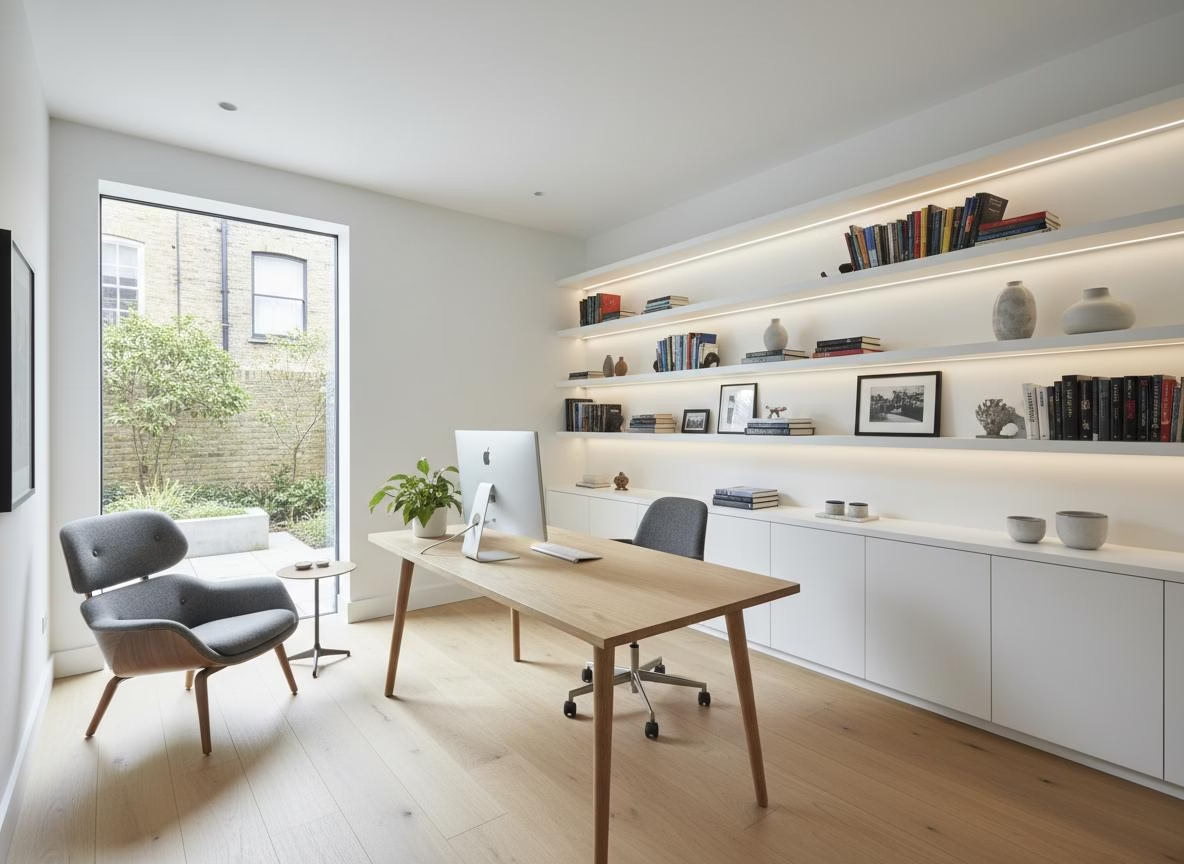
A garage was never built to be warm, so heating is one of the decisions that makes or breaks a conversion. Get it right and your new room is cosy and cheap to run; get it wrong and you have a beautiful space nobody wants to sit in during winter. The two main routes are extending your central heating or going electric — and the right answer depends on your boiler, your layout and your budget.
Why heating (and insulation) matter so much
Garages usually sit on external walls with a big door opening and minimal insulation, so they lose heat fast. Building Regulations require a converted garage to be properly insulated and heated, and getting the insulation right is what makes any heating system affordable to run. Insulation first, heating second — a well-insulated room needs far less heat however you provide it.
Option 1: Extend your central heating
Adding a radiator or wet underfloor heating fed from your existing boiler gives even, economical warmth that matches the rest of the house on one thermostat and bill. The catch is capacity and pipe runs: your boiler must be able to handle the extra demand, and pipework has to reach the garage sensibly. For an attached garage close to the existing system, this is often the best long-term option. A quick check of your boiler’s spare capacity tells you if it is viable.
Option 2: Go electric
Electric options — panel heaters, electric underfloor heating or infrared panels — are simpler to install, need no pipework, and are ideal where extending the wet system is impractical (a detached garage, a maxed-out boiler, or a home office used occasionally). Electric underfloor heating gives lovely comfort underfoot. The trade-off is higher running cost per unit of heat, which good insulation helps offset. For an intermittently used room, the low install cost can outweigh that.
Option 3: A heat pump / air-conditioning unit
An air-source mini-split (air conditioning that also heats) is efficient and gives both heating and summer cooling from one wall unit — increasingly popular for garage home-offices and gyms. Install cost is higher than a panel heater but running efficiency is good.
How to choose
Ask: Is the garage attached and near the boiler, with spare boiler capacity? Then extending central heating usually wins. Detached, occasional-use, or boiler at its limit? Electric or a heat pump often makes more sense. Whatever you pick, insulate to a high standard first — it is the cheapest “heating” you will ever buy.
How Fixiz helps
Fixiz handles the full garage conversion including insulation, heating and electrics with our in-house team. We assess your boiler capacity and layout, recommend the most cost-effective heating for how you will actually use the room, and deliver it all to Building Regulations with a fixed-price quote. Get in touch with Fixiz today for a no-pressure chat and a free survey.
FAQ — heating a converted garage
Can I put a radiator in my converted garage?
Often yes, if your boiler has spare capacity and pipework can reach the garage. It gives even, economical heat on the same system as the rest of the house.
Is electric heating a good idea for a garage conversion?
Yes, especially for detached garages or occasionally used rooms. It is simple to install with no pipework, though running costs per unit are higher, which good insulation offsets.
Do I need to insulate before heating?
Absolutely. Building Regulations require insulation, and a well-insulated room needs far less heat, making any system cheaper to run.
What’s the most efficient way to heat a garage conversion?
Extending an efficient central heating system is usually most economical where feasible; an air-source heat pump unit is a highly efficient electric alternative.
Does the heating need to meet Building Regulations?
Yes. A habitable garage conversion must meet insulation and heating standards, checked at Building Control sign-off.