
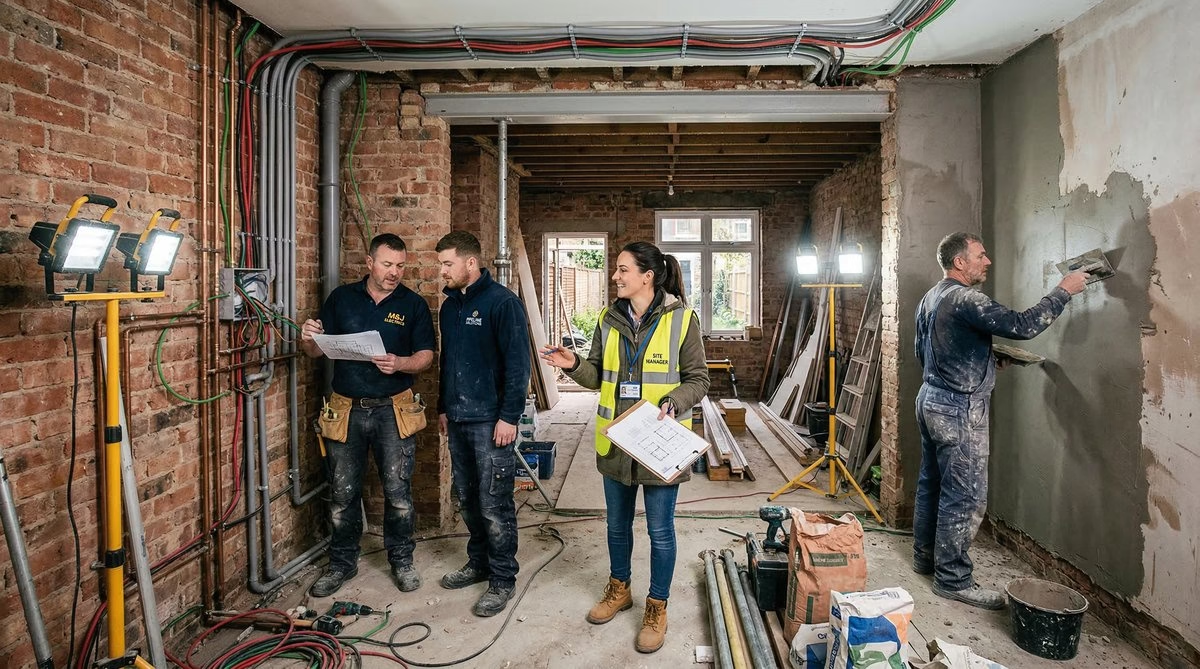
Ask any homeowner who has been through a full renovation what they wish they had known at the start, and the answer is almost always the same: order of works renovation UK projects live or die by. Get the sequence wrong and you will pay twice — sometimes three times — for work that has to be undone or completely redone. At Fixiz, we see the fallout from poor sequencing regularly, and we know that the anxiety of not knowing what goes first is one of the biggest barriers to getting started. This guide walks you through the correct order, explains first fix and second fix in plain English, and shows you exactly where projects go wrong.
Why the Order of Works Matters More Than Most Homeowners Realise
A house renovation is not a list of jobs you can tackle in any convenient order. Every trade depends on what came before it. Plasterers cannot skim a wall that still has cables to be routed. Tilers cannot fix to a surface a plumber will need to chase next week. Decorators cannot apply final coats while the carpenter is still fitting skirting. When the sequence breaks down, you get delays, damage to finished work, and — in the worst cases — work that has to be stripped out and started again.
We recently helped a homeowner in Catford who moved straight from structural work into decorating because their builder said plastering was “done enough.” Three weeks later, the electrician arrived for second fix and had to cut channels through freshly painted walls to install sockets in the correct positions. The decoration had to be redone in two rooms. A clear schedule of works would have cost nothing. The rework cost nearly £2,000.
The good news is that the correct sequence is well established. It follows a logical pattern — work from the outside in, from structure to finish, from hidden to visible. Once you understand the logic, the sequence makes intuitive sense and you will be able to hold your trades to account at every stage.
The standard order of works for a UK house renovation is:
- Strip-out and demolition — remove everything you are not keeping.
- Structural work — floors, ceilings, walls, steel beams, lintels.
- Roofing and external envelope — roof, windows, external doors, render, cladding.
- First-fix plumbing and electrics — all the hidden infrastructure.
- Plastering and screeding — the point of no return for first-fix work.
- Second-fix plumbing and electrics — all the visible fittings.
- Joinery and carpentry second fix — doors, skirting, architraves.
- Kitchen and bathroom fit-out — units, sanitaryware, tiling.
- Decoration — painting and wallpapering.
- Flooring — hard floors, carpet, vinyl.
- Snagging — the final check of everything.
Tip: Write this list on a single sheet and pin it to the wall on site. Any trade who suggests doing their work in a different order needs to give you a very good reason why.
First Fix vs Second Fix — Explained in Plain English
The terms first fix and second fix cause more confusion than almost any other building phrase. They are straightforward once you understand the principle.
First fix is everything that goes inside the building fabric — inside walls, under floors, above ceilings — before plastering happens. For an electrician, that means running cables and installing back boxes. For a plumber, it means running hot and cold water pipes, central heating flow and return, and soil and waste stacks. No visible components are fitted at this stage — no switches, taps, or radiators. Just hidden groundwork.
Second fix is everything installed after plastering is complete and dry. Electrician fits sockets, switches and light fittings, then tests and certifies. Plumber fits radiators, connects the boiler, installs sanitaryware, and pressure-tests. Carpenter hangs doors and fits skirting, architraves, and built-in joinery.
Plastering acts as the clean break between the two phases. Wet skim plaster produces substantial moisture and takes days to dry, so delicate fittings cannot be on site and need a smooth finished surface to fix to. In our experience across South London, the trades who work most efficiently plan their first-fix layout with second fix already in mind — dropping cables to correct finished-floor heights rather than wherever is easiest to route.
Phase by Phase — What Happens at Each Stage
Strip-Out and Structural Work
Every renovation begins with demolition. Everything you are not keeping must come out — old kitchen units, bathroom suites, carpets, wallpaper, redundant pipework and wiring. Plan skip hire and site access before work starts. Structural work follows immediately: steel beams for knocked-through rooms, new lintels, any changes to load-bearing walls or floor structure. All structural work requires sign-off from a structural engineer and Building Control inspection.
Tip: Strip out all redundant wiring and pipework now. Doing it later, around finished plaster, is significantly harder and more expensive.
Roofing and External Envelope
Before any internal first-fix work begins, the building must be weathertight. Running pipework in a building with a leaking roof or missing windows invites water ingress, damp problems, and delayed plastering. Roof repairs or replacement, new windows, external doors, and render or cladding must be complete — or at minimum watertight — before the internal programme begins.
First-Fix Plumbing and Electrics
With a weathertight, structural shell, the first-fix trades move in. Electrician and plumber are often on site simultaneously, which requires coordination. The electrician needs confirmed socket and switch positions, kitchen appliance layouts, and bathroom towel rail locations. The plumber needs confirmed bathroom layouts, kitchen sink positions, and boiler location. Every design decision not made before first fix begins has a cost — changes after the fact mean reworked cable runs and pipework.
We worked with a homeowner in Lewisham who changed the position of a kitchen island after the electrician had already run cables to the original location. Relocating the circuits added a day of labour and a new section of plasterboard — entirely avoidable with a finalised layout at the planning stage.
Plastering and Floor Screeding
Plastering is the watershed moment of any renovation. Once the walls are skimmed, first fix is permanently sealed inside the building. Before the plasterer arrives, walk the site with your electrician and plumber and verify every position. Confirm that underfloor heating coils are correctly laid so screed can follow immediately to protect them from site traffic. New plaster needs at least four weeks to dry fully before decoration begins — painting over wet plaster leads to peeling and staining. Use the drying period to plan and order second-fix materials.
Second-Fix Plumbing and Electrics
Once plaster is dry, the second-fix trades return. The electrician fits sockets, switches, light fittings, extractor fans, TV and data points, and then tests and certifies the installation. The plumber fits radiators, connects the boiler, commissions the heating system, installs sanitaryware, and pressure-tests the pipework. Leaks found at this stage must be rectified before tiling or flooring begins — a leak under tiles means the tiles come up, no exceptions.
Tip: Always pressure-test plumbing before tiling in a bathroom or kitchen. A leak discovered under tiles means the tiles come up. There is no way around it.
Joinery, Kitchen and Bathroom Fit-Out
Second-fix carpentry — hanging internal doors, fitting skirting and architraves — typically overlaps with kitchen and bathroom installation. Units are installed, worktops cut and fitted, and the electrician and plumber return briefly to make final connections. Tiling in bathrooms and kitchens follows once units and sanitaryware are confirmed in their final positions.
Decoration, Flooring and Snagging
Decoration should be the last substantial trade on site before flooring goes down. Painters work in completed rooms where no other trade will return. Hard flooring goes in after painting. Carpet and vinyl are last of all. Once the building is as complete as possible, carry out a methodical snagging walk-through: every room, every fitting, door, switch, and tap checked against the agreed standard, with any deficiencies noted for each trade to remedy.
How to Coordinate Multiple Trades — and What Goes Wrong
The most common cause of sequencing problems is not ignorance of the correct order — it is poor communication between trades. Each tradesperson knows their own phase of the work well. What they often do not know is what other trades need from them before they can proceed. It is the project manager’s job — whether that is a professional PM, your main contractor, or you as the client — to maintain a live schedule and keep everyone informed.
Common coordination failures we see include:
- Tiling before plumbing pressure tests: Tiles go over pipework that has not been tested. A leak is discovered weeks later and the tiles have to come up.
- Painting before plumbing second fix: The plumber returns and needs to access areas that have just been decorated. Walls get marked or damaged.
- Flooring before kitchen fitting: The kitchen fitter drags heavy units across a finished floor and causes damage.
- Plastering before all first-fix work is complete: A trade arrives for first fix to find the walls already skimmed. The plaster has to be hacked off and made good.
- Skirting before decoration: The painter has to carefully cut around fitted skirting rather than painting straight to bare wall — slow and less clean.
In our experience, the single most effective tool for avoiding these problems is a written schedule shared with every trade before they arrive on site. It does not need to be a complex Gantt chart — a one-page document with phases, approximate dates, and the key dependencies is enough to prevent the majority of coordination failures.
Realistic Timelines for a UK House Renovation
Homeowners routinely underestimate how long a full renovation takes. A whole-house project on a typical three-bedroom Victorian terrace takes a minimum of four to six months on site, and often longer where structural work is significant or Building Control approvals cause delays. Individual phases break down roughly as follows:
- Strip-out and structural: one to three weeks, depending on scope.
- Roofing and external envelope: one to three weeks.
- First-fix plumbing and electrics: one to two weeks.
- Plastering and screeding: one week to complete, four weeks to dry fully.
- Second-fix trades: two to three weeks across all trades.
- Kitchen and bathroom fit-out: one to two weeks.
- Decoration: one to three weeks.
- Flooring and snagging: one week.
These phases often overlap where the building has multiple rooms or floors, which shortens the overall programme. But never eliminate the drying time after plastering — it is not a phase you can compress.
Living in the Property During a Renovation
Whether you can live in the property during works depends on the scope. For a full-house strip-out involving structural work, loss of heating and hot water, and substantial dust, living on site is generally not practical. For a more targeted project — say, a bathroom and kitchen renovation in an otherwise habitable house — it is feasible but requires careful planning. Discuss with your contractor which areas will be sealed off, how bathroom access will be maintained during fit-out, and how long you will be without hot water and cooking facilities. In our experience, underestimating the disruption of living through a renovation leads to client pressure that causes trades to rush — and rushed trades make sequencing errors.
Tip: If you are living in the property, ask your contractor to complete one usable bathroom before progressing to the rest of the works. It makes day-to-day life significantly more manageable and removes the pressure to rush the fit-out phase.
How Fixiz Keeps Your Renovation on Track
At Fixiz, we deliver multi-trade renovation projects across London with a focus on programme discipline. We do not hand homeowners a list of separate trades and leave them to coordinate the sequence themselves — that is how projects fall apart. Instead, we maintain a live schedule of works from the moment we are appointed, shared with every trade on site.
We recently managed a full house renovation in Greenwich where the homeowner had already suffered from a contractor who plastered over incomplete first-fix work. We stripped back the affected areas, completed the first fix correctly, and replastered — adding three weeks to a project that should never have reached that stage. Our approach now includes a formal first-fix sign-off inspection before any plasterer arrives on site. Every cable run, pipe position, and back box is checked against the drawings before plaster covers them permanently.
We also give clients a plain-English programme document at project start — a clear week-by-week outline of what is happening, when each trade arrives, and what decisions the client needs to make at each stage. Renovation anxiety almost always comes from not knowing what comes next. We try to remove that uncertainty entirely.
Frequently Asked Questions
What is the correct order of works for a house renovation in the UK?
Strip-out and demolition, structural work, roofing and external envelope, first-fix plumbing and electrics, plastering and screeding, second-fix plumbing and electrics, joinery second fix, kitchen and bathroom fit-out, decoration, flooring, and snagging. Following this sequence prevents costly rework and damage to finished surfaces.
What is first fix in building work?
First fix is the hidden infrastructure installed inside walls, floors, and ceilings before plastering. For electricians: cabling and back boxes. For plumbers: pipework and soil stacks. Nothing visible is fitted at this stage — plastering seals it all in and marks the end of the phase.
What is second fix in building work?
Second fix is everything installed after plastering is complete: sockets, switches, light fittings, radiators, bathroom suites, boiler connections, doors, skirting boards, and kitchen units. It all happens in dry, near-finished conditions.
Can you tile before second-fix plumbing is done?
No. Pipework must be pressure-tested and confirmed leak-free before any tiling begins. A leak found under finished tiles means the tiles come up, the leak is repaired, and the tiles are relaid — an expensive and entirely avoidable mistake.
How long does a full house renovation take in the UK?
A typical three-bedroom house renovation takes a minimum of four to six months on site, not counting the planning and permissions period. Plaster drying alone adds four weeks that cannot be rushed. Compressing the programme increases the risk of rework and additional cost.
Do I need to move out during a house renovation?
For a whole-house renovation with structural work and loss of services, moving out is the most practical option. For more targeted projects, living in the property is possible if at least one bathroom remains functional and the programme has been discussed in detail with your contractor.
What is snagging in a renovation?
Snagging is the final inspection once all trades have finished. You walk through every room checking each fitting, door, switch, tap, and finish against the agreed standard. Any shortfalls are listed for the responsible trade to remedy before final sign-off.
Ready to move from confusion to construction? Get in touch with Fixiz today for a no-pressure chat about your project and the fastest route to full compliance.