Physical address:
128 City Road, EC1V 2NX, London,UK

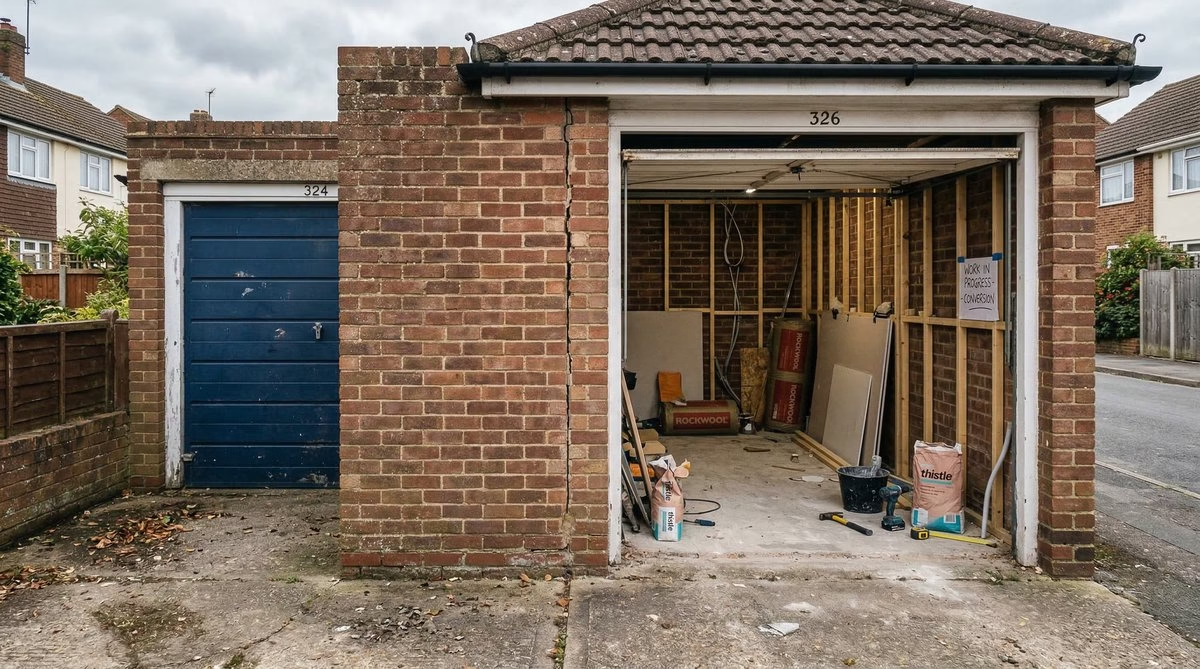
Converting a garage or loft is one of the most cost-effective ways to add space to a home—but the legal side catches homeowners off guard more often than you might expect. The question we hear regularly is some version of: do I need a party wall notice garage conversion—and what does that actually involve? The answer is not a simple yes or no. It depends on whether your garage or loft shares a genuine party wall with your neighbour, what work is being done on that wall, and whether any structural elements are being inserted into or loaded onto it. Get this wrong and you risk injunctions, delays, and neighbourly disputes at the worst possible moment.
What Is a Party Wall—and Why Does It Matter for Conversions?
Under the Party Wall etc. Act 1996, a party wall is any wall that stands on the boundary between two properties and is used by both owners—either as part of their buildings or to separate them. This covers the classic shared wall in a semi-detached or terraced house, as well as walls that sit wholly on one owner’s land but physically support or enclose a neighbour’s structure. The Act applies throughout England and Wales and is entirely separate from planning permission—you can have full permitted development rights for your conversion and still be required to serve a party wall notice before structural work begins.
For garage and loft conversions, the party wall question arises because these projects often involve work on or close to a boundary wall. The critical distinction—one that many homeowners miss—is whether the wall in question genuinely qualifies as a party wall, or whether it is simply a wall that happens to touch a neighbour’s wall without actually being shared.
We recently helped a homeowner in Bromley who had gone to a builder convinced he did not need a party wall notice because “the garages are separate structures.” Once we looked at the deeds and the physical arrangement, it turned out the dividing wall between the two garages sat astride the boundary—making it a party wall in the full legal sense. The notice had to be served before any structural work could begin. Getting that right early saved weeks of delay.
When a Garage Conversion Triggers a Party Wall Notice
The most common scenario that triggers the Act during a garage conversion is where you live in a semi-detached or terraced property and your attached garage shares a dividing wall with your neighbour’s garage. This wall—if it sits on or straddles the boundary between the two plots—will almost certainly be a party wall.
Work requiring a notice includes:
- Cutting into the wall: Installing a lintel, beam, or joist that bears into the shared wall at any depth.
- Raising the wall: Building the dividing wall higher to suit a new roof line.
- Inserting a damp-proof course: Any damp treatment that involves cutting into the shared wall.
- Demolishing and rebuilding: Even if you intend to rebuild like-for-like, notice must be served first.
- Changing load distribution: Any work that alters how weight bears on the party wall.
A two-month notice period under Section 2 of the Act applies in all of these cases. The clock starts when your neighbour receives the notice—not when you send it—and work cannot begin until that period has elapsed and agreement has been reached (or an Award made).
Tip: Even if your neighbour is perfectly happy with the work, the correct response is a written consent, not a verbal agreement. A verbal “yes” provides no protection if something goes wrong during the build.
When a Loft Conversion Triggers a Party Wall Notice
Loft conversions are the project type most consistently requiring party wall notices—particularly in terraced and semi-detached homes. Even a straightforward conversion in a Victorian terrace is likely to involve the shared party wall in one or more of the following ways:
- Steel beam insertion: The most common trigger. Structural engineers designing a loft floor almost always specify RSJs that bear into the party wall. Cutting into the wall to receive those beams requires a notice under Section 2.
- Raising the party wall: A mansard or hip-to-gable conversion typically requires the party wall to be built higher—Section 2 work requiring a two-month notice.
- Loading a party wall: Placing new structural elements that transfer load onto the shared wall—even without cutting into it—may bring the Act into play.
- Removing a chimney breast: Where the chimney breast is part of the party wall, removal is covered.
- Weatherproofing a dormer: Applying flashing or sealing between a new dormer and the party wall is classed as party wall work.
In our experience across South London, steel beam insertion is the trigger that catches homeowners most by surprise. Architect’s drawings are approved, the builder is booked, and then someone points out that the RSJs need to be pocketed into the party wall—requiring a notice that should have been served two months earlier.
Tip: Ask your structural engineer or architect at the very beginning of the design process whether any beams will bear into the party wall. That gives you time to serve notice early without delaying the build.
When a Party Wall Notice Is NOT Required
Not every garage or loft conversion triggers the Act. Understanding the clear exceptions saves unnecessary cost and time.
- Detached garage with a physical gap: If your garage stands entirely on your own land and structures are physically separate, there is no party wall. What matters is whether the dividing wall straddles the boundary—not how close the buildings are.
- Loft work that does not touch the party wall: Entirely internal work—reconfiguring ceiling joists, insulating between rafters, internal partitions—where nothing bears onto or cuts into the shared wall requires no notice. Some end-of-terrace conversions can be designed to avoid the party wall altogether.
- Minor works: Plastering, electrical work, fixing shelving, painting, or minor drilling are excluded. The test is whether the work could affect the structural strength of the shared wall.
- Wholly separate structures: Where both garages were built with their own independent walls that simply abut, the Act does not apply—the “touching walls” situation covered in the next section.
The “Touching Walls” Mistake—and How to Avoid It
One of the most common misconceptions we encounter is the assumption that walls touching each other must automatically form a party wall. In practice, particularly on post-war suburban estates, two semi-detached garages are often built with each owner’s own brick wall—constructed to meet at the boundary. The walls touch, or even sit flush against each other, but they are structurally independent. Neither relies on the other for support, and the Act does not apply to work on your own wall.
You cannot assume this without evidence. Check the original building plans or deeds, look at the wall construction—one leaf of brickwork serving both garages, or two separate leaves?—and if necessary, seek the view of a structural engineer or party wall surveyor.
We recently had a client in Lewisham who was told by a contractor that his garage wall was definitely a party wall and that a notice was required. We reviewed the build records and confirmed that both garages had their own independent walls, constructed back-to-back. No notice was needed, and the conversion could proceed immediately. That initial professional check saved him the cost of a surveyor and at least two months of waiting.
The opposite error is equally dangerous. Homeowners who assume their attached garage has two separate walls when the whole structure was built on a single shared party wall face injunctions and potential liability for any damage if they proceed without notice.
Tip: When in doubt, a single consultation with a qualified party wall surveyor—often available for a fixed fee—is money well spent before you commit to a start date.
Can You Serve the Notice Yourself—and Should You?
Yes, you can. The Act allows you, as the Building Owner, to draft and serve the notice yourself using the standard form templates available from the Planning Portal—no surveyor required. If your neighbour consents in writing within 14 days, you can proceed without appointing any surveyors at all, though taking dated photographs of the party wall condition beforehand is strongly advisable.
However, there are real risks to serving the notice yourself:
- Invalid notice: A valid notice must include both parties’ names and addresses, a description of the works, the intended start date with the correct notice period, the relevant section of the Act, and the options available to the adjoining owner. Missing any of these can invalidate it.
- Wrong section cited: Serving a Section 6 excavation notice when Section 2 party structure notice is required forces the process to restart, adding months to your project.
- You cannot represent yourself if dissent arises: If your neighbour dissents, you must appoint a qualified surveyor—you cannot act as your own. Starting without professional support can end up costing more than engaging a surveyor from the outset.
- No schedule of condition: A professionally served notice includes a documented record of the neighbour’s property before works begin. Without it, proving which damage (if any) was caused by your work becomes very difficult.
Our view is pragmatic: if the conversion is straightforward, the relationship with your neighbour is good, and you are comfortable reading the Act carefully, self-service is viable. For anything involving structural work on a shared wall—which most garage and loft conversions do—engaging a surveyor from the start protects everyone and avoids a poorly drafted notice unravelling the process later.
Agreed Surveyor vs. Two Surveyors—What It Costs and What to Choose
Where a formal Award is needed—because the neighbour dissents or because you want the protection of a documented agreement—there are two routes under the Act:
- Agreed Surveyor: Both you and your neighbour jointly appoint a single impartial surveyor who acts for both parties. This is the more cost-effective route. For a loft conversion, an agreed surveyor typically charges between £900 and £1,200 to produce the Award and schedule of condition, according to current market rates. For a garage conversion (generally a simpler structural scenario), fees at the lower end of this range—or even below—are achievable.
- Two Surveyors: You appoint your own surveyor and your neighbour appoints theirs. The Building Owner (you) pays both sets of fees. Where the two surveyors cannot agree, a third—the Third Surveyor named at the outset—is called in to determine the dispute, adding further cost. Total fees for the two-surveyor route on a loft conversion can reach £1,800 to £2,400, and on more complex projects considerably more. If the process becomes protracted, costs can exceed £5,000.
The agreed surveyor route is almost always preferable on cost and speed. The concern that a single surveyor will favour the paying party is legally unfounded—surveyors have a statutory duty to act impartially. The two-surveyor route tends to arise where the relationship has already broken down; the cost, however, lands with the Building Owner either way.
Tip: Introduce the idea of an agreed surveyor early and frame it clearly: it saves time and money for everyone, and the surveyor’s duty of impartiality is built into the Act itself. Neighbours who understand this almost always agree.
How Fixiz Keeps Your Conversion Legally on Track
At Fixiz, party wall obligations are something we factor in from the very first site visit. The projects that run smoothest are those where the party wall position is confirmed before the builder is booked—not after the scaffolding is up.
We assess whether your planned work triggers the Act, identify the correct notice type and period, and advise on whether self-service suits your situation. Where a formal Award is needed, we connect you with qualified party wall surveyors working at transparent, fixed-fee rates.
We recently helped a homeowner in Catford who was convinced her semi-detached loft conversion did not involve any party wall issues—her architect had not flagged anything. When we reviewed the structural engineer’s specification, four steel beams were shown bearing into the party wall. We served notice the same week, and the two-month period ran concurrently with the rest of the design process—so the structural work started on schedule without a day of avoidable delay.
We also worked with a client in Peckham whose builder had confidently told him a party wall notice was unnecessary because “the work is all internal.” Internal it may have been, but the new loft floor’s steel frame transferred load onto the shared wall—textbook Section 2 work. Notice was served, the neighbour consented within a week, and the project moved forward cleanly.
Frequently Asked Questions
Do I need a party wall notice just because my garage wall touches my neighbour’s garage wall?
Not necessarily. Walls that physically touch are not automatically party walls. If both garages were built with their own independent walls that simply abut each other, the Act may not apply to work on your own wall. A party wall surveyor can confirm the position from building records and the physical construction.
My loft conversion is entirely internal. Do I still need a party wall notice?
If no structural work bears onto, cuts into, or alters the party wall, a notice may not be required. However, most loft conversions in terraced and semi-detached houses do involve the party wall—particularly where steel beams carry the new floor structure. Confirm this with your structural engineer at design stage.
How much does a party wall agreement cost for a garage conversion?
Garage conversions are structurally simpler, so costs tend to be at the lower end. Using an agreed surveyor, expect fees of roughly £700 to £1,000 for the Award and schedule of condition. If your neighbour insists on their own surveyor, you pay both sets of fees, and costs can rise to £1,500 or more. Serving the notice yourself, where your neighbour consents in writing, costs nothing.
Can my neighbour stop my conversion by refusing to agree to a party wall notice?
No. Dissent triggers the surveyor appointment process and results in a Party Wall Award—a binding document setting out how the work may proceed. The work can go ahead in accordance with the Award. A neighbour cannot veto the project; that is a planning matter, not a party wall one.
What happens if I start work without serving the required notice?
Your neighbour can apply for an injunction to halt work immediately. Without a schedule of condition, any dispute about damage becomes very difficult to resolve. Retrospective awards are possible but procedurally messy, and you may face damage claims with no documented baseline to defend against.
Is the Party Wall Act the same as planning permission?
No. They are entirely separate regimes. Full planning permission or permitted development rights do not remove party wall obligations, and you may need to serve notice for work that requires no planning permission at all. Both must be addressed independently before your project starts.
Ready to move from confusion to construction? Get in touch with Fixiz today for a no-pressure chat about your project and the fastest route to full compliance.