Physical address:
128 City Road, EC1V 2NX, London,UK

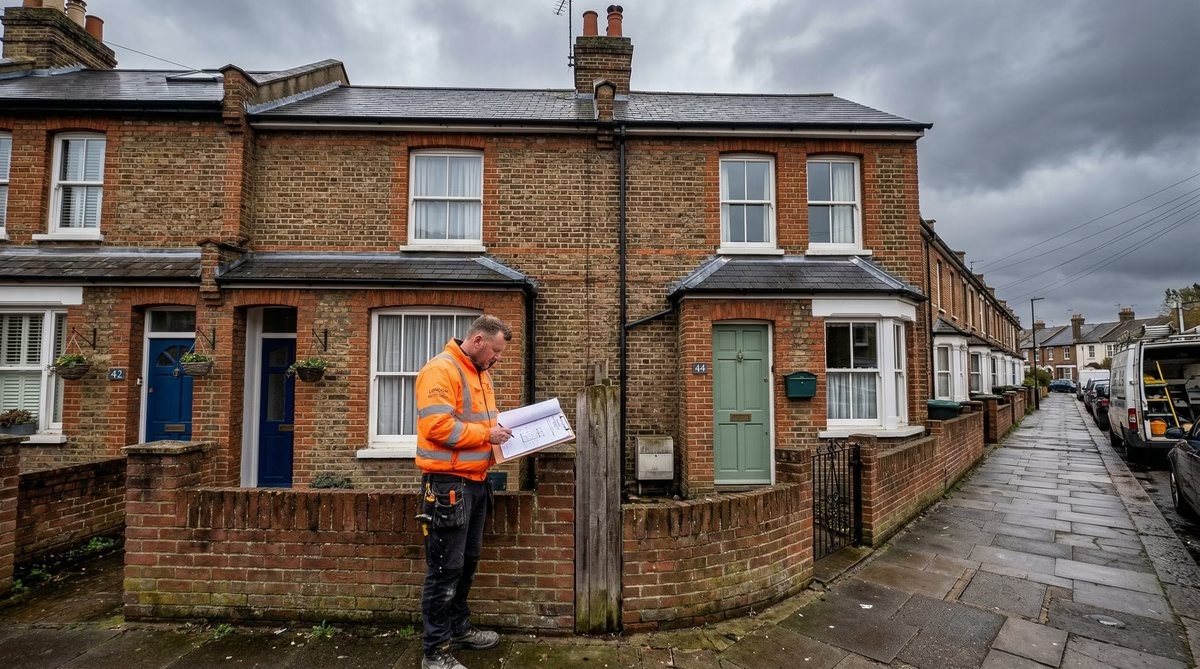
You’ve served the notice, waited the required period, and now your neighbour refuses party wall notice — or simply isn’t responding. It’s one of the most stressful situations a homeowner can face when preparing for a building project. The good news is that a refusal or silence does not give your neighbour the power to stop your work. The Party Wall etc. Act 1996 has a clear, well-established process for exactly this situation, and knowing how it works — and what the realistic timelines look like — will help you keep your build on track rather than letting it drift into months of delay.
What the Party Wall etc. Act 1996 actually says about refusal
The Party Wall etc. Act 1996 is a piece of legislation that many people misunderstand. It is not a planning law. It does not give neighbours the right to veto your works. What it does is establish a formal process for managing potential disputes about works that affect a shared wall, boundary, or the excavation near a neighbouring foundation.
When you serve a party wall notice, your neighbour has three options:
- Consent in writing: they agree to the works, the Act’s dispute resolution process is not needed, and you can proceed (subject to the Act’s other requirements).
- Dissent and agree to appoint a surveyor: this triggers the formal dispute resolution process — surveyors are appointed, a Party Wall Award is prepared, and works can proceed under its terms.
- Do nothing: after 14 days of receiving the notice (for Section 3 notices) or 10 days (for Section 1 notices), silence is treated as dissent, and the dispute process begins automatically.
The critical point: dissent does not mean refusal of the works. It means the works must be managed under a formal Party Wall Award rather than by informal agreement. The Award sets out the rights and protections for both parties — it typically includes a schedule of condition of the neighbour’s property before works begin, access provisions, working hours, and details of what happens if damage occurs.
What happens next — the surveyor appointment process
Once your neighbour dissents (or is deemed to have dissented through non-response), a party wall dispute is formally “in dispute” under the Act. The next step is surveyor appointment — and this is where the process often confuses people.
Option 1: Agreed surveyor
Both parties appoint the same single surveyor — known as the “agreed surveyor” — who acts impartially for both. This is usually the most cost-effective and fastest route. The agreed surveyor prepares the Party Wall Award, which both parties receive. Costs are typically paid by the building owner (you), but the agreed surveyor can apportion costs differently if the circumstances warrant it.
Option 2: Two surveyors
Each party appoints their own surveyor. Your surveyor and your neighbour’s surveyor then prepare the Award jointly. If they cannot agree, they appoint a third surveyor whose decision is binding. This route is slower and more expensive — your neighbour’s surveyor fees are generally paid by you as the building owner — but it provides both parties with independent representation.
Tip: If your neighbour dissents and immediately appoints a surveyor, or if the relationship is already fractious, two surveyors is usually unavoidable. If the relationship is neutral and you can approach your neighbour about an agreed surveyor, it will save time and money for everyone.
What if my neighbour refuses to appoint a surveyor?
This is where the Act’s teeth become visible. If your neighbour refuses to appoint a surveyor within 10 days of you requesting that they do so, Section 10(4) of the Act allows you to appoint a surveyor on their behalf. You write to your neighbour informing them that you will appoint a surveyor for them if they do not do so within 10 days, and if they still do not act, you appoint one yourself.
This provision exists precisely to prevent a neighbour from using inaction as a blocking tactic. The Act assumes that both parties are entitled to fair representation and that the process must be able to conclude even if one party refuses to engage.
Realistic timelines — from dissent to Award
One of the most common questions we hear at Fixiz is: “How much will this delay my project?” The answer depends on which route is taken, how co-operative your neighbour is, and how complex the works are.
- Notice period: most party wall notices require a minimum 2-month notice period before works can begin (1 month for Section 1 notices about new walls on the boundary).
- Dissent response window: your neighbour has 14 days from receipt of the notice to respond. After that, they are deemed to have dissented.
- Surveyor appointment: once dissent is established, both surveyors should be appointed within 10–14 days (if an agreed surveyor route is taken) or shortly after.
- Schedule of condition: surveyors inspect and photograph the neighbour’s property to record its pre-works condition. This typically takes 1–2 visits and a week or two to document formally.
- Award preparation: a straightforward Award — for a standard rear extension, for example — can typically be prepared and served within 4–6 weeks of surveyors being appointed.
- Total from notice to works start: in a smooth case, 3–4 months from the first notice to being able to commence notifiable works. In a contested case, 5–6 months or more.
The most important thing you can do to compress these timelines is to serve notices early — ideally well before you need groundworks to start. We always advise clients to serve party wall notices as soon as planning permission is granted or as soon as the design is fixed enough to know what notifiable works are required.
Common mistakes that extend timelines — and how to avoid them
The party wall process is a legal procedure and it has to be followed precisely. The following mistakes cause delays that are entirely avoidable:
- Serving the notice at the wrong address: the notice must be served at your neighbour’s last known address. If they rent out the property, you may need to serve it on the owner, not the tenant. Errors here can invalidate the notice and require you to start the clock again.
- Using an informal notice template: party wall notices must include specific information required by the Act. Using a generic template from the internet without checking it meets the legal requirements is risky. We always recommend using a qualified party wall surveyor or solicitor to prepare notices.
- Starting works before the Award is served: this is an extremely serious mistake. Works that begin before a valid Award is in place are unlawful under the Act, and your neighbour can obtain an injunction to stop them. Starting too early can result in works being paused, legal costs, and a damaged relationship with your neighbour.
- Assuming dissent means no: many building owners hear “dissent” and panic, sometimes leading to costly design changes or project delays that were never necessary. Dissent means the formal process applies. It does not mean the works are refused.
- Not commissioning a schedule of condition: even where both parties are on good terms, skipping the schedule of condition leaves you exposed. Without a documented pre-works record of your neighbour’s property, any claim for damage — however minor — becomes a “your word against mine” situation.
What a Party Wall Award contains — and what it protects
For anyone who has not been through this process before, it’s worth understanding what a Party Wall Award actually is. It is a legally binding document, not just a letter of comfort. It sets out:
- The scope of works: precisely what is permitted under the Award.
- Working hours and access: when your contractors can work and how they access the neighbour’s side if needed.
- Schedule of condition: the photographic and written record of your neighbour’s property before works begin, which forms the baseline for any damage claims.
- Damage resolution procedure: how any damage caused by the works will be assessed and remedied.
- Security for expenses: in some cases (usually larger or more complex projects), your neighbour can ask for a financial security to be lodged against the cost of potential damage.
An Award cannot be appealed to the courts on the merits of the works themselves — only on procedural grounds or questions of law. This is a deliberate design: the Act is meant to resolve disputes through the surveyor process, not through litigation.
How Fixiz keeps your project moving through the party wall process
At Fixiz, we manage party wall matters as part of our end-to-end project management service. We don’t just hand you a list of surveyors and leave you to it — we co-ordinate the notice process, liaise with surveyors on both sides, and ensure that the Award is in place before any notifiable works begin.
We’ve navigated difficult neighbour relationships, unresponsive adjoining owners, and complex multi-neighbour situations (for example, where an extension affects two properties). Our experience means we know which approaches de-escalate tension and which inadvertently make it worse.
If you are facing a situation where your neighbour is actively hostile — threatening injunctions or commissioning their own structural surveys to challenge your works — we can help you understand your legal position and connect you with party wall solicitors when that level of support is needed.
Frequently asked questions
Can my neighbour stop my building works entirely by refusing the party wall notice?
No. A neighbour cannot veto works that are lawfully permitted under planning law or permitted development. Dissenting under the Party Wall Act triggers a formal dispute resolution process, but it does not give your neighbour the power to refuse your project. The outcome of that process — a Party Wall Award — sets conditions for how the works proceed, not whether they proceed.
What happens if my neighbour ignores the notice completely?
Silence counts as dissent after 14 days. This triggers the dispute resolution process exactly as if they had formally dissented. You then write requesting they appoint a surveyor within 10 days. If they still don’t respond, you can appoint a surveyor on their behalf. The process continues regardless of their co-operation or lack of it.
Do I have to pay my neighbour’s surveyor fees?
Generally, yes — as the building owner carrying out the works, you are responsible for the reasonable fees of the adjoining owner’s surveyor. “Reasonable” is the key word: if your neighbour appoints a very expensive specialist with an unusually high hourly rate, the party wall surveyors can challenge whether those costs are proportionate. This is another reason why suggesting an agreed surveyor early in the process can save significant money.
Can I appoint my own building contractor’s surveyor as the party wall surveyor?
Surveyors must act impartially in carrying out their party wall duties — they are not advocates for either party. While a surveyor who has done other work for you can technically act as the agreed surveyor or as your appointed surveyor, it’s generally advisable to appoint independent party wall surveyors to avoid any perception of bias, which could be challenged by an aggressive neighbour.
How much does a party wall award typically cost?
For a straightforward case — a single-storey rear extension with one adjoining owner — an agreed surveyor typically charges £800–£1,500 for preparing the Award. Where two surveyors are appointed, costs on both sides can be £1,500–£3,000 in total, with the building owner usually paying both. Complex projects, difficult neighbours, or properties in London — where party wall surveyors tend to charge more — can push costs considerably higher.
Ready to move from confusion to construction? Get in touch with Fixiz today for a no-pressure chat about your project and the fastest route to full compliance.