Physical address:
128 City Road, EC1V 2NX, London,UK

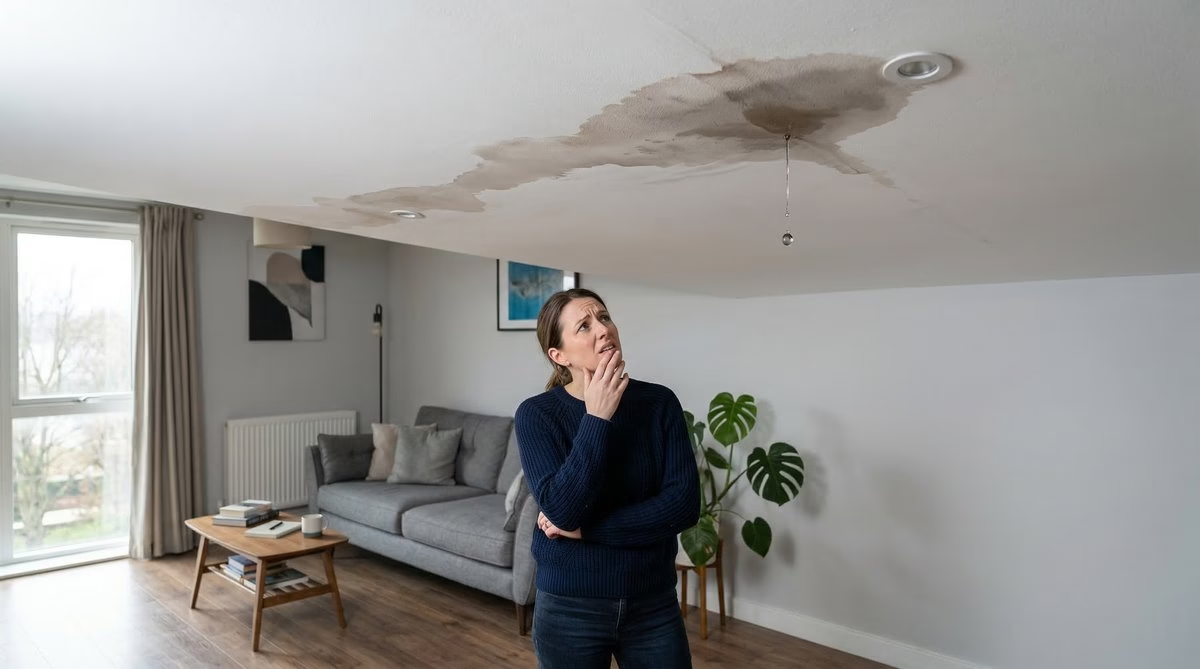
A damp patch spreading across your ceiling, a brown stain that appeared overnight, the unmistakable drip of water where no water should be — the flat leak who pays question is one of the most stressful situations any leaseholder faces. Responsibility can fall on you, the flat above, the freeholder, or a buildings insurance policy you’ve been contributing to through your service charge without ever reading the small print. At Fixiz, we help leaseholders across London understand exactly where the buck stops — and what to do about it right now.
Building Fabric Leaks vs Flat-Specific Leaks — Why the Difference Matters
The most important distinction in any flat leak is whether the source sits within the building fabric or within your own demised premises. This determines who is legally responsible for the fix, who arranges the insurance claim, and who pays.
Building fabric leaks originate in parts of the structure that no individual leaseholder owns: the roof and guttering, external walls, communal water tanks and boilers, shared supply pipes, and underground pipework. The freeholder — or the management company acting on their behalf — carries responsibility for both the repair and any associated insurance claim.
Flat-specific leaks are different. If the source is a pipe serving only your flat, a faulty appliance, a leaking bath, or a boiler connection, you own the problem and the repair bill. The same applies upstairs: if their pipework or appliance is dripping through your ceiling, the repair sits with them.
In our experience across South London, most disputes between neighbours stem from confusion at exactly this boundary — one party assumes the block insurance will absorb everything; the other refuses to accept liability for something they didn’t deliberately cause.
- Roof and guttering: Freeholder/management company responsibility. Water ingress from a failed roof covering or blocked gutter is a structural issue — report it in writing to your management company immediately.
- Communal pipes and risers: Any pipe serving more than one flat is the freeholder’s responsibility, even if it runs through your walls or floor. The management company must arrange the investigation and repair.
- Your own pipework: Pipes that serve only your flat — typically from where the supply branches off the communal riser — are your responsibility, even if part of that pipe is inside a shared wall.
- Your appliances: Washing machines, dishwashers, fridges with ice-makers, boilers, and shower trays all fall within your demised area. Any leak originating from them is yours to fix.
- Upstairs neighbour’s pipework or appliances: If the source is definitively within their flat, the repair cost sits with them. The critical question is whether it was negligence or a genuine accident — this affects whether buildings insurance will engage.
Tip: Your lease is the legal document that defines exactly where your responsibilities begin and end. Most standard leases draw the boundary at the inner surfaces of walls, floors, and ceilings — meaning the ceiling plasterwork of your flat is technically within your demise, even though the leak is coming from above. Always read your specific lease before assuming anything.
How to Determine the Source Before Anyone Assigns Blame
One of the biggest mistakes we see leaseholders make is confronting a neighbour or demanding that a management company pay up before the source has been confirmed. Without a definitive trace, any conversation about liability becomes circular. Getting the source established first is a requirement before most insurance policies will engage.
The challenge is that water is deceptive — it travels along joists, cables, and cavities, emerging metres from its origin. A stain in your bedroom corner may have nothing to do with the bathroom directly above. We recently helped a leaseholder in Camberwell who had spent three weeks arguing with their upstairs neighbour over a suspected shower leak, only for a professional trace to reveal a corroded joint on a communal cold water riser two floors up — the management company’s problem entirely.
- Start with visual checks: Document everything with dated photographs and video clips before touching anything. Note the stain location, any active drips, and whether damp is spreading — this evidence underpins any insurance claim.
- Turn off what you can: Locate your stopcock — typically under the kitchen sink — and turn it off. If dripping continues after isolating your supply, the source is not within your flat.
- Notify your neighbour above: Contact them in writing (a text creates a useful timestamp). Ask them to turn off their water supply as a test. If dripping stops, the source is likely within their flat.
- Engage a leak detection specialist: For concealed or intermittent leaks, professional trace-and-access is the only reliable answer. Specialists use thermal imaging, acoustic equipment, and tracer gas to locate the exact source without unnecessary destruction. Their written report is what your insurer and the management company need to act.
- Do not open up walls or ceilings yourself: Self-investigative work can complicate or invalidate a claim. Most insurers require a professional report before authorising any expenditure.
Once the source is confirmed in writing, the conversation about who pays becomes factual rather than speculative. In our experience across South East London, a professional trace report resolves the majority of inter-neighbour disputes without any need for legal involvement.
What Buildings Insurance Covers — and What It Doesn’t
As a leaseholder, you pay for buildings insurance through your service charge without holding the policy yourself. The freeholder arranges it; you contribute to its cost. Many leaseholders assume the policy exists to protect them, when in legal terms it exists to protect the freeholder’s interest in the building structure — a distinction that explains why claims are sometimes handled differently from what you expected.
What buildings insurance typically covers:
- Structural damage to the fabric: Replastering, replacing damaged ceilings, repairing timbers, and reinstating fixed elements such as fitted kitchen units — covered under the escape-of-water section.
- Trace and access: Most UK buildings policies include a trace-and-access clause (limit typically £5,000–£10,000) covering the cost of locating the leak, gaining access, and making good — but not repairing the failed pipe or appliance itself.
- Escape of water damage: Water damage to fixed building elements is covered under a separate, often more generous section — the clause that applies when a ceiling collapses or walls are saturated.
What buildings insurance typically does not cover:
- Negligence: If a leaseholder ignored a known leak or allowed a bath to overflow, the insurer may reject the claim. Comprehensive cover applies to genuine accidents, not avoidable ones.
- Gradual deterioration: Slow drips present for an extended period before reporting are frequently excluded. Report promptly.
- Your personal belongings: Buildings insurance covers the structure and fixed fittings — not furniture, electronics, or clothing. For those, you need your own contents insurance.
- The repair of the source itself: Buildings insurance covers the consequences of a leak, not the mechanical repair of the failed pipe or appliance.
A common confusion: under RICS guidance, when a claim is made on the block’s buildings insurance, the management company — not the individual leaseholder who suffered the damage — should be the claimant. The excess is generally recoverable from the responsible party or from the service charge fund, not automatically from the victim of the leak. We recently assisted a leaseholder in Lewisham who had been told to make the claim themselves and pay the £250 excess personally — in fact, the management company should have filed the claim on the block policy, with the excess addressed through the service charge fund. Knowing this can save you real money.
Common Disputes Between Upstairs and Downstairs Leaseholders
Flat-to-flat leak disputes almost always follow the same pattern: the downstairs leaseholder wants the ceiling fixed; the upstairs leaseholder disputes liability. The legal position turns on whether negligence can be established. A sudden appliance failure is treated as an accident — buildings insurance engages and both parties move on. But if the upstairs leaseholder was aware of a slow drip or a failing seal and did nothing, negligence becomes a factor, bringing personal liability for both the source repair and potentially the downstream damage.
- Accident vs negligence: An accidental leak triggers block insurance; a negligent one may result in direct personal liability for the leaseholder at fault.
- Damage to belongings: Buildings insurance will not cover a neighbour’s ruined sofa or laptop. Claim on your own contents insurance first; your insurer can pursue recovery from the responsible party’s insurer through subrogation.
- Repeated leaks: If the same source has leaked multiple times and repairs have not been arranged, a negligence argument strengthens considerably. Document every occurrence in writing.
- The “no fault” claim trap: Some management companies present all claims as “no fault” to avoid disputes. This should not automatically mean the victim leaseholder bears the excess — push back and ask for the lease clause that justifies it.
Keep written records of every communication — emails and timed text messages — so that if the situation escalates, you have a clear evidence trail.
The Role of the Management Company and Freeholder
The management company holds three powers that matter directly when a flat leak occurs. First, they manage the buildings insurance policy and are the correct party to notify the insurer — ask them in writing to do so on your behalf. Second, most leases grant them a right of access to any flat to investigate a suspected defect, which they can invoke if an upstairs neighbour refuses entry. Third, they can require a leaseholder to carry out repairs under the repairing covenant, and in many cases arrange the works and recharge the cost if the leaseholder refuses.
Where a management company is unresponsive, the First-tier Tribunal (Property Chamber) can determine disputes about service charges, insurance, and repair obligations. Free advice is available from the Leasehold Advisory Service (LEASE).
What to Do Step-by-Step When You Discover Ceiling Damage
Acting in the right sequence protects your legal position and your insurance claim.
- Stop the damage: Place towels and buckets. Turn off your stopcock. If the leak is near electrical fittings, isolate the circuit at the consumer unit first.
- Document everything: Dated photographs and video of all visible damage before moving anything.
- Notify your neighbour above: By text or email — a written record with a timestamp.
- Notify your freeholder or management company in writing: Email noting the date, nature of damage, and suspected origin. This triggers their obligations under the lease.
- Arrange professional leak tracing: Press the management company to authorise a specialist. If the source is communal, cost falls on the service charge fund; if within your flat, the buildings insurance trace-and-access clause may cover it.
- Support the insurance claim: Provide the specialist’s written report and request the management company file a formal claim on the block buildings insurance. Confirm in writing who handles the excess.
- Claim on your contents insurance separately: Notify your own insurer for personal possessions. They can pursue recovery from the responsible party’s insurer.
- Follow up in writing: If repairs stall, send formal chasers and seek free advice from LEASE before escalating to tribunal.
Tip: Know where your stopcock is before you need it. Stopcocks that haven’t been turned in years can seize solid at the worst moment. Test yours twice a year — it takes thirty seconds.
How Fixiz Helps Leaseholders Cut Through the Confusion
At Fixiz, we carry out professional leak detection investigations using thermal imaging, acoustic testing, and tracer gas, producing the detailed written reports that management companies and insurers require before acting. We recently assisted a leaseholder in Peckham who had been dealing with a recurring ceiling stain for four months — two plumbers had failed to find the source, and the management company was claiming the problem had resolved itself. Our investigation located a hairline crack in the waste pipe joint serving the bathroom above, obligating the management company to act and leading to a successful buildings insurance claim for our client’s redecoration.
We also advise on the correct sequence of notifications and documentation. One point worth noting: buildings insurance covers structure and fixed fittings, not personal possessions. Your own contents policy — which should include escape-of-water cover — handles furniture, electronics, and clothing. In our experience, leaseholders without contents insurance are in a significantly worse position when a neighbouring flat causes damage, as they must pursue the neighbour directly rather than claiming on their own policy first.
Frequently Asked Questions
My upstairs neighbour caused a leak — do I have to pay the buildings insurance excess?
Not automatically. Under RICS guidance, the management company should be the claimant on the block policy — not you. The excess should be addressed through the service charge fund or recovered from the responsible leaseholder. If you are being asked to pay it personally, request a written explanation of the lease clause that justifies this.
The management company says the leak is my responsibility but I think it’s communal. What do I do?
Obtain a professional leak detection report identifying the pipework element responsible. If it identifies a communal pipe, the management company cannot reasonably maintain it is your problem. If the dispute continues, seek a determination from the First-tier Tribunal (Property Chamber) or take free advice from the Leasehold Advisory Service (LEASE).
Can the management company force my upstairs neighbour to fix their plumbing?
In most cases, yes. Standard leases include a repairing covenant requiring leaseholders to maintain their flat and not cause damage to neighbours. The management company can invoke this to require repairs. If the leaseholder refuses, the management company may arrange the works and recharge the costs under the lease.
Does buildings insurance cover the cost of finding the leak as well as fixing the damage?
Most UK buildings policies include a trace-and-access clause (typically £5,000–£10,000) covering the cost of locating the leak, gaining access, and reinstating surfaces — but not repairing the failed pipe or appliance itself. Damage caused by the leak sits under the separate escape-of-water section, often with much higher limits. Ask the management company to confirm trace-and-access cover before engaging a specialist.
My ceiling is stained but the leak seems to have stopped. Do I still need to report it?
Yes — and promptly. A dried stain does not mean the source has resolved itself; it often means the leak is intermittent or slow. Delayed notification can complicate a future claim. Report it in writing, document with photographs, and request an investigation. Gradual leaks frequently cause hidden structural damage that only becomes apparent months later.
What does my own contents insurance actually cover in a flat leak situation?
Contents insurance covers personal possessions — furniture, clothing, electronics — damaged by a water leak. It does not cover the building structure. If a neighbour’s negligence caused the damage, your contents insurer may pursue recovery from their insurer on your behalf. Check your policy specifically includes escape-of-water cover and adequate sublimits.
Ready to move from confusion to construction? Get in touch with Fixiz today for a no-pressure chat about your project and the fastest route to full compliance.