Physical address:
128 City Road, EC1V 2NX, London,UK

If you have searched “leak detection cost UK” recently, you have probably found a wall of similarly worded pages all quoting a “fixed fee” and very little else. What those pages rarely tell you is that the fixed fee is almost always for detection only—and that the work needed to actually expose, repair, and reinstate your property can cost considerably more on top. At Fixiz, we hear this frustration from homeowners every week, and we want to give you a completely straight account of what is and is not included in a typical leak detection service, how to compare quotes fairly, and how to make sure you are never caught off guard by a bill you did not see coming.
What a “Fixed Fee” Leak Detection Service Actually Covers
Most specialist leak detection companies in the UK operate a set-price model for the detection survey itself. Typical rates sit between £395 and £600 plus VAT for a domestic property, though prices can rise to £1,250 or beyond for complex or commercial jobs. Understanding exactly what sits inside that number is critical before you book.
A standard fixed-fee leak detection survey will normally include the following:
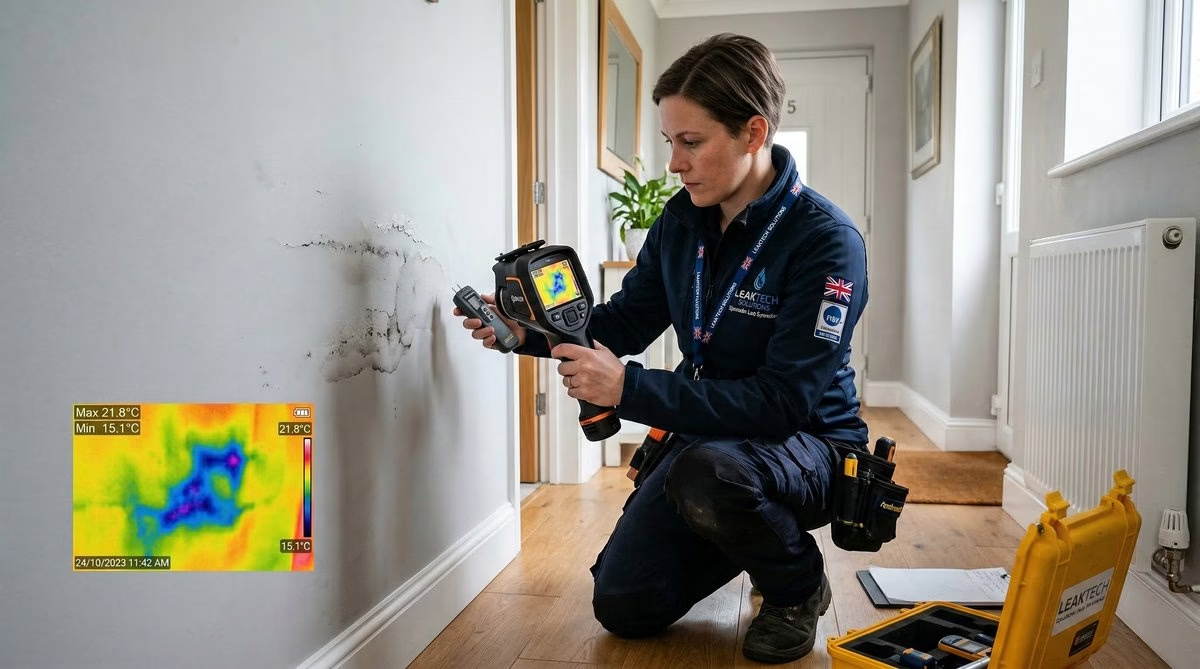
- Thermal imaging survey: An infrared camera scans walls, floors, and ceilings to identify temperature differentials caused by moisture or active water movement. This is non-invasive and leaves no damage.
- Acoustic leak detection: Sensitive listening equipment is pressed against surfaces or pipework to pick up the distinct sound signature of water escaping under pressure. Skilled operatives can pinpoint a leak to within a few centimetres without opening anything.
- Moisture mapping: Calibrated moisture meters are used to log readings across the affected area, building a picture of where saturation is highest and tracking the probable path of the water.
- Tracer gas testing (where required): An inert gas is introduced into the pipework and a sensitive detector traces where it escapes. This adds cost and is generally charged as an extra or included only in higher-tier packages—always confirm before booking.
- A written report: Most reputable companies include a detailed written report with photographs, identifying the probable leak source and recommending next steps. This report is typically supplied within 24 hours and is essential if you are making an insurance claim.
That is what you are paying for. It is investigative work—expert diagnostics—not repair work. The distinction matters enormously, and it is the root cause of most of the dissatisfaction we see reported online.
We recently helped a homeowner in Streatham who had already spent £450 plus VAT on a detection survey with another company. The report was thorough and correctly identified a leaking pipe beneath the kitchen floor. What the homeowner had not been told upfront was that lifting the tiled floor, exposing the pipe, carrying out the repair, and reinstating the tiles would all be quoted separately. She called us because she felt blindsided—and she was right to feel that way.
What Is NOT Included—and Why the Bill Climbs
The fixed-fee confusion sits in the gap between finding a leak and fixing it. Even if the detection itself is priced clearly, homeowners consistently report being surprised by the costs that follow. Here is what you should expect to be quoted separately:
- Access works: Lifting floorboards, breaking up tiles or screeded floors, opening stud walls, or removing sections of plasterboard to physically reach the pipe. Depending on the finish and extent, access costs can run from a few hundred to several thousand pounds.
- The repair itself: Cutting out and replacing the damaged section of pipe, fitting new joints, pressure-testing the repaired section. This is a separate trade cost and will be quoted by a plumber, not the detection specialist.
- Reinstatement: Replacing the tiles, screeding, plastering, or boarding that was removed to gain access. Reinstatement is often the most expensive element and requires a separate trade—in many cases two or three separate trades—to return your home to its pre-leak condition.
- Drying and remediation: If water has been present for some time, structural drying with professional dehumidification equipment may be required before reinstatement can begin. This is almost always a separate charge.
- Additional visits: If the leak proves difficult to locate, or if a second visit is needed after initial access works, some companies charge per visit rather than providing a guaranteed outcome. Always ask whether the fee covers unlimited time on site or a capped attendance period.
A recurring pattern on Trustpilot is particularly telling. One reviewer of a nationally known detection company wrote: “The upfront cost of £395 +VAT only covers detection, even if it only takes a short while, you then pay extra for access and repair. The company should be much clearer on their website about the costs involved.” Another noted: “It seems inappropriate that a ‘one size fits all’ pricing policy is used.” These are not isolated complaints—they reflect a structural issue with how detection-only services are marketed versus how they are experienced by the customer.
In our experience across South London and beyond, the disconnect comes from marketing that emphasises the low headline detection fee while downplaying everything that follows. A homeowner sees “from £395” and assumes that is the bulk of the cost. The reality can be three to five times that figure by the time the floor is back down and the wall is replastered.
Questions to Ask Before You Book Any Leak Detection Service
Armed with the right questions, you can cut through ambiguous pricing and make a genuinely informed comparison between companies. Before you confirm any booking, ask the following:
- Does the fee cover a set time on site or unlimited time? Some companies quote a fixed attendance window. If the leak is not found within it, additional time is charged at an hourly rate. Know which model applies before you book.
- What happens if they cannot find the leak? A minority of companies offer a no-find, no-fee policy. Most do not. If the operative attends and concludes there is no detectable active leak, you may still owe the full survey fee. Ask explicitly before booking.
- Is a written report included? It should be—with photographs, moisture readings, the suspected leak location, and a remediation recommendation. You will need this document for any insurance claim.
- Does the company carry out access works and repairs, or only detection? Many detection firms are diagnostics-only. They find the leak, write the report, and leave you to arrange the rest. Others—including Fixiz—offer an end-to-end service under one instruction, which avoids the relay-race of separate contractors and quotes.
- Are there any additional charges beyond the quoted fee? Ask specifically about tracer gas, second visits, parking, travel time, ULEZ charges, and VAT. Make sure you are comparing like with like.
Tip: Get at least two quotes and insist that each one sets out in writing exactly what is and is not included. A quote that is £100 less but excludes the written report or charges per hour for site attendance may end up costing more in total.
How to Compare Leak Detection Quotes Fairly
The leak detection cost UK market is genuinely variable, and headline prices can be misleading without context. Here is a practical framework for comparison:
First, establish the all-in cost, not just the detection fee. Ask every company to give you a worst-case estimate covering detection, access, repair, and reinstatement. Not every company will provide this—but those that do are demonstrating transparency that is worth paying a premium for.
Second, distinguish between detection-only specialists and full-service contractors. Detection-only firms are often technically excellent, but using them means managing multiple contractors and invoices. A full-service provider charges more upfront but reduces coordination costs, delays, and the risk of disputes about responsibility.
Third, check what the report covers. A one-paragraph letter is not sufficient for an insurance claim. A proper report includes photographs, moisture readings, the leak location identified by reference to fixed structural points, and a recommended remediation pathway. Ask for a sample report before booking if you are uncertain.
Fourth, ask about insurance work experience. Companies that regularly work on trace and access claims understand the documentation requirements and know how to write reports that satisfy loss adjusters.
We recently worked with a landlord in Lewisham who had received three quotes ranging from £395 to £850 for detection alone, none of which included any indication of access or repair costs. We provided a single written estimate covering all four stages—detection, access, repair, and reinstatement—so she knew the full exposure before work began. That level of transparency is not universal in this market, but it should be.
When Your Home Insurance May Cover Detection Costs
Home insurance trace and access cover is one of the most misunderstood clauses in a standard buildings policy. Cover limits typically sit between £5,000 and £10,000. According to Compare the Market, trace and access cover pays for the investigative work to find a hidden leak and making the area around it accessible for repair—but it does not cover the repair itself or the consequential damage (those fall under your main buildings or escape of water cover).
There are several important nuances to understand:
- Trace and access is not the same as escape of water cover: Escape of water covers damage caused by a leak. Trace and access covers the cost of finding it. Some cheaper policies include only escape of water and strip out trace and access to reduce premiums. According to Confused.com, without trace and access cover, you may need to pay investigation and access costs yourself.
- Trace and access is not the same as home emergency cover: Admiral notes that Home Emergency cover is designed to stop a leak in progress—turning off a stopcock or isolating a pipe—and does not cover the cost of finding a hidden leak. Confusing the two can lead to a rejected claim.
- You usually need to notify your insurer before instructing a contractor: If you instruct a detection company and then attempt to claim the cost back, your insurer may refuse on the grounds that they were not given the opportunity to appoint their own approved contractor. Always call your insurer first if you intend to claim.
- Reinstatement cover is separate again: The cost of returning your floor, wall, or ceiling to its pre-access condition after repair is sometimes covered under a specific reinstatement clause—and sometimes not. According to Aspect Maintenance, you should check your policy specifically for reinstatement cover, as it is not universally included.
Tip: Before booking any detection company, check your policy documents for the words “trace and access” and note the cover limit. If you cannot find it, call your insurer directly and ask whether cover is included and whether they have a preferred panel of contractors. Using an insurer-approved contractor often eliminates the upfront cost entirely.
In our experience, homeowners who engage their insurer before work begins recover the full detection cost in the majority of cases. Those who instruct independently and attempt to claim afterwards face a much harder conversation with their loss adjuster.
How Fixiz Handles Leak Detection Differently
At Fixiz, we made a deliberate decision not to offer detection as a standalone service. From the customer’s point of view, a leak is not solved when it is found—it is solved when the property is dry, repaired, and reinstated. Stopping at detection and handing over a report leaves homeowners managing a complex multi-stage process at the moment they are least equipped to do so.
Our approach is end-to-end. We use the same non-invasive methods—thermal imaging, acoustic detection, moisture mapping, tracer gas where necessary—as any specialist detection firm. But we also carry the capability to carry out the access works, the repair, and the reinstatement ourselves, under one instruction, with one invoice, and a single point of accountability.
We price transparently. After our initial investigation, we provide a written estimate covering all four stages before any destructive work begins. You know the full cost of resolution before you commit—not just the cost of the report. We also assist with insurance documentation, writing reports in the format required by most major UK insurers and liaising directly with loss adjusters where needed.
We recently helped a family in Greenwich who had been told by their detection company that a leak was located beneath a tiled bathroom floor and that access, repair, and reinstatement would need to be arranged separately. They called us to take over. We provided a single fixed price for the remaining three stages, completed the work in two days, and had their insurer reimburse the trace and access element in full.
We do not use detection-only fees as a loss-leader to generate follow-on work at uncontrolled rates. What we quote is what we charge, with no surprises at the point of invoicing.
Frequently Asked Questions
What is typically included in a £395 leak detection fee?
At that price point, you are paying for the detection survey only—typically thermal imaging, acoustic detection, moisture mapping, and a written report. Access works to expose the pipe, the repair itself, and reinstatement of any floor or wall opened during the process are all charged separately. Always confirm the full scope in writing before booking.
Why do some companies charge £395 just for detection when the repair ends up costing more?
Detection-only specialists price for their diagnostic expertise and equipment, not for anything that follows the report. It is a legitimate model, but it can mislead homeowners into thinking the total cost is close to the headline figure when access, repair, and reinstatement often treble or quadruple the outlay.
What if the leak detection company cannot find the leak?
Most companies charge the full survey fee regardless of outcome. A minority operate a no-find, no-fee policy for standard domestic properties. Ask explicitly before booking and get the policy confirmed in writing.
How does home insurance trace and access cover work in practice?
If your policy includes trace and access cover, your insurer will typically pay for the detection survey and access works needed to expose the leak—up to your policy limit, less your excess. It does not usually cover the repair or reinstatement, though those may fall under separate clauses. Always notify your insurer before instructing any contractor, as using an unapproved firm can invalidate the claim.
Is a written report always included in a leak detection fee?
It should be, but always confirm. A proper written report—with photographs, moisture readings, leak location, and remediation recommendations—is essential for insurance purposes and for any contractor carrying out the subsequent repair. If it is not included as standard, ask whether it costs extra.
Can I compare leak detection quotes fairly if companies price differently?
Yes, but only if you force each company to quote on the same scope. Ask every company for an estimate covering all four stages: detection, access, repair, and reinstatement. Then compare the total, not just the detection fee.
Ready to move from confusion to construction? Get in touch with Fixiz today for a no-pressure chat about your project and the fastest route to full compliance.