Physical address:
128 City Road, EC1V 2NX, London,UK

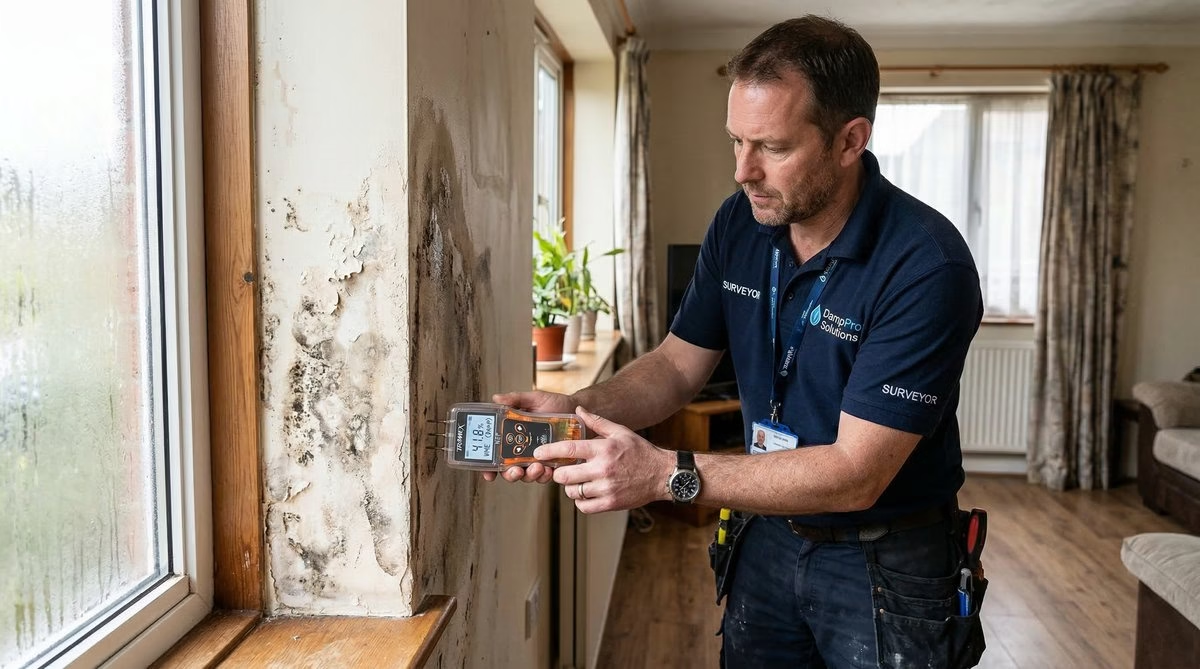
When you see tide marks, flaky paint, or a musty smell, it’s easy to panic and search for rising damp—but in our experience at Fixiz, most ‘damp’ calls in London are actually condensation or penetrating damp, not true rising damp. The problem is that the symptoms overlap, and plenty of homeowners get sold a treatment before anyone proves the cause. This guide explains how we diagnose damp properly, what you can check today, and the sensible next steps before you spend money.
Rising damp vs penetrating damp vs condensation—why homeowners get misled
Damp is a symptom, not a diagnosis. A wet wall can come from moisture moving up from the ground, water getting in from outside, or warm humid air condensing on cold surfaces. If you don’t separate these, you risk paying for the wrong fix—like injecting a chemical DPC when the real issue is poor ventilation or an external defect.
In UK homes we usually see three patterns:
- Condensation: warm moist air meets a cold surface (often corners, window reveals, behind wardrobes) and you get mould spotting and damp patches that come and go.
- Penetrating damp: water enters through the building fabric—cracked render, missing pointing, leaking gutters, defective flashing—often worse after rain and localised to one wall or one area.
- Rising damp: moisture travels up from the ground through masonry, usually limited to lower walls, with salts and consistent deterioration near skirting level.
The reason people get stuck is that the same room can have more than one issue. A blocked air brick (ventilation) plus high external ground levels (bridging) plus a small gutter leak can create a confusing picture. That’s why we don’t start with ‘treatment’—we start with evidence.
Tip: If someone recommends a chemical DPC after a five-minute look, ask what they measured, where they measured it, and what external checks they completed.
The quick checks you can do today—before you book anyone
You don’t need to be a surveyor to gather useful clues. The goal is not to self-diagnose perfectly—it’s to avoid obvious missteps and to give a professional the right information. If you do these checks, you’ll get a faster and more accurate outcome.
- Note the pattern: is the damp highest near the floor (skirting level) or higher up? Is it in corners and behind furniture (often condensation)? Is it on one external wall only (often penetrating damp)?
- Check recent weather: if patches worsen after heavy rain or wind-driven rain, look outside—guttering, downpipes, pointing, and roof details are prime suspects.
- Look for ‘bridging’: external ground or paving that sits too high, render taken down below the DPC line, or flower beds against the wall can bypass a functioning DPC.
- Ventilation reality check: do you have working extractor fans in bathroom/kitchen, and do you use them? Are trickle vents open? Do you dry clothes indoors without extraction?
- Measure humidity: a simple hygrometer is cheap. If your indoor relative humidity sits high for long periods, condensation risk is high—especially in winter.
These checks won’t replace a proper inspection, but they stop the most common waste of money: treating the wall while ignoring the cause. In London properties, we often find the ‘fix’ is a combination of small external repairs plus better moisture control inside.
Tip: Take photos of the affected wall, skirting, external elevation, and guttering/downpipes. Time-stamped photos help confirm whether the issue correlates with rainfall.
How Fixiz diagnoses damp—our step-by-step approach
When we inspect damp in a home, we use a structured process so you get clarity, not guesswork. We also explain what we’re doing as we go—because homeowners deserve to understand what they’re paying for.
Our typical diagnosis workflow includes:
- Moisture mapping: we check multiple points and heights on the wall to see the moisture ‘shape’—that profile is often more useful than one reading.
- Salt indicators: salts and persistent deterioration at low level can support rising damp, but we still confirm bridging and external water paths first.
- Thermal and ventilation context: we consider room temperature, air movement, and likely cold bridges—condensation is about physics, not just ‘damp walls’.
- External inspection: we look at rainwater goods, pointing, cracks, render details, air bricks, ground levels, and any obvious leak paths.
- Bridging checks: we identify anything that could bypass the DPC—internal plaster bridging, external render, or raised paths and patios.
Only when the cause is clear do we recommend remedial works. Sometimes the right answer is small and boring—like repairing a downpipe joint and improving extraction. Sometimes it’s bigger—like improving sub-floor ventilation or addressing a defective external wall finish. Either way, the key is doing the right thing in the right order.
Common costly mistakes—and how to avoid them
Damp problems become expensive when the cause is ignored or when repairs are done in the wrong sequence. We see the same pitfalls repeatedly.
- Treating symptoms first: replastering and repainting without fixing the moisture source usually fails within months.
- Injecting a DPC ‘just in case’: this can be unnecessary and it won’t fix penetrating damp or condensation.
- Sealing the house tighter without ventilation: new windows and heavy draught-proofing can worsen condensation if extraction isn’t upgraded.
- Ignoring external ground levels: if paths or flower beds bridge the DPC, internal treatments won’t last.
- Not considering hidden plumbing leaks: a slow leak can mimic damp—especially around bathrooms and kitchens.
Tip: If mould is present, treat it as a ventilation and humidity problem until proven otherwise. Cleaning mould without reducing humidity is like bailing water without fixing the leak.
How Fixiz keeps your home dry—without selling you the wrong fix
Fixiz is a London-based construction and property works company, so we approach damp with the mindset of a builder and a problem-solver. We don’t benefit from pushing one ‘product’—we benefit from getting your home right and protecting our reputation.
When you work with us, you can expect:
- Plain-English advice: we explain what’s happening and why, so you can make a confident decision.
- Practical repair options: from external repairs (guttering, pointing, render) to internal improvements (extraction, insulation upgrades), we recommend what fits your home.
- Correct sequencing: fix the water path first, then allow drying time, then repair finishes—so you don’t pay twice.
- Clean working: dust control and clear scopes matter, especially when damp repairs touch plaster and joinery.
FAQ—damp diagnosis in UK homes
Can a damp proof course fail in a typical London house?
Yes, but true DPC failure is less common than bridging or external water ingress. We check for bridging and obvious leak paths first because those are simpler, cheaper, and more likely causes.
Will a dehumidifier ‘solve’ damp?
A dehumidifier can reduce condensation and protect your belongings short-term, but it doesn’t fix penetrating damp or a water entry point. Think of it as damage control while you address the root cause.
How quickly should damp be investigated?
If you see active mould, musty smells, or staining spreading, investigate promptly. The earlier you stop moisture, the less likely you are to face rotten timbers, failed plaster, or hidden decay.
Ready to move from confusion to construction? Get in touch with Fixiz today for a no-pressure chat about what you’re seeing, what you’ve checked so far, and the fastest route to a genuinely dry home.