Physical address:
128 City Road, EC1V 2NX, London,UK

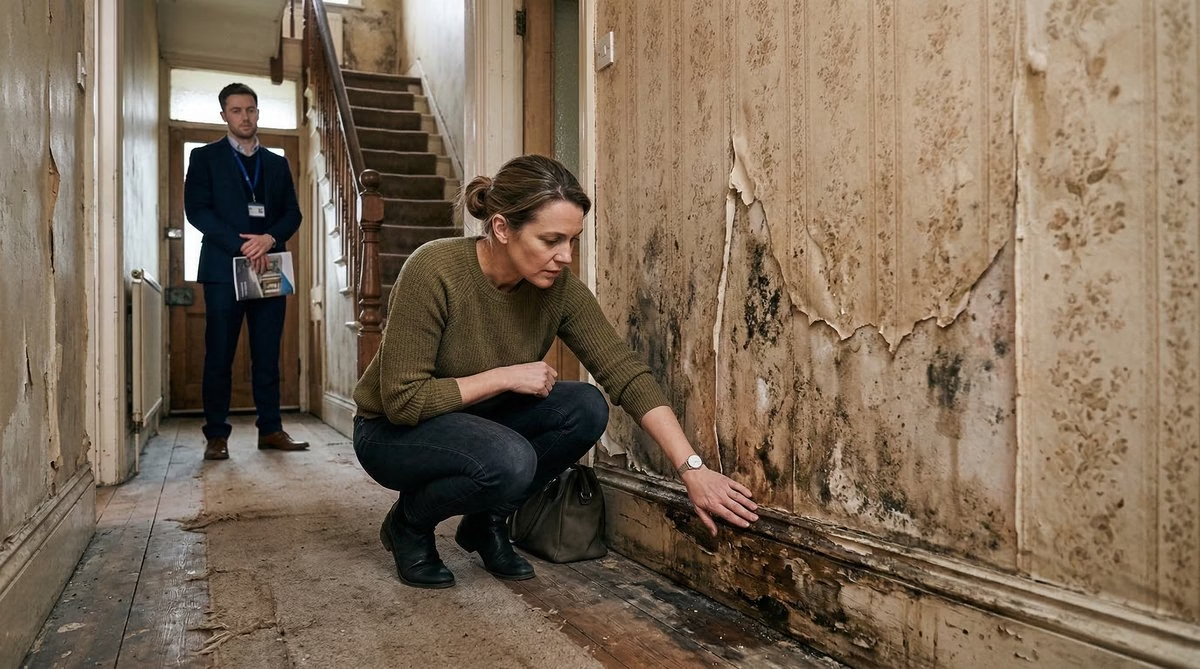
Every year, buyers and tenants sign contracts on properties harbouring damp problems that were hiding in plain sight — or, more accurately, hidden behind a fresh coat of paint and a roll of new laminate. Knowing how to spot damp when viewing a property is one of the most valuable skills you can take into any viewing, whether you are buying a family home in Lewisham or renting a flat in Stockwell. You do not need specialist equipment. You need to know what you are looking for — and to trust what your senses are telling you.
Why damp is so easy to miss at a viewing — and so costly to overlook
A viewing typically lasts between fifteen and thirty minutes. Lighting is often flattering, windows may be opened in advance to clear odours, and sellers have every incentive to present the property at its very best. Many vendors genuinely do not know the full extent of a damp problem, but the conditions at a viewing are rarely ideal for spotting moisture issues.
The financial stakes are significant. A contained patch of surface condensation mould might cost £200 to address. Penetrating damp from a failing parapet wall can run to several thousand pounds. We have seen clients who moved into properties only to discover that what looked like isolated corner mould was actually the visible tip of a much larger moisture problem concealed behind new plasterboard.
The good news is that damp rarely hides perfectly. It leaves traces — in smells, textures, colours, and patterns — and once you know what to look for, a short viewing can tell you a great deal.
Red flags in listing photos before you even step through the door
Your investigation should begin before the viewing. Listing photos are curated, but they can still reveal problems if you look carefully.
- Missing room photos: If a listing shows every bedroom and the garden but omits the bathroom or a downstairs toilet entirely, ask why. Agents photograph rooms that present well. A conspicuously absent room deserves a direct question.
- Freshly painted patches: Look carefully at wall colours. An otherwise consistent wall with a slightly brighter patch at skirting level — or a section that appears recently repainted while the surrounding area looks older — may indicate a painted-over damp stain.
- New flooring in unexpected areas: Brand-new laminate or vinyl tile in an otherwise unrenovated property is worth questioning. One of the cheapest ways to conceal damp damage or tide marks at skirting level is to lay new flooring over the top. We had a case in Peckham where a prospective tenant noticed new laminate running up to and partially overlapping the skirting boards — not how professionally fitted floors normally terminate. It turned out the previous tenant had reported a persistent damp patch along that wall.
- Dehumidifiers visible in photos: Some vendors forget to move them before the photographer arrives. A dehumidifier in a living room or bedroom is not proof of a problem, but it is worth asking about.
Tip: Use the listing photo zoom function on Rightmove or Zoopla to examine wall and floor junctions in detail before booking a viewing. A few minutes of scrutiny can help you arrive with focused questions.
Physical checks to carry out during the viewing itself
The moment you walk through the front door, your senses are your most reliable tool.
Trust your nose first
A musty, earthy smell is one of the most consistent indicators of moisture problems. It is caused by microbial compounds produced by mould, and it is very difficult to fully mask even with air fresheners or open windows. If the property smells strongly of candles or plug-in diffusers, note that too — not automatically suspicious, but worth considering alongside other signs. In our experience across South London, the musty smell is often strongest at ground floor level near external walls and in under-stair cupboards.
Check the walls at skirting level
Tide marks — horizontal staining lines running along the lower section of a wall, usually between 200mm and 1,000mm from floor level — are one of the most telling signs of sustained moisture. They are the watermark left by salts drawn to the surface as moisture evaporates. Look for discolouration, patchy paint, or a crystalline white deposit along the base of walls, particularly on ground floors and in rooms adjoining external walls.
Look for bubbling or flaking paint
Paint that is bubbling or peeling from the substrate — rather than simply chipping from age — suggests moisture pressure behind the surface. Similarly, plaster that sounds hollow when you knock it has often been compromised by moisture. Pay particular attention to chimney breasts and areas around bay windows, which are frequent entry points for penetrating damp.
Check behind furniture and feel for cold spots
Politely ask to look behind any large wardrobes pushed against external walls. Black mould directly behind furniture is a common sign of a cold thermal bridge — a point where the surface temperature drops low enough for condensation to form. Also run your hand along external walls. A wall that feels colder than its surroundings, or clammy, may have elevated moisture content. We recently helped a first-time buyer in Catford who was told a bedroom mould patch was caused by the previous tenant drying clothes; our inspection found a leaking gutter directing water onto the external wall for several seasons.
Look at window reveals and ceiling corners
Black mould on window reveals, on silicone sealant around frames, or on the wall directly below windows indicates that condensation is regularly forming. Also examine the junctions between walls and ceilings in bathrooms and bedrooms — corners are where air circulation is weakest and mould colonises first.
Questions to ask the estate agent or landlord
You are entitled to ask direct questions, and a straightforward answer — or the absence of one — tells you something useful either way.
- Has there ever been any damp or water ingress in this property? In England and Wales, sellers completing a TA6 property information form are legally required to disclose known defects. Ask the question directly and note the response.
- Has any work been carried out on the walls, floors, or plaster in the last two years? This opens the conversation about cosmetic works that may have been undertaken over a problem area without being confrontational.
- When was the flooring in this room laid? New flooring in a ground floor room of an older property always deserves this question. There may be a perfectly innocent answer, but it is important to ask.
- Has a damp survey ever been carried out? If one has, ask to see a copy. If the answer is yes but the documentation is unavailable, that is itself useful information.
- What is the heating pattern in the property? Intermittent or minimal heating drives condensation damp, particularly in flats. Ask about how the property has been heated, especially if it has been empty or tenanted with limited oversight.
We recently assisted a couple considering a Victorian terrace in Herne Hill where the estate agent repeatedly described marks on the kitchen wall as “cosmetic shadowing.” When our team visited ahead of exchange, we found elevated moisture readings and traced the problem to a downpipe directing water against the external elevation for several years. The cosmetic description was not accurate — but it might never have been questioned without independent verification.
Harmless marks versus signs of expensive remediation
Not everything you see at a viewing is a cause for alarm. Being able to distinguish genuine concern from surface blemishes will help you assess properties more calmly and accurately.
Usually harmless: A small patch of surface mould on a bathroom silicone seal in a property that has been unoccupied. Minor lime bloom on old external brickwork. A faint ceiling watermark that corresponds to a documented and repaired roof tile.
Merits further investigation: Any staining at skirting level on ground floor external walls. Black mould recurring in the same location year after year. New plaster over wall sections that correspond to external defects. New flooring with no clear explanation in a ground floor room. A musty smell present throughout the property rather than in one isolated spot.
Likely to require significant remediation: Visibly soft or crumbling plaster on multiple external walls. White crystalline salt deposits at tide marks running at consistent height across multiple walls. Any evidence of a previous chemical injection damp-proof course where the contaminated plaster has not been removed — a scenario where the cause has been addressed but the symptoms remain embedded in the wall substrate.
Tip: If you are in doubt, do not rely on what you can see at a viewing alone. The cost difference between a cosmetic issue and a structural moisture problem is often measured in thousands of pounds.
The difference between a homebuyer survey and a specialist damp survey
A homebuyer survey — a RICS Level 2 Home Survey — is a general condition report. The surveyor will note visible signs of damp and flag areas of concern, but will typically recommend further specialist investigation rather than providing specific moisture readings or remediation costs. It tells you a problem may exist. It does not tell you how serious it is or what it will cost to fix.
A specialist damp survey, carried out by someone holding the Certified Surveyor in Structural Waterproofing (CSSW) qualification or a Property Care Association (PCA) member, uses moisture meters, hygrometers, and sometimes thermal imaging to map moisture levels, identify causes, and recommend specific works with estimated costs. This is the report that gives you genuine negotiating power.
If a homebuyer survey flags any damp concerns — even ones described as minor — commission a specialist damp survey before exchange of contracts, not after. Once you have exchanged, you are committed. A specialist survey costs between £200 and £500. The cost of discovering significant damp after exchange could be many times that figure.
Tip: Be cautious about commissioning a damp survey through a company that also sells damp-proofing treatments. Use an independent surveyor with no financial stake in the outcome.
What to do if you suspect damp before exchanging contracts
- Document everything photographically at your viewing — walls, floors, window reveals, visible marks. Date-stamp your photographs. If the vendor later disputes that a defect was present, your record matters.
- Instruct a specialist damp survey before exchange. Arrange access through the estate agent. Any vendor who refuses access for a specialist survey is telling you something about their own confidence in the property’s condition.
- Use the survey findings to negotiate. If damp is confirmed, you can require the vendor to remediate before completion, negotiate a price reduction commensurate with remediation costs, or withdraw from the purchase entirely.
- Ensure your solicitor is aware. If a specialist survey identifies damp that was not disclosed on the TA6 form, your solicitor needs to raise this formally. Misrepresentation of known defects has legal consequences.
- For renters: One Reddit user considering a tenancy described visible damp patches and new laminate flooring that appeared to conceal tide marks at skirting level — a scenario we recognise from our own casework. If you are in that position, ask the landlord for a written schedule of works detailing what has been done and when. Under the Homes (Fitness for Human Habitation) Act 2018, landlords in England are legally required to ensure rental properties are free from conditions that pose a risk to health. A landlord who is unwilling to discuss damp transparently before you sign is unlikely to respond effectively once you are in the tenancy.
In our experience working across South London, the buyers and tenants who protect themselves most effectively are those who ask direct questions early, photograph everything at the viewing, and do not allow the social pressure of a viewing to stop them from looking behind the wardrobe.
How Fixiz can help
At Fixiz, we work with buyers, tenants, and landlords at every stage of the damp investigation process — from a quick pre-viewing conversation about what to look for, to full investigation and remediation works after you take on a property. We recently worked with a buyer in Brockley who had been told by the selling agent that some staining on the ground floor back room wall was old and dry. Our inspection found active moisture in the wall substrate and traced the source to a failed render section on the rear elevation. The buyer used our findings to negotiate a £4,500 reduction on the purchase price — more than enough to cover proper remediation.
Whether you need someone to attend a second viewing with you, carry out a pre-exchange inspection, or manage full remediation works, our team is available at short notice and gives you clear, jargon-free advice throughout.
Frequently asked questions
Can I check for damp myself at a viewing, or do I need specialist equipment?
You can identify many significant warning signs through visual inspection, smell, and touch alone. Tide marks at skirting level, black mould in corners, musty odours, and bubbling paint are all detectable without equipment. Trust your senses — they are more reliable than most people expect.
Should I be worried if a property has new flooring on the ground floor?
Not automatically, but it is worth asking why it was laid and when. New flooring in an otherwise unrenovated ground floor room is worth questioning, particularly if the skirting boards have also been replaced. Ask the estate agent directly and ensure your surveyor checks moisture levels at the base of the walls in that room.
How much does a specialist damp survey cost?
A specialist damp survey typically costs between £200 and £500 for a standard residential property. This is money well spent: if significant damp is identified, the negotiating leverage it provides — or the costly mistake it helps you avoid — is worth many times the fee.
Can I pull out of a purchase if damp is found before exchange?
Yes. Before exchange of contracts in England and Wales, either party can withdraw without legal penalty, though you may lose survey and legal fees already incurred. Use specialist survey findings to renegotiate the price, require remediation before completion, or withdraw entirely. This is why specialist surveys must happen well before exchange, not after.
What should a tenant do if shown a property with visible damp?
Ask what the damp is, when it was first identified, and what remediation has been carried out. Request written evidence of any works. Under the Homes (Fitness for Human Habitation) Act 2018, landlords in England must ensure properties are free from conditions posing a health risk. A landlord unwilling to discuss damp before you sign is unlikely to respond effectively once you are in the tenancy.
Ready to move from confusion to construction? Get in touch with Fixiz today for a no-pressure chat about your project and the fastest route to full compliance.