Physical address:
128 City Road, EC1V 2NX, London,UK

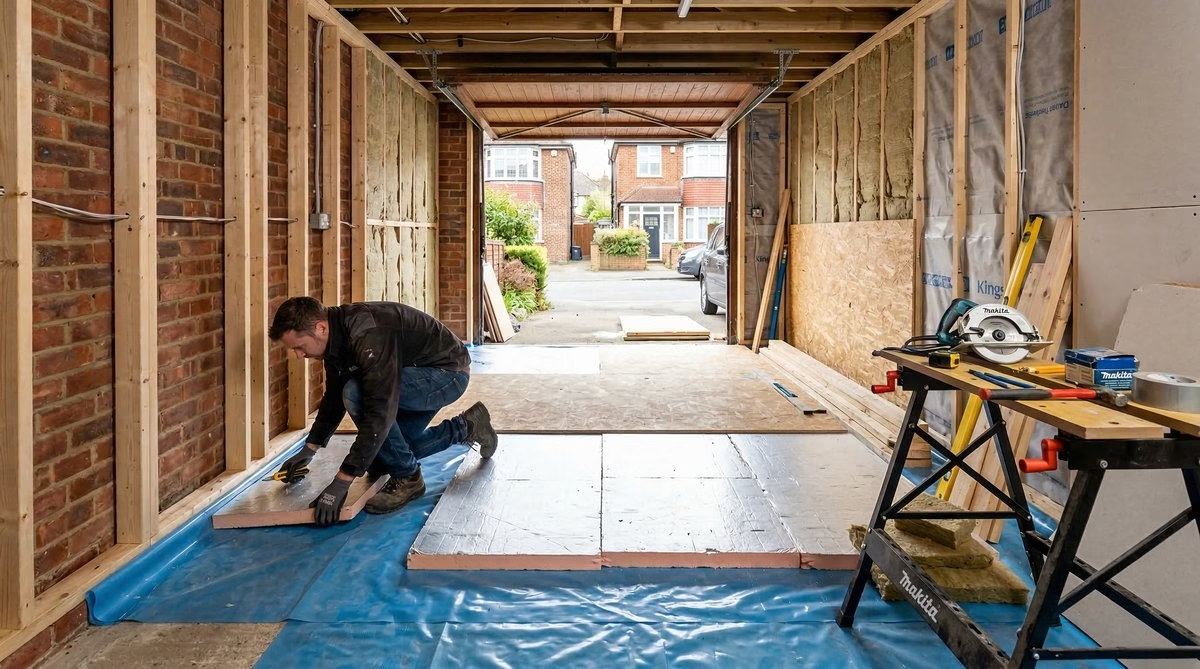
A garage can look “dry enough” for storage, then turn into a cold, damp headache the moment you try to make it a real room. The most common issue we see is the garage conversion floor — especially the floor-to-wall junction where damp proofing and insulation details get complicated. If that junction is wrong, you can end up with mould on skirtings, a musty smell, and a floor that never feels warm.
We’re Fixiz Ltd in London. We convert garages properly — not just cosmetically — and we treat moisture control as a design detail, not an afterthought.
Why garage floors go damp (and why it gets worse after “upgrading”)
Many UK garages were not built to the same standard as habitable rooms. Floors are often thin slabs, sometimes without an effective damp proof membrane, and external ground levels may be high. Add in cold surfaces, little ventilation, and occasional rainwater tracking under the door, and you get persistent moisture risk.
When homeowners “improve” the space — adding rubber flooring, laminate, or insulation without a continuous damp strategy — they often trap moisture rather than solve it. The garage then feels worse, not better.
- No DPM (or a failed DPM): Moisture can migrate up through the slab.
- Bridging at edges: The floor-to-wall junction is where moisture bypasses the nice new floor build-up.
- Cold surfaces: Cold slabs and uninsulated walls encourage condensation.
- External levels: Paths/drive levels too high can push moisture into walls.
Tip: A garage conversion is not just “insulate and plaster”. The floor build-up and edge details are the make-or-break part.
The floor-to-wall junction — the detail most people miss
In a proper habitable room, we want a continuous barrier against ground moisture and a continuous thermal layer to stop cold bridging. The junction between the floor and the wall is where both of those requirements collide — and where DIY (and sometimes even poor contractor) work fails.
What we’re aiming for is continuity: your floor DPM should link to an appropriate wall detail, and your insulation should meet the wall insulation to reduce cold bridging. If you leave a gap, moisture and cold find it.
- DPM continuity: The membrane needs to be lapped and sealed properly, not just “laid under” a new layer.
- Edge insulation: Insulation at the perimeter reduces cold bridging and condensation risk at skirtings.
- Finished floor height: You need to plan thresholds and door heights before you build up the floor.
- Wall moisture route: If walls are damp due to external levels or defects, the floor fix alone won’t solve it.
In London garages, we also commonly deal with adjacent party walls, attached utility runs, and poor previous repairs. All of that affects how we design the junction detail.
Common garage conversion floor options (and when each makes sense)
There isn’t one “best” floor build-up. The right solution depends on the existing slab condition, ceiling height, thresholds, and moisture risk. We choose the system that gives you a warm, durable floor without creating a damp trap.
- New slab with DPM: Best when the existing slab is poor and you need a long-term fix.
- DPM + insulated screed system: Useful where you can afford some height build-up and want a solid finish.
- Floating floor build-up: Sometimes appropriate, but only with correct moisture control and ventilation considerations.
- UFH integration: Underfloor heating can be great, but only if insulation and moisture details are correct.
Tip: If your finished floor build-up steals too much height, the whole conversion can feel cramped — plan heights early, not after you’ve ordered doors and skirtings.
Stopping mould — insulation and ventilation work together
Even with good damp proofing, you still need a room that can manage moisture from everyday living. A garage turned office or bedroom will generate moisture from breathing, cooking nearby, drying clothes, and daily use. If the room stays cold or poorly ventilated, condensation becomes your new “damp”.
That’s why we always think in layers: keep ground moisture out, keep the room warm, and keep air moving correctly.
- Wall insulation strategy: Prevent cold bridging on external walls and at corners.
- Ventilation design: Background ventilation and extraction where needed.
- Thermal continuity: Insulation layers should connect across floor/walls/ceiling.
- Moisture management: Avoid sealing a damp space without a drying pathway.
How Fixiz delivers garage conversions that stay warm and dry
We don’t want you calling us six months later to say the room looks nice but smells damp. Our process is to design the build-up properly, detail the junctions, and then execute cleanly on site so the finished room performs like a real part of the home.
- Survey and moisture checks: We look at external levels, slab condition, and likely moisture routes before proposing a floor system.
- Correct sequencing: We install damp control and insulation before finishes — not after problems appear.
- Building regs mindset: We treat the conversion as a habitable space, with performance and compliance in mind.
- Clean handover: You get a room that’s comfortable, not just “finished”.
FAQ — garage conversion floor damp and insulation
Can I just put insulation boards over my garage slab?
Sometimes, but only if moisture risk is properly managed. If the slab is damp and you trap it under impermeable layers, you can create mould and edge damp problems. The junction details matter as much as the boards.
Why is damp showing at the skirting line after my conversion?
This is commonly a floor-to-wall junction issue (bridging or missing continuity), or a cold bridge causing condensation at the perimeter. A proper investigation should check both moisture and thermal causes.
Do I need a new concrete slab for a garage conversion?
Not always. If the existing slab is sound, there are solutions that improve performance without full replacement. But if the slab is thin, cracked, or consistently wet, a new slab and DPM may be the best long-term option.
Will underfloor heating solve a cold garage floor?
UFH helps comfort, but it’s not a substitute for insulation and moisture detailing. Without insulation, you’ll heat the ground instead of the room — and costs rise.
Ready to move from confusion to construction? Get in touch with Fixiz today for a no-pressure chat about your garage conversion and a floor plan that prevents damp, mould, and regret.