Physical address:
128 City Road, EC1V 2NX, London,UK

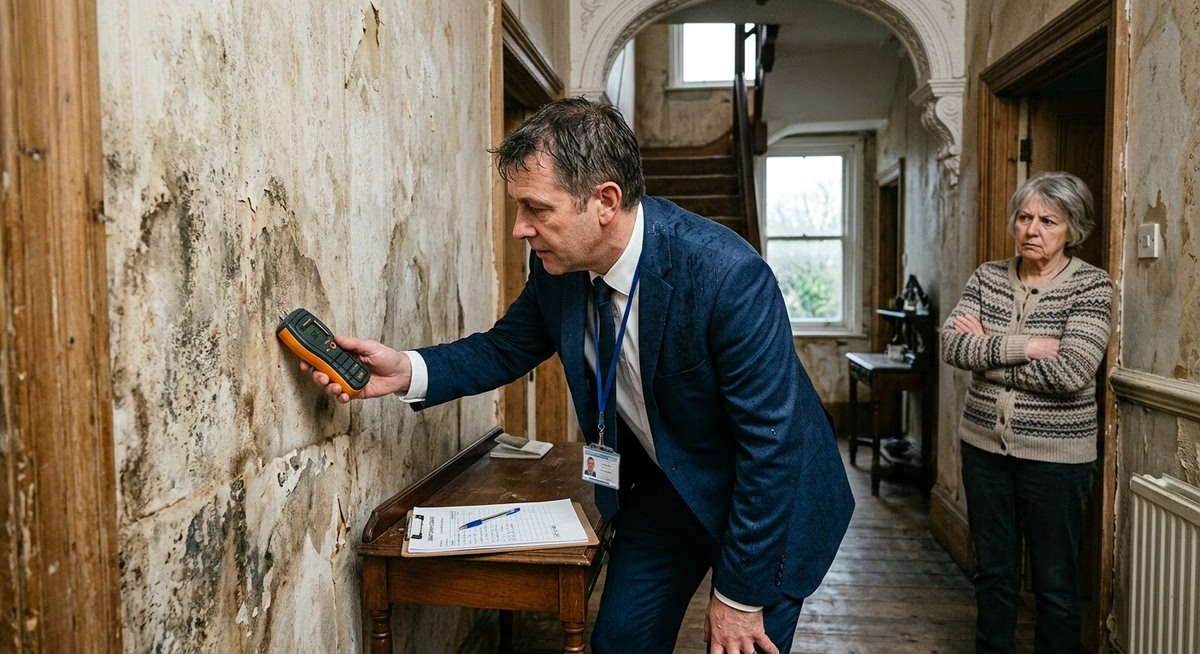
A company knocks on the door — or pops up online — offering a free damp survey. An hour later someone is waving a moisture meter at your skirting boards and quoting four figures for a chemical damp-proof course. If that sounds familiar, you are not alone. Across the UK, homeowners with damp patches are being funnelled into a sales process disguised as diagnosis. In this guide we explain how the free damp survey UK scam model works, what a genuine inspection looks like, and how to protect yourself from unnecessary chemical DPC treatments.
What is a “free damp survey” — and why should it concern you?
On the surface a free damp survey sounds sensible — someone checks the walls and tells you what is wrong, all at no charge. The reality is that most free damp surveys are lead-generation appointments designed to turn concern into remedial work. The company offering the “survey” earns its revenue from chemical damp-proof courses, replastering, or tanking. If the person diagnosing the problem also profits from a particular solution, the recommendation starts to look like their product list.
The UK damp-proofing industry is worth over £200 million per year, and a significant slice depends on converting anxious homeowners during a single visit. The inspection may be brief — a few sweeps of a handheld electrical-resistance meter at skirting-board height — followed by a “rising damp” diagnosis and a quotation for chemical injection. You will rarely receive a written report that considers alternative causes.
At Fixiz, we have seen this pattern repeatedly: a homeowner contacts us after paying thousands for a chemical DPC that solved nothing, because the real cause — condensation, high ground levels, or a leaking downpipe — was never investigated. The free survey was never a survey. It was a damp sales visit. Understanding the commercial incentive makes it easier to spot one. Here is the typical sequence:
- Lead capture: The company advertises a “free damp survey” online or via leaflets. A worried homeowner books an appointment expecting impartial advice.
- Quick meter readings: A representative arrives with a handheld moisture meter. These devices measure electrical conductivity, not actual water content, yet the numbers are presented as proof of damp.
- The “rising damp” diagnosis: Without investigating external defects, ventilation, ground levels, or salt contamination, the representative declares the damp-proof course has failed and chemical injection is needed.
- Same-day quote: A quotation — often several thousand pounds — appears before the representative has left. It typically includes chemical DPC injection, hacking off plaster, replastering with cement-based render, and redecorating.
- Pressure to commit: Time-limited discounts, warnings that the problem will “spread” rapidly, or implied mortgage consequences push the homeowner toward a quick decision.
The entire model depends on one assumption: that the homeowner will not seek a second opinion. We recall a south London job where a homeowner had paid over £4,000 for a chemical DPC after a free survey. When we investigated ongoing damp, we found external paving laid above the original damp-proof course, bridging it completely. Lowering the paving and repointing cracked render resolved the problem at a fraction of the cost.
What a proper damp inspection should include — and the tests that matter
A genuine damp survey is an evidence-based investigation, not a quick meter sweep. According to standards such as BS 6576, a proper inspection should cover:
- External fabric inspection: Checking rainwater goods, external ground levels relative to the internal floor, wall build-up, pointing condition, and roof coverings. Many damp problems originate outside — a surveyor who never goes outdoors is a red flag.
- Internal moisture mapping: A competent surveyor builds a moisture profile — recording readings at multiple heights across affected walls. Rising damp produces a characteristic gradient; condensation produces a different one. The pattern matters more than any single number.
- Ventilation and humidity assessment: Checking airflow paths, extractor fans, trickle vents, sub-floor ventilation, and thermal bridging. Condensation is the most common cause of low-level dampness in UK homes, yet routinely misdiagnosed as rising damp by companies selling chemical DPCs.
- Timber risk assessment: Identifying whether persistent dampness puts structural or embedded timbers — joists, lintels, wall plates — at risk of fungal decay.
- Occupant and lifestyle factors: Discussing heating patterns, drying laundry indoors, and ventilation habits — all of which contribute to moisture load.
- Context-led diagnosis: Separating active moisture sources from old staining, hygroscopic salt residues, and secondary damage.
A thorough survey of a three-bedroom house takes three to four hours — not the 30 minutes many free visits last. The surveyor should produce a written report detailing findings, the moisture mechanism, severity, and recommended next steps — usable by any contractor, not tied to the surveyor’s own treatment arm.
Diagnostic tests that separate real surveys from sales visits
A handheld electrical-resistance meter — the device most free surveys rely on — measures conductivity, not moisture content. Embedded salts, metal fixings, and dense plaster can all produce elevated readings unrelated to active damp. A responsible surveyor treats these readings as a starting point. The tests that form part of a rigorous investigation include:
- Calcium carbide (speedy meter) testing: A sealed pressure vessel reacts a drilled masonry sample with calcium carbide. The acetylene gas produced is proportionate to total moisture content — far more reliable than a surface meter, though it cannot distinguish free moisture from hygroscopic moisture on its own.
- Gravimetric (oven-drying) analysis: Masonry samples are weighed, oven-dried to constant weight, and reweighed. The difference gives true moisture content. This is the gold-standard method recommended by BRE Digest 245 for conclusive proof of rising damp.
- Hygroscopic salt analysis: Ground-water salts — primarily chlorides and nitrates — travel upward with rising moisture and concentrate at the evaporation front. Testing for them distinguishes genuine capillary rise from condensation or old contamination.
- Moisture profiling: Taking readings at intervals up a wall to map the moisture gradient. A genuine rising-damp profile shows high moisture at the base tapering with height. Condensation tends to affect a broader area more uniformly. Thermal imaging can supplement this by revealing cold spots.
Tip: If the person inspecting your property uses only a handheld meter, does not drill any samples, and diagnoses “rising damp” within minutes, treat that diagnosis with extreme caution. A proper surveyor will explain which tests are needed and why.
Red flags — and how to choose an independent surveyor instead
Our team has spoken with dozens of homeowners who only realised they had been through a sales process after the treatment failed. Here are the warning signs:
- The survey is free but the company sells treatments: If the surveyor’s employer earns revenue from chemical DPC injection or tanking, there is a built-in conflict of interest.
- No external inspection: The representative stays indoors and never checks gutters, downpipes, ground levels, or rendering. Many damp problems start outside — skipping this step almost guarantees a wrong diagnosis.
- Vague “rising damp” diagnosis with no testing: Nobody has drilled a sample, tested for salts, or profiled the moisture gradient. Rising damp should not be diagnosed from a surface meter alone.
- A quotation appears before a report: A genuine surveyor produces a written report first. If you receive a quote on the same visit but never a formal report, you have had a sales appointment.
- Pressure to act quickly: Urgent language — “this will get worse fast,” “this discount expires Friday” — is a sales tactic. Damp developing over months will not become catastrophic over a weekend.
- No discussion of alternative causes: Condensation, penetrating damp, bridging, high external ground, and impermeable finishes can all produce symptoms at skirting level. If none are mentioned, the diagnosis is incomplete.
We once visited a Victorian terrace in east London where the homeowner had been quoted £6,500 for a chemical DPC after a free survey. Our inspection found cement render from a previous renovation had sealed the breathable lime walls, trapping moisture. Replacing it with a lime-based alternative — at a third of the quoted cost — resolved the damp within months.
The single most important step is to separate diagnosis from treatment. Pay for an independent survey and use the report to instruct whichever contractor is appropriate — or confirm that no treatment is needed. Look for CSDB or CSTDB (Certificated Surveyor of Dampness in Buildings / Timber and Dampness in Buildings), CSSW (Certificated Surveyor in Structural Waterproofing), or CSRT (Certificated Surveyor in Remedial Treatment) — awarded through the PCA and ABBE. An RICS-qualified building surveyor with damp experience is also strong. The surveyor should not sell chemical products or remedial works. For a three-bedroom house, expect £200 to £600 depending on size, age, and complexity — almost always cheaper than the wrong remedial work.
Tip: Ask the surveyor directly: “Do you or your company carry out damp treatments?” If the answer is yes, the survey is not fully independent. A surveyor with no stake in the remedy has no reason to exaggerate the problem.
A staged remediation plan — fix sources first, then repair finishes
Even when genuine damp is confirmed, jumping straight to chemical injection is rarely correct. At Fixiz we follow a source-first approach:
- Stage 1 — Eliminate external defects: Repair leaking gutters, downpipes, and hoppers. Repoint cracked mortar joints. Lower external ground levels built up above the DPC. Clear sub-floor air bricks and ensure adequate ventilation beneath suspended timber floors.
- Stage 2 — Address ventilation and lifestyle factors: Improve extract ventilation in kitchens and bathrooms, install trickle vents, and advise on heating and drying patterns. Many “damp” problems are actually condensation problems that respond to ventilation rather than chemical treatment.
- Stage 3 — Monitor before committing to invasive work: After external repairs and ventilation improvements, allow the building to dry — this can take weeks or months. Re-test moisture levels before specifying further treatment. In many cases the damp resolves without chemical intervention.
- Stage 4 — Targeted remedial treatment if still required: Only if invasive testing confirms active rising damp after external sources have been eliminated should chemical DPC be considered. It should be specified by an independent surveyor, carried out to BS 6576, and appropriate to the building’s age. Injecting chemicals into a pre-1919 solid-walled property with lime mortar is rarely effective and can disrupt breathability.
- Stage 5 — Reinstate finishes: Once the building is confirmed dry, replaster using materials appropriate to the wall type — lime-based plaster for older breathable walls, renovating plaster where salt contamination is present. Only then should decorating take place.
This staged approach avoids the expensive mistake of replastering over an unresolved problem — a cycle we see far too often after free-survey-driven chemical DPC installations. On a recent project involving a 1930s semi, following these five stages meant the homeowner spent under £1,500 on ventilation upgrades and gutter repairs — saving over £5,000 compared with the chemical DPC quote they had received.
How Fixiz keeps your damp project on track
We do not offer free damp surveys, because honest diagnosis should never be subsidised by treatment sales. When you come to us with a damp concern — whether you have noticed staining, had a worrying homebuyer’s report, or been quoted thousands by another company — here is what you can expect:
- Independent, evidence-based assessment: We inspect the property inside and out, profile moisture patterns, and — where needed — arrange laboratory salt and gravimetric analysis to identify the actual cause.
- A clear written report: You receive a formal report explaining what we found, why it is happening, and what needs to be done — in plain language, usable with any contractor.
- Source-first remediation: If we carry out remedial work, we address the moisture source before touching plaster or decoration. We will not inject a chemical DPC if the real problem is a blocked gutter or high paving.
- Honest advice — even when it means less work for us: We have told many homeowners that their “rising damp” is condensation fixable with better ventilation and no building work at all. We would rather give you the right answer than the profitable one.
Our experience across London properties — from Georgian terraces with solid lime walls to 1960s cavity-wall semis — means we know which buildings genuinely risk rising damp and which are being misdiagnosed. That distinction saves you thousands and months of disruption. Whether you have noticed staining above the skirting boards or you are buying a property flagged for damp in a homebuyer’s report, the right first step is always an independent diagnosis — not a free sales appointment. We have walked away from jobs where the honest answer was “you do not need us” — and that is the kind of surveyor you want on your side.
Frequently asked questions
Is every free damp survey a scam?
Not necessarily, but the business model creates an inherent conflict of interest. When the company offering a free inspection earns its revenue from selling treatments, there is a commercial incentive to diagnose problems those treatments appear to solve. Paying for an independent survey — typically £200 to £600 — removes that conflict and gives you a report you can trust.
How common is rising-damp misdiagnosis?
Very common. Some industry commentators suggest up to 80 per cent of “rising damp” diagnoses are incorrect. Former RICS construction chairman Stephen Boniface has stated that “true rising damp is a myth” in most practical contexts and that chemically injected DPCs are often a “complete waste of money.” The real causes are more commonly condensation, penetrating damp, DPC bridging, or high ground levels.
What qualifications should an independent damp surveyor hold?
Look for CSDB or CSTDB (Certificated Surveyor of Dampness in Buildings / Timber and Dampness in Buildings), CSSW (Certificated Surveyor in Structural Waterproofing), or CSRT (Certificated Surveyor in Remedial Treatment) — all awarded via the PCA and ABBE. An RICS-chartered building surveyor with damp experience is also reliable. The key question is whether they are independent of any treatment company.
Can a chemical DPC ever be the right solution?
In rare cases, yes — for example, in a post-1950s cavity-wall property where a physical DPC was never installed or has been irreparably bridged. But chemical injection should only follow invasive testing (gravimetric analysis, salt testing, moisture profiling) confirming active capillary rise after all other moisture sources have been eliminated. In older solid-walled buildings, chemical DPCs frequently underperform because chemicals cannot bond evenly with porous heritage materials.
What should I do if I have already had a chemical DPC installed and the damp has returned?
Commission an independent survey from a qualified surveyor who does not sell treatments. They can determine whether the original diagnosis was correct and identify the actual moisture source. Often the returning damp is condensation, external defects, or bridging — issues the chemical DPC was never going to fix. Addressing the real cause is always cheaper than repeating failed treatment.
Ready to move from confusion to construction? Get in touch with Fixiz today for a no-pressure chat about your project and the fastest route to full compliance.