Physical address:
128 City Road, EC1V 2NX, London,UK
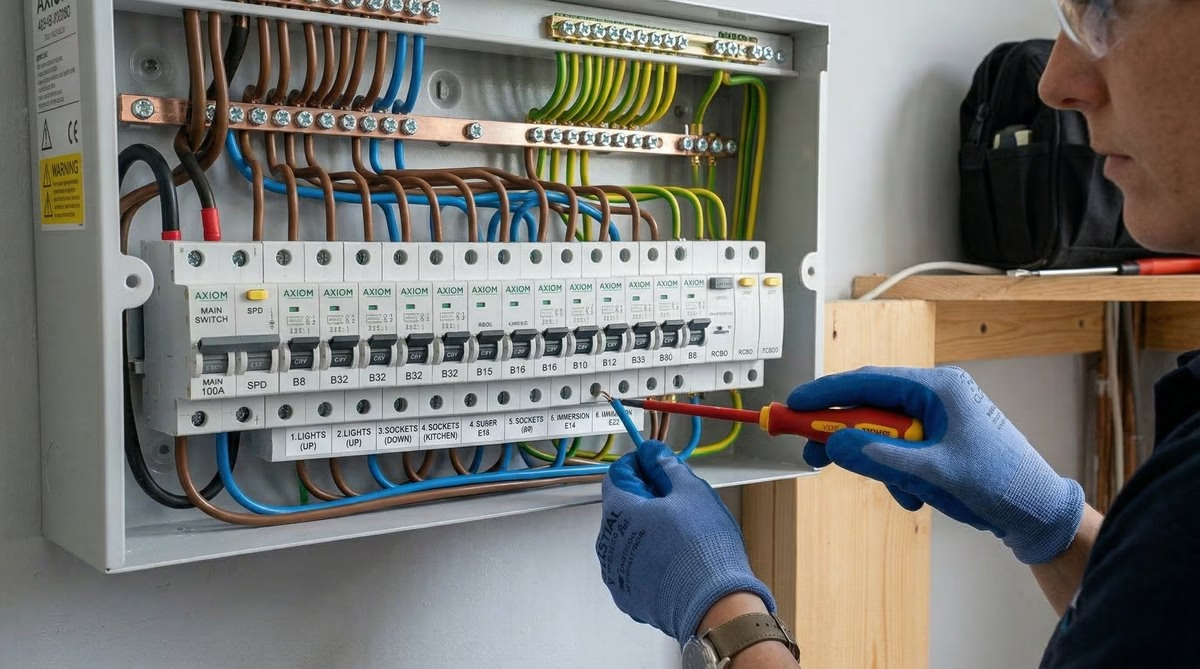
If you’re comparing quotes for a consumer unit upgrade (fuse board replacement) and everything is one line—no detail on RCBOs, no mention of surge protection, no clarity on testing or certification—you’re not alone. We see it constantly across London. The problem is you can’t compare like-for-like, and you can’t tell if you’re being quoted for a compliant installation or the cheapest possible box swap. This guide gives you the checklist we use so you can ask the right questions.
What a consumer unit upgrade actually involves—beyond ‘changing the box’
A consumer unit is the heart of your home’s electrical protection. Replacing it safely and correctly is not just a mechanical swap. A proper upgrade includes assessment of the existing installation, verification of earthing and bonding, correct circuit protection selection, and full testing before you energise.
In practical terms, a good electrician should be considering:
- Protection type: whether circuits will be protected by RCD devices (often split-load) or individual RCBO breakers per circuit.
- Surge protection: whether a surge protection device (SPD) is needed to protect sensitive electronics.
- Number of circuits: how many final circuits you actually have, whether any are shared, and if there are signs of past DIY changes.
- Earthing and bonding: condition and adequacy of main earth, and bonding to gas/water where required.
- Condition of tails: meter tails and main isolator suitability—sometimes an upgrade is required for safety and compliance.
A vague quote often means these items haven’t been properly reviewed, and that’s where unpleasant surprises happen on the day.
Tip: Ask whether the quoted price includes any required upgrades to tails, earth, and bonding, or whether these are ‘extra if needed’.
RCBO vs RCD vs split-load—how to compare quotes properly
Homeowners get stuck because quotes use different language, and some quotes don’t say anything at all. Here’s how we explain it in plain English.
- Split-load RCD board: circuits are grouped—if one circuit trips the RCD, multiple circuits can go off. It can be fine, but it can be annoying when fault-finding.
- All RCBO board: each circuit has its own protection, so a fault on the sockets doesn’t take out the lights. This usually reduces nuisance tripping and makes faults easier to isolate.
- Hybrid: some circuits on RCBO, some on RCD, depending on budget and design.
There isn’t one correct answer for every home, but there is one correct principle: your quote should state what protection you’re paying for, and how many circuits are covered.
Tip: If two quotes differ by hundreds of pounds, the cheapest one may simply be using a different board design, fewer RCBOs, or omitting SPD and remedials.
The ‘quote checklist’—what should be written down before you say yes
If you want a quote you can trust, it should be specific. At Fixiz we like customers to be informed, because it prevents disputes and protects safety.
Ask the electrician to confirm these items in writing:
- Board specification: brand/model (or equivalent), number of ways, and whether circuits are RCBO, RCD, or mixed.
- SPD inclusion: whether a surge device is included and where it will be installed.
- Scope of remedials: what happens if bonding is missing or earth is inadequate—fixed price, or separate quoted remedials?
- Testing: confirmation of full testing and a certificate on completion.
- Notification: confirmation of Building Regulations notification where applicable and any scheme registration.
- Power-down duration: realistic estimate of how long you’ll be without power and what preparation is needed.
This forces clarity. If a contractor avoids these questions, that’s useful information in itself.
EICR first or consumer unit first—what’s the sensible order?
Homeowners often ask whether to book an EICR first. In many London homes, an EICR can identify issues that affect the consumer unit upgrade, such as borrowed neutrals, ring circuit faults, or inadequate earthing and bonding. If you have an older property, an EICR first can prevent surprises.
That said, there are cases where the board is clearly unsafe (for example, a damaged unit or obvious overheating). In those cases, a competent electrician may recommend prioritising the upgrade with testing and remedials as part of the job.
- Older wiring and unknown history: EICR first is usually sensible.
- Known urgent safety issue: upgrade may be the priority, but testing still must happen.
- Landlord or sale timeline: EICR can help you plan remedials and avoid last-minute panic.
Tip: If you’re selling, keep certificates organised. Buyers and solicitors often ask for evidence of electrical compliance.
How Fixiz helps—safe electrical works with transparent scope
Fixiz coordinates property works across London, including electrical upgrades delivered by qualified electricians with the right testing and paperwork. Our job is to make it simple: clear scope, clear schedule, and correct certification.
When we handle a consumer unit upgrade, we focus on:
- Clear specification: you know what board and protection type is being installed.
- Site assessment: earthing/bonding and circuit condition reviewed so surprises are reduced.
- Testing and documentation: certificates provided and explained in plain English.
- Coordination: if the upgrade is part of a renovation, we sequence it with other trades to avoid rework.
FAQ—consumer unit upgrades in the UK
Is a surge protection device always required?
Not always, but it is increasingly common and often recommended, especially in homes with sensitive electronics. The key is that your electrician should discuss it—not silently omit it.
Do RCBO boards always cost more?
Often yes, because there are more individual devices. But they can offer better fault isolation and reduce nuisance tripping—so many homeowners see it as worthwhile.
What certificate should I receive?
You should receive an electrical installation certificate for the work and confirmation of any required notification. If you’re unsure, ask before the job is booked.
Ready to move from confusion to construction? Get in touch with Fixiz today for a no-pressure chat about your fuse board upgrade, what your quotes include, and how to get the job done safely with the right paperwork.