Physical address:
128 City Road, EC1V 2NX, London,UK

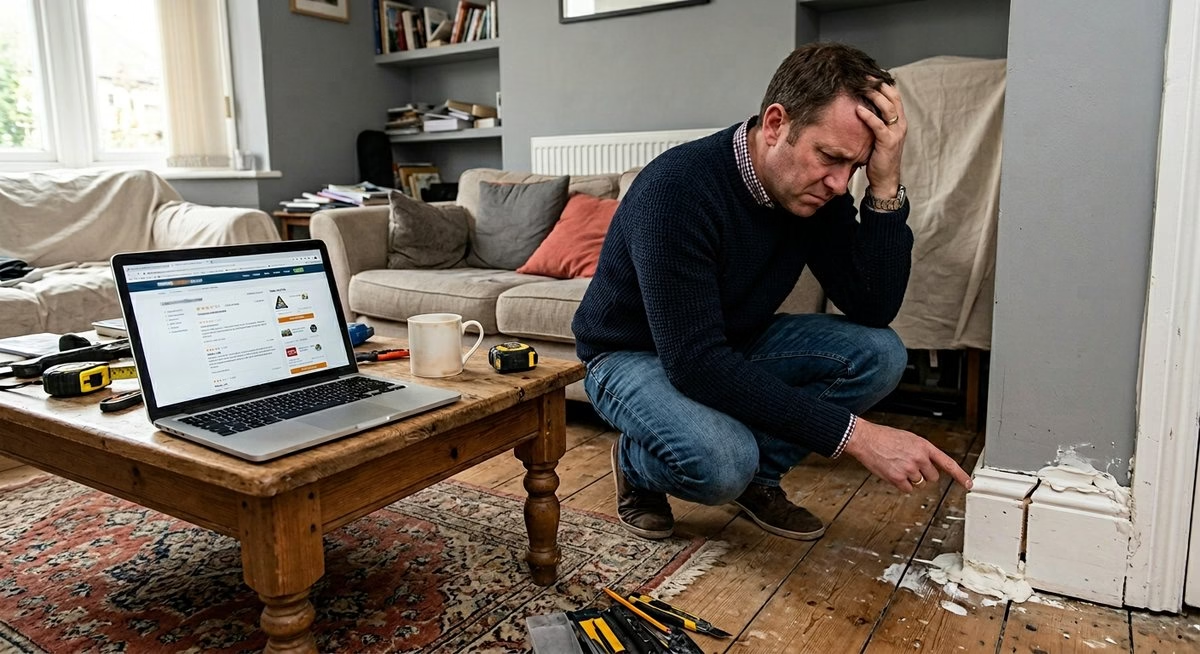
Trade platforms like Checkatrade, MyBuilder, and Rated People promise vetted professionals and peace of mind — but a growing number of UK homeowners are discovering the hard way that a platform listing is not the same as a genuine guarantee. If you have ever searched for a Checkatrade bad experience UK story, you will know the pattern: glowing reviews, confident quotes, then poor workmanship, disputed costs, and a “guarantee” that barely covers the damage. At Fixiz, we regularly help clients pick up the pieces after platform-sourced trades leave a job bodged. This article explains what trade platform guarantees actually cover, how to protect yourself, and what to do when things go wrong.
Why trade platforms give homeowners a false sense of security
The appeal of a trade platform is obvious — you browse star ratings, read reviews, and click “request a quote.” The platform’s branding suggests that someone has done the hard work of checking these traders for you. But the reality is far less reassuring, and understanding why is the first step to protecting yourself.
Most platforms operate as paid directories, not quality-control bodies. Tradespeople pay annual fees — often over £1,000 — to appear on the site, creating an inherent conflict of interest. The platform’s revenue depends on keeping trades listed, not on removing them at the first sign of trouble. Investigative reporting has found that fake tradespeople have been able to register on platforms without qualifications, and some sites have approved profiles using invented credentials and falsified insurance documents. Even platforms advertising multiple vetting checks rely on self-reported information and document uploads rather than on-site inspections of actual workmanship.
We have seen this play out first-hand. A client in south London hired a flooring fitter through a well-known platform — the trader had dozens of five-star reviews. The fitter damaged planks during installation, used silicone instead of properly removing skirting boards (despite charging extra for the service), and left the floor with no expansion gap — virtually guaranteeing it would buckle. The client only discovered the platform’s guarantee would not cover replacement materials, leaving them out of pocket for both the original job and the fix.
Homeowner reports consistently highlight the same frustration: the reviews looked perfect, the profile was reassuring, but the work was substandard — and the platform’s response amounted to closing the trader’s account after the damage was done.
Tip: A platform badge means the trader paid a membership fee and submitted documents. It does not mean an independent assessor has inspected their work. Treat it as a starting point, never as proof of competence.
What trade platform guarantees actually cover — and what they exclude
The word “guarantee” suggests comprehensive protection, but trade platform guarantees are narrow, discretionary, and capped. Checkatrade’s guarantee, for example, is capped at £1,000 per claim — a fraction of the cost of most renovation work. A botched kitchen or bathroom can easily cost several thousand pounds to remedy.
More critically, the guarantee explicitly does not cover materials. If a trader ruins your flooring, damages your tiles, or installs kitchen units incorrectly, you bear the full cost of replacement materials. Key exclusions from the published terms include:
- Materials involved in the work: if the trader damages or wastes your materials, you pay again.
- Consequential losses: if a botched plumbing job causes water damage elsewhere, that is not covered.
- Diagnostic fees: surveyor costs to assess the damage are yours.
- Trader insolvency: if the trader goes bust or disappears, the guarantee does not apply — even if you paid a deposit.
- Work already rectified: if you fix the problem yourself before the platform inspects, you lose the right to claim.
There are also strict eligibility hoops. You must have made initial contact through the platform itself — if you found the trader on the platform but then called their personal number, you may not qualify. Claims must be filed within 12 months, and only one claim per household per year is allowed. The guarantee is explicitly “discretionary” — the platform can decline your claim at its sole judgement. It is not an insurance product, so you have no recourse to the Financial Ombudsman if rejected.
We helped one homeowner whose bathroom refit went badly wrong — over £4,000 to remedy, but the platform payout was capped at £1,000 and excluded replacement tiles entirely. Knowing these limits upfront would have changed how they structured payments from the start.
Tip: Read the full guarantee terms before hiring. If the potential cost of a botched job exceeds £1,000, you need additional contractual protections.
How to vet trades beyond platform reviews
Platform reviews are a useful signal, but they are easily gamed — traders can solicit glowing feedback from friends and family, and there are persistent reports of platforms making it difficult to publish negative reviews or quietly removing them after complaints from paying members. Several homeowners have described being blocked from leaving honest feedback or finding that their critical review was taken down without explanation. The real vetting happens off-platform, and it takes about an hour of effort that could save you thousands of pounds.
- Check insurance independently: ask for the actual public liability insurance certificate and call the insurer to confirm the policy is current. A platform tick does not mean the policy has not lapsed.
- Ask for photos of recent, comparable work: a portfolio is far more telling than a star rating. If the trader cannot provide relevant recent examples, that is a red flag.
- Follow up references: ask for contact details of recent clients and actually call them. Did the job finish on time and on budget? Would they rehire?
- Verify accreditations at source: a platform profile is not genuine accreditation. Membership of the Federation of Master Builders, NICEIC, Gas Safe Register, or the government-endorsed TrustMark scheme means independently verified standards, on-site inspections, and codes of conduct. Always check directly on the accreditation body’s website — not on the trader’s profile.
- Search Companies House: check that the trader’s limited company is active and has not been dissolved or flagged. A quick search can reveal whether you are dealing with a legitimate, established business or a recently formed shell.
At Fixiz, we check every subcontractor’s insurance, accreditations, and recent work history before they set foot on a client’s property. It is a non-negotiable part of our process, and it is the standard every homeowner should hold their trades to — regardless of how many stars a profile displays. Word of mouth from neighbours, local tradespeople you already trust, or community groups remains the single most reliable way to find competent trades.
What to insist on in writing before work starts
A verbal agreement is technically enforceable under UK contract law, but proving what was agreed becomes your word against theirs. For any job over a few hundred pounds, a written contract is essential — and it needs to cover considerably more than just the headline price.
- Detailed scope of work: “fit new bathroom” is not a scope. Specify exactly what is being done, including preparation, materials, and finish standard. The more specific, the easier it is to prove when work falls short.
- Snagging clause: include a period — typically 7 to 14 days after completion — for you to compile a snag list. The trader should agree to return and address all reasonable snags before the final payment is released.
- Staged payments with retention: never pay the full amount upfront. A sensible structure is 10–20% deposit, stage payments tied to milestones, and 5–10% held back as retention until snagging is complete. This is standard practice — the JCT small works agreements build it in by default.
- Materials responsibility: specify who supplies materials and who bears the replacement cost if they are damaged during installation. This single clause could save you hundreds — or thousands — if things go wrong.
- Timeline and access: agree a start date, expected duration, and working hours. If the trader needs access to services or adjacent rooms, note this upfront to avoid mid-project surprises.
We always provide our clients with a written scope and payment schedule before any work begins. It sets expectations on both sides, removes ambiguity, and gives everyone a reference point if questions arise later. The traders who push back on paperwork are almost always the ones you will end up in a dispute with.
Tip: If a trader dismisses a contract as unnecessary, walk away. Professional tradespeople welcome clear documentation — it protects them as much as it protects you.
Warning signs during the quoting stage
The quoting stage is your best chance to spot trouble before it becomes expensive. A careful eye at this point costs nothing and can save you from months of stress, wasted money, and remedial work. Here are the patterns we see most often at Fixiz when a job is heading for problems:
- Vague or one-line quotes: a text message saying “bathroom refit — £3,500” tells you nothing about scope, materials, or timeline. Insist on an itemised, written quotation.
- Pressure for large upfront payments: any request for more than 20% deposit — or demands for cash — should raise concerns. Cash payments leave no paper trail.
- Immediate availability: good tradespeople are typically booked weeks or months ahead. An empty diary warrants extra scrutiny — it is not always a red flag, but it demands further questioning.
- Reluctance to provide credentials: hesitation when asked for insurance, references, or accreditation details tells you everything.
- No mention of Building Regulations: for work requiring sign-off, a competent trader will raise compliance unprompted.
- Quoting without a site visit: any quote given by phone or message alone, without seeing the property, is an estimate at best.
We turned down a subcontractor last year after the quoting stage alone — they quoted a job by photograph, could not explain their insurance cover, and wanted 50% upfront before visiting the site. Three months later, a client brought us a botched version of the same job done by the same trader. Every warning sign had been visible before a single tool was picked up.
Always get at least three written quotes for any significant job. Comparing them side by side will quickly show you who has thought carefully about the work and who is guessing. The quoting stage is not just about price comparison — it is your first quality-control checkpoint.
How to protect yourself if workmanship is poor
Even with thorough vetting and a solid contract, things can still go wrong. The key is to act quickly, stay methodical, and protect your evidence. Here is the step-by-step process for defending your position when workmanship falls short.
- Document everything immediately: take date-stamped photographs of every defect. Keep all texts, emails, invoices, and receipts. Do not fix any defective work before it has been independently assessed — doing so can void both platform guarantees and your legal position.
- Send a formal snag list: list every defect in writing, referencing the original scope. Give the trader 7 to 14 days to respond. Be factual — “silicone used instead of skirting removal as specified” is more useful than “terrible job.”
- Withhold the retention: do not release the final payment until snags are resolved. Your written contract justifies this.
- File a platform claim: follow the process precisely, but do not rely on the payout alone if losses exceed the cap.
- Consider small claims court: for claims up to £10,000, the small claims track is straightforward and you do not need a solicitor. Under the Consumer Rights Act 2015, any service must be carried out with reasonable care and skill. Courts now require compulsory mediation before a hearing, and many disputes resolve at that stage without a courtroom appearance.
- Get remedial quotes: obtain two or three written quotes from other tradespeople to fix the defective work. This establishes the monetary value of your loss and strengthens any court claim or negotiation.
The most important principle through any dispute is to remain factual and keep everything in writing. Courts, platforms, and mediators all respond to documented evidence — not verbal recollections. The homeowners who come to us having kept a clear paper trail from day one are always in the strongest position to recover their losses.
Tip: If you paid by credit card and the total exceeded £100, Section 75 of the Consumer Credit Act may make the card provider jointly liable for breaches of contract.
How Fixiz keeps your renovation project on track
We built Fixiz because we saw how often homeowners were let down by the platform model. Every Fixiz project has a written scope, defined payment stages, a retention clause, and a formal snagging process — nothing is left to a handshake. Our project managers oversee work in progress on site, catching problems before they become disputes. We vet every trade ourselves, verify credentials at source, and maintain standards throughout the build — not just at sign-up.
And if something goes wrong, we fix it — not with a capped, discretionary payout, but by putting the work right at our cost. The difference between a platform and a managed renovation service is the difference between a listing and a commitment. You should never have to become your own building inspector just because you hired through a website.
Frequently asked questions
What does the Checkatrade guarantee actually cover?
The Checkatrade guarantee covers claims related to sub-standard workmanship up to a maximum of £1,000. It is discretionary — Checkatrade decides whether to pay out. It does not cover materials, consequential damage, VAT, diagnostic fees, or trader insolvency. You must have contacted the trader through the platform, filed within 12 months, and only one claim per household per year is permitted.
Is a Checkatrade listing the same as being accredited?
No. A listing means the trader paid a membership fee and submitted documentation. Genuine accreditation — through bodies like the Federation of Master Builders, NICEIC, Gas Safe Register, or TrustMark — involves independent verification, on-site inspections, and ongoing monitoring. Always verify directly with the issuing body.
How much should I hold back for snagging?
Industry standard is 2.5% to 5% of the total contract value as a retention payment, released only after all snags are resolved. For smaller jobs under £5,000, a fixed holdback of £250 to £500 achieves the same purpose. This must be written into your contract before work begins.
Can I take a tradesperson to small claims court?
Yes. The small claims track covers disputes up to £10,000 in England and Wales. You do not need a solicitor. You will need evidence of the agreement, photographs of defective work, and ideally quotes from other tradespeople showing the cost to remedy. Courts require compulsory mediation before a hearing, and many cases settle at that stage.
Ready to move from confusion to construction? Get in touch with Fixiz today for a no-pressure chat about your project and the fastest route to full compliance.