Physical address:
128 City Road, EC1V 2NX, London,UK
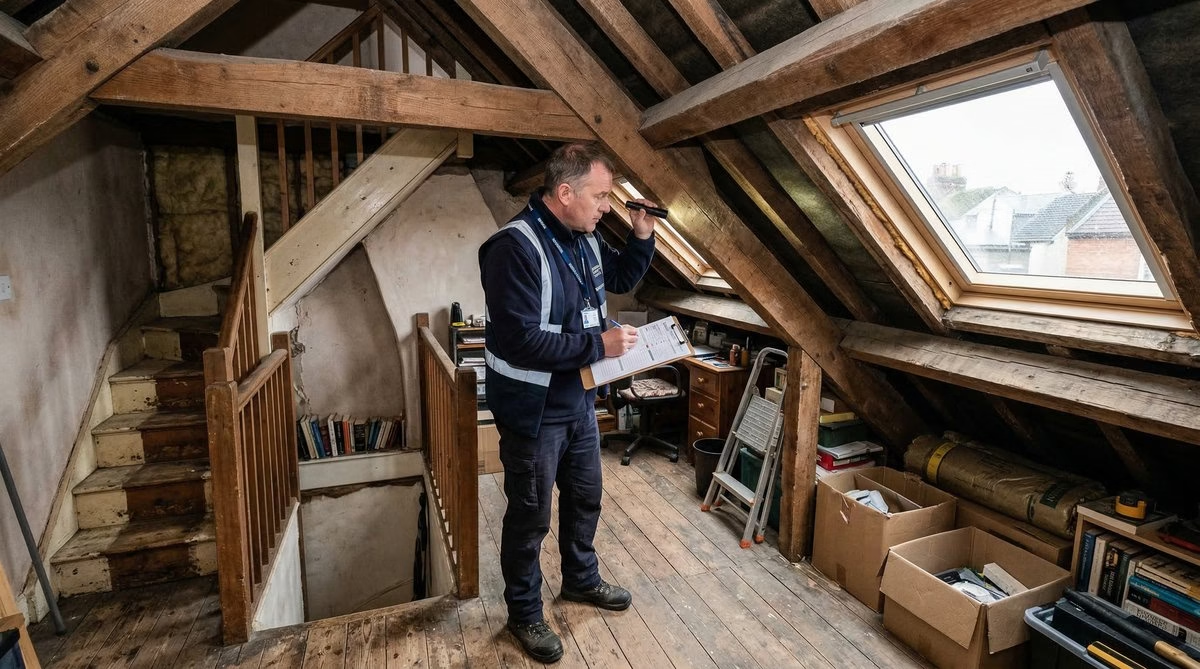
If you’re buying a home with an older loft conversion and there’s no Building Regulations completion certificate, it can feel like a deal-breaker. We speak to London buyers and homeowners in this exact situation—often with a loft done decades ago, some paperwork saying “plans approved”, but nothing that clearly says the work was completed and signed off. This guide explains what the real risks are, what evidence you can gather, and what practical options exist if you want to make the loft safer and more compliant.
What ‘no Building Regs sign-off’ really means—especially for older lofts
Building Regulations are about safety: structure, fire protection, stairs, insulation, ventilation, and more. A completion certificate is evidence that Building Control was satisfied at the time. But older conversions can be messy. Records may be incomplete, councils used different systems, and homeowners may not have kept documents.
From a buyer’s perspective, the risk is usually one of these:
- Safety uncertainty: you can’t be sure the structural alterations and fire precautions meet the required standard.
- Valuation and mortgage: some lenders and surveyors treat the loft as storage or “occasional room” if there’s no evidence of compliance.
- Resale friction: even if you’re comfortable with the loft, future buyers may worry—and you may face price negotiations later.
- Insurance and liability: if something goes wrong, lack of evidence can complicate claims and responsibility.
It’s important to be balanced. A missing certificate does not automatically mean dangerous work—but it does mean you need to investigate properly and decide how you will use the space.
Tip: If the loft is being marketed as a bedroom, ask your solicitor to clarify exactly how it will be described in the paperwork. Clarity now prevents disputes later.
The due diligence checklist—what to ask for and what to inspect
You don’t need to guess. You can gather evidence that helps you understand what you’re buying. Some of this is solicitor-led, and some is practical inspection.
Ask for:
- Building Control records: sometimes there are notes like “plans approved” or inspection entries, even if a certificate wasn’t issued or has been lost.
- Structural information: any engineer calculations, steel beam details, or photos from the work (many owners have these on old emails).
- Electrical certification: evidence of safe electrical works in the loft area.
- Smoke alarms and fire protection: what exists today—interlinked alarms, fire doors, protected stair route.
Then inspect the typical weak points:
- Stairs: steepness, headroom, handrails, spindle gaps, and how the stair integrates with the existing layout.
- Escape strategy: window sizes and access, and whether the route to an exit is protected.
- Structure: signs of undersized timbers, deflection, cracks below, or poor load transfer.
- Insulation and ventilation: cold loft rooms, condensation, and mould can indicate incorrect roof build-up.
A specialist inspection can’t always prove every hidden detail without opening up, but it can identify red flags and give you a realistic remediation plan.
Common loft non-compliances we see—and why they matter
When older lofts aren’t signed off, the issues are usually predictable. These aren’t ‘paperwork problems’—they’re safety and usability problems.
- Fire protection gaps: lack of a protected stair route, missing fire doors, or no interlinked alarms can increase risk in an emergency.
- Stair issues: unsafe geometry or guarding—especially where the loft stair was squeezed into a tight area.
- Structural uncertainty: steels not properly supported, undersized timbers, or alterations not designed by an engineer.
- Poor insulation and ventilation: uncomfortable rooms, high heating costs, and condensation damage within the roof structure.
Even if the loft feels “fine”, these issues can affect how you should use the room and what upgrades are worth doing after completion.
Tip: If your surveyor flags uncertainty, don’t accept a vague reassurance. Ask what specific evidence would change their view.
Regularisation and remedial upgrades—what your real options are
Homeowners often ask about retrospective approval (regularisation). The reality is that the process can involve opening up parts of the structure so Building Control can inspect what they need to see. That can be intrusive, and it’s not always the best path.
In practice, you have options:
- Treat it as storage/occasional room: if the risks are manageable but compliance is uncertain, you can use it cautiously while planning future works.
- Targeted safety upgrades: improving alarms, doors, and the escape route can significantly improve safety even if you don’t pursue formal sign-off.
- Upgrade and regularise: where feasible, you can plan remedial works and pursue regularisation, accepting that some opening up may be required.
- Rebuild properly: in some cases, a full loft conversion upgrade is the cleanest long-term solution—especially if stairs and fire strategy are fundamentally wrong.
Choosing the right route depends on your budget, your timeline, and how you intend to use the loft. The best decision is the one made with clear information, not fear.
How Fixiz helps—practical inspections and a clear plan
Fixiz supports London homeowners with loft works and property upgrades. If you’re unsure about an existing loft conversion, we can help you understand what’s likely happening behind the finishes, what’s safe to rely on, and what improvements make the biggest difference.
Our support typically includes:
- Inspection and evidence gathering: a structured review of stairs, fire precautions, structure indicators, and ventilation/insulation performance.
- Remediation planning: a clear list of upgrades, prioritised by safety and value, with realistic disruption expectations.
- Sequencing with other works: if you’re renovating, we integrate loft upgrades with the rest of the project so you don’t pay twice.
FAQ—loft conversions without certificates
Can a loft be a ‘bedroom’ without Building Regulations sign-off?
It can be used as a bedroom in practice, but marketing and valuation can be affected if compliance evidence is missing. Safety is the bigger issue—especially fire strategy and stairs.
Should I contact Building Control myself?
Speak to your solicitor first, especially during a purchase. There can be implications for indemnity arrangements. The right approach depends on the property, age of works, and what records exist.
What’s the fastest safety improvement?
Interlinked smoke alarms and a protected escape route are often high-impact. The correct solution depends on the home layout, but improving detection and containment is usually a strong early step.
Ready to move from confusion to construction? Get in touch with Fixiz today for a no-pressure chat about your loft conversion, what paperwork you have, and the safest, most practical route forward.