
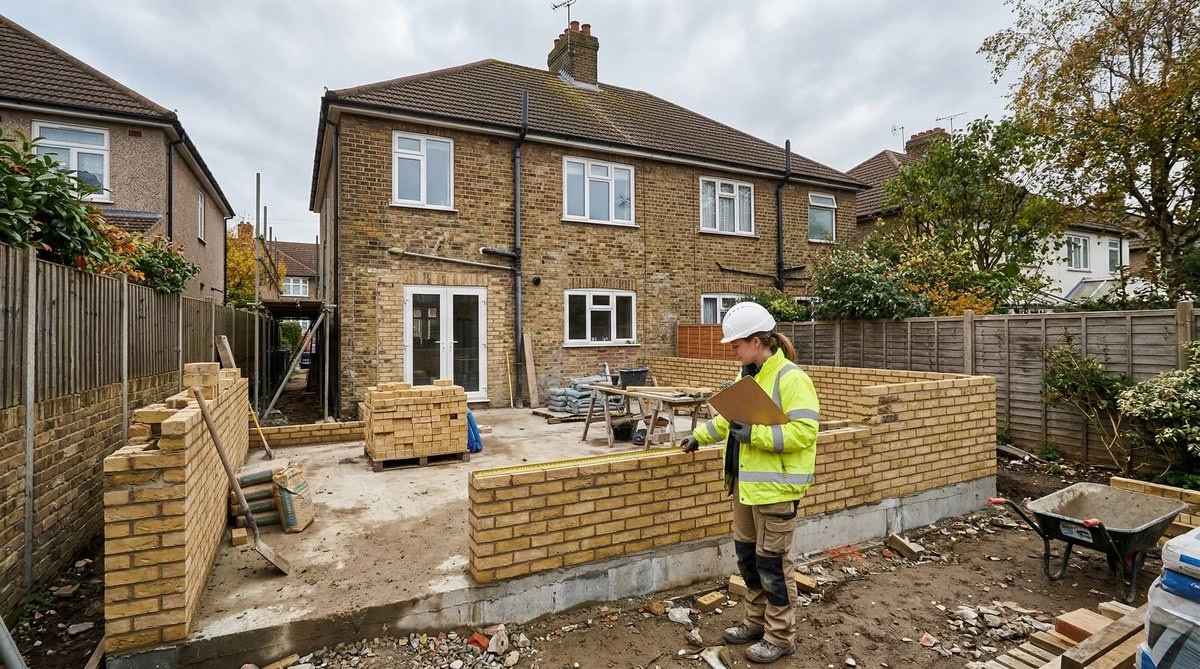
If you’re hoping to build a rear extension under permitted development, you’re not alone — in London, many homeowners want to avoid a full planning application. The problem is that “PD” is often misunderstood. People assume it’s automatic, then discover mid-project that they needed prior approval, their property is on restricted land, or a dimension they overlooked takes them outside the rules.
We’re Fixiz Ltd in London. We’re builders, not a planning authority — but we work with the rules every week, and we help homeowners design and deliver extensions that stay compliant, insurable, and saleable.
What permitted development really means for rear extensions
Permitted development rights allow certain home improvements without a full planning application, as long as your proposal stays within strict limits. For rear extensions, the rules focus on how far you extend, how high you build, how close you are to boundaries, and whether the extension overwhelms the garden area around the “original house”.
The key point is this: permitted development is not “anything goes”. It’s a predefined box. If your design sits inside the box, planning permission may not be required. If it sits outside, you may need planning permission — and it’s usually cheaper and safer to find out early rather than after a neighbour complains.
- PD is conditional: You must meet all the limits, not just “most of them”.
- Rules vary by context: Designated land, conservation areas and previous alterations can reduce what’s allowed.
- Evidence matters: A Lawful Development Certificate can protect you later, even if you don’t strictly need it.
Tip: If your extension is close to the boundary (common in London), height and eaves rules become critical — don’t assume a “standard” roof detail will pass.
The part homeowners miss: prior approval and neighbour consultation
One reason homeowners get caught out is the difference between “standard” permitted development and the larger home extension route, which involves prior approval and a neighbour consultation scheme. People hear “permitted development” and assume neighbours have no say. Then they receive objections and panic.
In reality, the prior approval route exists to manage impact — mainly on neighbours’ amenity. That doesn’t mean a neighbour can veto your project by default, but it does mean there is a formal step where the council considers certain impacts. If you ignore this step when it applies, you increase the risk of enforcement and future property sale issues.
- Not all PD is the same: Larger rear extensions often need prior approval.
- Neighbours may be consulted: Expect the process and plan communication accordingly.
- Get the paperwork right: Poor drawings and unclear dimensions create delays.
Common reasons rear extensions fail permitted development checks
Most failures aren’t dramatic — they’re small oversights that have big consequences. We see homeowners plan a beautiful extension, then discover one constraint knocks them out of PD. In London, the tightness of sites makes this even more common.
- Height too close to a boundary: The 2-metre-from-boundary constraint can restrict eaves/overall height.
- Depth over the limit: The extension projects too far from the original rear wall for the property type.
- Garden coverage: Exceeding the “half the curtilage” rule for the original house.
- Designated land restrictions: Conservation areas and other protected designations reduce what’s allowed.
Tip: Measure from the “original house” footprint — not your current rear wall if previous owners extended. This is a common trap in older London homes.
Planning vs building regulations — don’t confuse the two
Even if your rear extension qualifies as permitted development, it still must meet building regulations. Homeowners sometimes think “no planning” means “no compliance”. Building regs cover structure, insulation, fire safety, drainage, electrics, and more.
From a build perspective, building regs are not optional. They are also where many hidden costs live — steels, insulation upgrades, ventilation, glazing performance, and drainage changes. That’s why we help clients separate the two questions early:
- Is it permitted development? A planning law question.
- Can it be built compliantly? A building regulations and construction reality question.
How Fixiz helps you stay compliant from design to completion
Our role is to reduce risk. We want you to build once, build properly, and avoid the “retrofit fixes” that happen when something is missed. That means we push for clarity: drawings with dimensions, a realistic build-up, and a compliance path that matches your home.
- Early sanity-checking: We review your concept and highlight typical PD pitfalls before you spend heavily on build contracts.
- Buildable design: We think about drainage, structure and insulation early so the plan isn’t “pretty but unbuildable”.
- Neighbour risk management: Even when planning isn’t required, neighbour relations still matter for smooth delivery.
- Compliance mindset: We build with building control sign-off in mind from day one.
FAQ — permitted development for rear extensions
Do I always need planning permission for a rear extension?
No. Some rear extensions can be done under permitted development if they stay within the rules. The safest approach is to confirm early, especially if you’re in London where constraints are tight and designations can apply.
What is prior approval for a rear extension?
Prior approval is a process used for certain larger extensions under permitted development, where the council considers limited impacts (including neighbour amenity) before you proceed.
Should I get a Lawful Development Certificate?
Often, yes. It’s a strong piece of evidence for future buyers and lenders that the work was lawful from a planning perspective, and it can reduce anxiety if neighbours raise concerns later.
If it’s permitted development, do I still need building regs?
Yes. Building regulations are separate from planning permission. Structure, insulation, drainage and safety still need to be compliant and signed off.
Ready to move from confusion to construction? Get in touch with Fixiz today for a no-pressure chat about your rear extension and the cleanest route through permitted development and building regulations.