
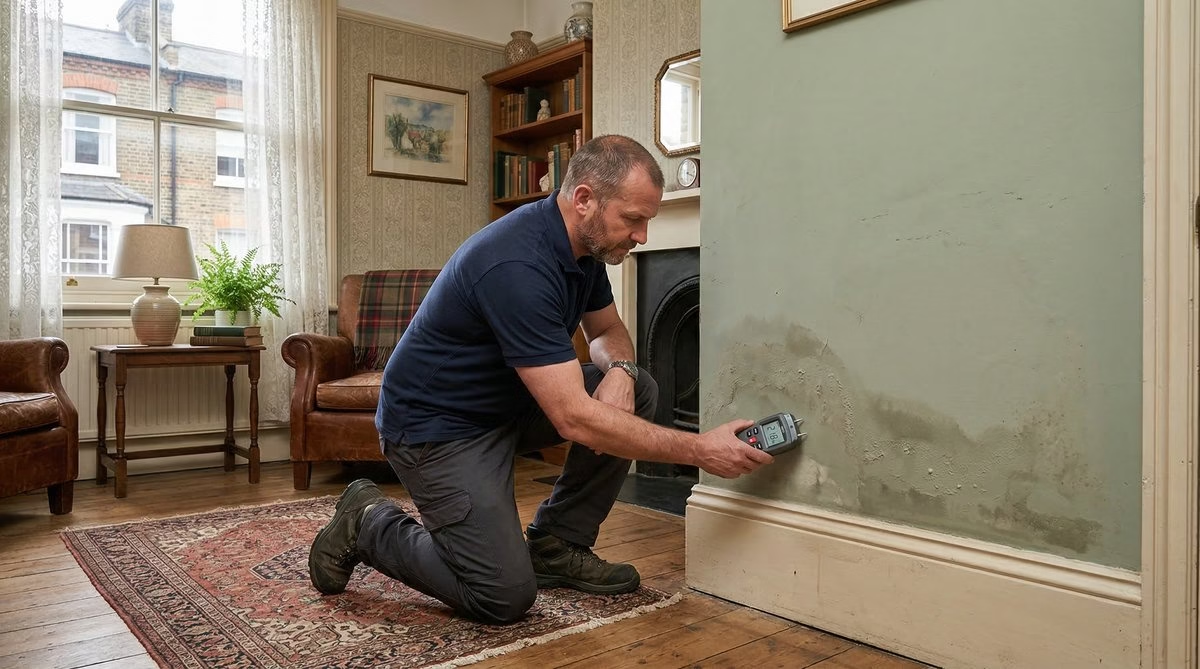
If you’ve been told you have rising damp and the next sentence is “you need chemical injection and replastering”, it’s normal to feel uneasy. We meet UK homeowners every week who’ve had conflicting opinions, confusing meter readings, and quotes that don’t explain the underlying cause. Damp is a symptom — and if you treat the symptom without identifying the source, you can waste money and still end up with mould, rot, and ruined finishes.
We’re Fixiz Ltd in London. Our approach is to investigate first, then recommend work that actually matches the building and the moisture source — especially in older properties where breathability, ventilation and ground levels matter as much as “products”.
Damp is not one thing — the three causes we separate first
When homeowners search for “damp”, they often expect one diagnosis and one fix. In reality, the correct solution depends on the moisture pathway. In most London housing stock we see, damp complaints fall into three broad groups. Getting this right early is the difference between a targeted repair and a cycle of redecoration.
- Condensation: Moist air meeting cold surfaces — often worse in winter, corners, behind wardrobes, and on external walls.
- Penetrating damp: Water coming through the building envelope — failed pointing, cracked render, leaking gutters, defective flashing, or porous brickwork.
- Plumbing leaks: Hidden pipe or waste leaks — under floors, behind tiled bathrooms, in ceilings, or around radiators and boilers.
“Rising damp” is a specific mechanism, and it’s not the default explanation for every ground-floor stain. If you don’t check the simpler, more common causes first, you risk chasing the wrong problem.
Tip: Any diagnosis based only on a handheld moisture meter reading, without context, is incomplete. Moisture meters can be useful, but they do not identify the source on their own.
What a proper damp investigation looks like (our method)
A good damp inspection is more like detective work than product selection. We start with the building and the pattern, then prove or disprove likely routes. We also try to find “one change” that explains the timeline — new windows, blocked air bricks, a recently tiled shower, a leaking gutter, raised paving levels, or a recent re-plaster.
On site, we typically work through:
- History and pattern: When it started, where it shows, and whether it tracks with rain, heating, or occupancy.
- External survey: Gutters, downpipes, falls, pointing, render cracks, roof details, and ground levels against internal floors.
- Internal ventilation review: Extractor performance, trickle vents, condensation risk points, and air movement.
- Targeted moisture profiling: Comparing “control areas” to suspect areas to see if the reading is localised or widespread.
- Leak checks where relevant: Radiator valves, pipe runs, bathroom waste traps, and signs of pressurised leaks.
At the end, we want to be able to say, “Here’s the likely pathway, here’s what evidence supports it, and here’s the smallest set of works that removes the cause.”
Red flags that suggest misdiagnosis (and wasted spend)
Homeowners come to us after they’ve been sold work that didn’t make sense for their property. You don’t need to become a damp expert, but you can look for warning signs that the quote is built around a standard package rather than your specific building.
- Instant certainty: A definitive diagnosis within minutes, with no external checks.
- One-solution sales: Every problem leads to the same recommendation — chemical injection, tanking, or hard replastering.
- No moisture source: They can’t explain how water is entering, only where it’s showing.
- Ignoring building type: Breathable walls (older brick/solid wall) treated like modern cavity construction.
We’re not anti-treatment — some remedial work is appropriate in the right conditions. But it has to come after diagnosis, not replace it.
Tip: Ask any contractor: “If we do nothing for 3 months, what will get worse and why?” If they can’t explain the mechanism, they’re guessing.
Fixes that often solve the real problem (before ‘treatments’)
Many damp cases improve dramatically when you remove the moisture source and let the building dry. In London, the most common “real fixes” we see are surprisingly unglamorous — but they work.
- Rainwater goods repairs: Leaking gutters and downpipes are a huge cause of penetrating damp.
- Ground level correction: Paths, patios and flower beds bridging damp proof courses or sitting too high against walls.
- Ventilation upgrades: Proper extraction in bathrooms/kitchens and improved airflow to prevent condensation.
- Plumbing repairs: Small leaks under floors or behind sanitaryware that keep materials constantly wet.
Once the cause is removed, we can then decide what finishes need doing — and crucially, when. Replastering too early, before drying, is a classic way to trap moisture and restart the cycle.
How Fixiz approaches damp work in London homes
We focus on accuracy, not hype. That means we don’t promise a “magic” fix — we promise a clear, evidence-led plan that makes sense for your property type and your budget. If the right answer is “repair the gutter and improve ventilation, then monitor”, we’ll say so.
- Diagnosis first: We separate condensation, penetrating damp, and leaks before recommending works.
- Practical remediation: We fix the root cause, then repair finishes in the correct sequence.
- Clear reporting: You get a plain-English explanation you can act on — or use for quotes/comparisons.
- One team: If you want, we can handle investigation, repair, and making good under one roof.
FAQ — rising damp, condensation, and damp surveys
Is rising damp real in UK homes?
Rising damp is a real mechanism, but it’s not the default diagnosis for every ground-floor damp patch. Many cases that look like “rising damp” are actually condensation, penetrating damp, or plumbing leaks. A proper investigation should test those possibilities.
Should I accept a chemical injection quote straight away?
Only after you’re confident the moisture source has been correctly identified and that injection is appropriate for your wall type and the pattern of damp. If the diagnosis is unclear, it’s reasonable to get a second opinion.
Why did my damp get worse after replastering?
If the moisture source wasn’t fixed, or if drying time wasn’t respected, new finishes can trap moisture and force it to spread to adjacent areas. Sequencing matters as much as materials.
Can a hidden leak look like damp?
Yes. A slow leak can keep floor voids, plaster, or solid slabs damp without obvious drips. That’s why we always consider plumbing as a potential cause when patterns don’t match weather or ventilation.
Ready to move from confusion to construction? Get in touch with Fixiz today for a no-pressure chat about your damp symptoms and an evidence-led plan to fix the cause — not just cover it up.