
If you’ve collected two or three quotes for a loft conversion and found yourself staring at numbers that seem to have nothing in common, you are not alone. Loft conversion cost breakdowns routinely range from £45,000 to well over £100,000 in London — and the gap is rarely down to one contractor being greedy and another being charitable. It comes down to what is and isn’t included, what your specific roof structure demands, and how honestly each builder has priced the hidden structural and compliance work. We’ve carried out dozens of loft projects across the capital, and the same four cost drivers come up every single time: steels, stairs, fire doors, and building regulations compliance. Once you understand each one, the quotes stop looking random and start making sense.
Why London loft conversions cost more than you expect
London properties — particularly Victorian and Edwardian terraces — were not built with loft conversions in mind. The roof pitches are steep, the joists are undersized by modern standards, and the floor plan directly below is usually already fully occupied. That combination means structural intervention is almost always required, and structural work is where costs diverge most sharply between quotes.
A builder who prices a loft conversion without specifying the steel requirement in detail is either guessing or has not yet spoken to a structural engineer. Both are warning signs. The steel beam specification — its size, the number of beams, the padstone and bearing detail — is typically produced by a structural engineer after a site visit, and that document is what an accurate quote should be based on. Without it, any figure is provisional at best.
The structural engineer’s role
Most householders don’t realise that a structural engineer’s fee is separate from the builder’s quote and is almost always a necessary expense. Fees typically run from £500 to £1,500 for a standard dormer or hip-to-gable conversion. The engineer specifies the steels, the temporary propping arrangement during installation, and the load transfer path down through the structure to the foundations. Get this done before you request final quotes, and you’ll find the gap between bids narrows considerably because everyone is pricing the same scope of work.
Tip: Ask every contractor whether their quote is based on a structural engineer’s specification. If it isn’t, the steel cost is an estimate — and steel estimates routinely understate the final figure once the engineer’s drawing is in hand.
Steels — the single biggest variable in loft conversion quotes
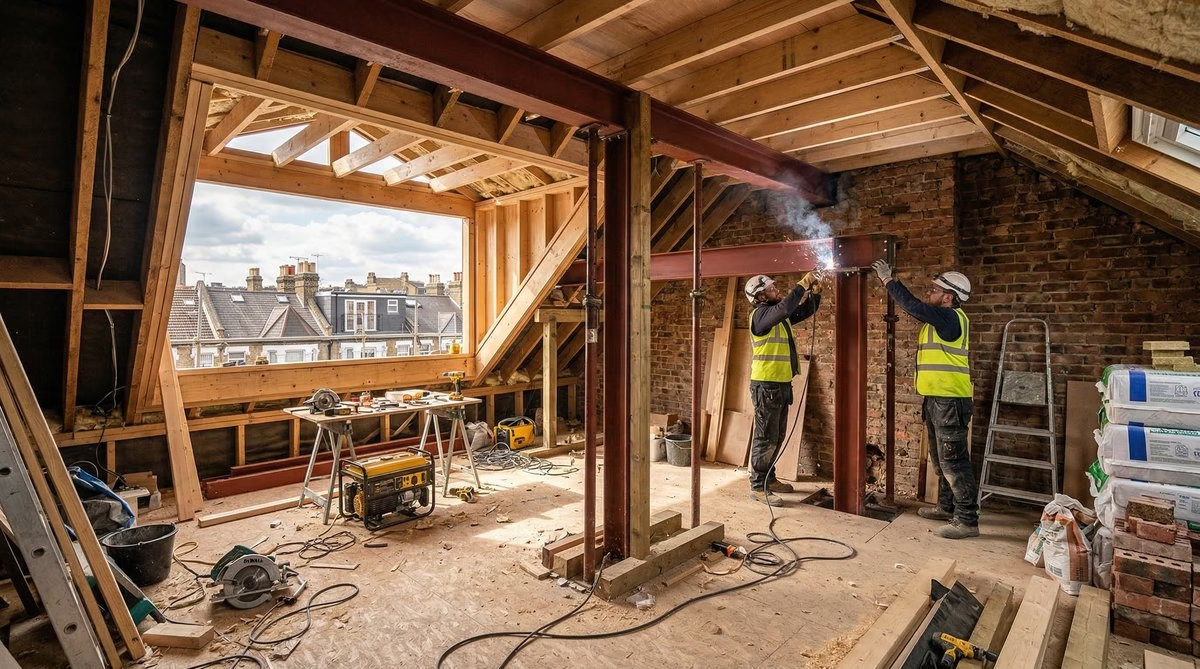
Steel beams are required in almost every loft conversion to carry the new floor, to create the dormer opening, and — in many terraced properties — to form the ridge beam that replaces the existing ridge board. The cost of steelwork varies enormously depending on span, loading, and access.
- Floor beams (purlins): The new loft floor needs to carry residential loading (typically 1.5kN/m²). Existing ceiling joists are almost never adequate. New steel or timber beams are installed at structural engineer’s specification, and the cost depends on the span between load-bearing walls.
- Dormer steels: A rear dormer requires a structural lintel or steel frame to carry the roof load above the dormer opening. On a wide terrace, this can be a substantial beam with complex bearing arrangements.
- Ridge beam: In a hip-to-gable or mansard conversion, the ridge often needs to be replaced with a structural steel ridge beam — one of the most expensive single line items in a loft conversion.
- Temporary propping: While steels are installed, the roof structure must be propped. This requires labour, materials, and careful sequence, all of which add cost that cheap quotes sometimes omit.
In London, steelwork alone can range from £3,000 for a modest rear dormer with short spans to £15,000 or more for a full mansard with multiple structural beams. When you see two quotes with a £20,000 gap, the steel specification is often the place to look first.
What to ask about steels when comparing quotes
Request the steel specification in writing. A credible contractor will either provide the engineer’s drawing or confirm that their price is subject to engineer’s specification and will be adjusted once it’s available. Any contractor who says steels are “included, don’t worry about it” without being able to show you the specification is absorbing an unknown — and that unknown will surface as a variation order mid-project.
Tip: If you commission your own structural engineer before going to tender, you control the specification and all contractors bid on identical information. The cost of the engineer is recovered many times over in better, more comparable quotes.
Stairs — more complex and more expensive than most homeowners assume
A loft conversion requires a permanent, fixed staircase that complies with Part K of the Building Regulations. This covers minimum headroom (2 metres, though there are specific loft stair provisions for reduced headroom), minimum tread depth, maximum riser height, handrail requirements, and guarding at the landing. Compliance is not optional — Building Control will inspect the stair as part of sign-off, and a non-compliant stair will fail.
The challenge in London is space. Most terraced houses have a first-floor landing that is already tight. Finding a compliant stair route — one that delivers adequate headroom at the bottom, doesn’t eat into a bedroom, and arrives at a sensible point in the loft — often requires creative design. Space-saver stairs (alternating tread designs) are permissible under specific conditions but are not universally accepted by all Building Control officers, and they are not suitable for everyone.
- Bespoke vs. off-the-shelf: A standard off-the-shelf stair from a stair manufacturer can cost £1,500–£3,000 supplied and fitted. A bespoke stair — hardwood treads, glazed balustrade, tight geometric design to fit an awkward space — can be £8,000–£15,000 or more.
- Room sacrifice: In many conversions, the stair requires taking a portion of a bedroom below. This is structural work in its own right and affects the value and usability of the existing floor. It’s a cost that should be visible in the quote but sometimes isn’t.
- Headroom at the landing: Achieving the 1.9m minimum headroom (for loft stairs) at the point where the stair arrives at the loft level sometimes requires altering the dormer structure or the roof ridge. This is structural cost driven by stair geometry.
Tip: Before getting quotes, measure your first-floor landing carefully and note the location of any load-bearing walls. Share this with your contractors and ask them to sketch their proposed stair route. If they haven’t thought about it yet, they haven’t priced it accurately.
Fire doors and the escape route requirement
Fire safety is one of the most consistently under-explained cost drivers in loft conversion quotes. Part B of the Building Regulations requires that a loft conversion creates a protected escape route — a corridor of fire-rated construction from the loft level down to the final exit from the building. In practice, this means:
- Fire doors throughout: Every room that opens onto the escape route — including existing bedrooms on the floors below — must be upgraded to a fire door (typically FD30S, meaning 30 minutes’ fire resistance with an intumescent seal). In a three-storey Victorian terrace, this can mean five or six doors being replaced.
- Fire-rated linings: The ceiling and walls of the escape route must be fire-rated. In older properties, this often means replacing or over-boarding ceilings.
- Self-closing devices: Fire doors must be fitted with door closers that bring the door to a fully latched position. These add cost per door and affect how a door feels in daily use.
- Mains-wired smoke detection: The conversion must include a Grade D, Category LD2 interlinked smoke and heat alarm system. This is a real electrical installation cost, not just a case of putting a battery detector in the loft.
The fire compliance package — doors, linings, closers, and alarms — routinely adds £3,000 to £8,000 to the project cost in a London terrace. A quote that doesn’t break this out is either hiding it in the headline figure or not including it. Either way, you need to know.
How Building Control handles fire compliance
Building Control will inspect the fire doors, check the installation of intumescent seals, and confirm the detection system before issuing your completion certificate. A completion certificate is what your conveyancer will ask for when you come to sell. A loft conversion without a completion certificate is a significant problem — it can delay or collapse a sale, and it may affect your ability to make insurance claims. The fire compliance work is not optional, and it’s not something to leave until you’ve moved in.
Tip: Ask your contractor to confirm in writing that their quote includes full Part B compliance — fire doors, closers, intumescent seals, fire-rated linings, and a mains-wired detection system. If they say “Building Control doesn’t always check”, that’s a red flag.
Hidden costs that separate accurate quotes from dangerous ones
Beyond steels, stairs, and fire doors, there are several other cost categories that frequently appear as surprises on loft conversion projects. Understanding them in advance helps you interrogate quotes more rigorously.
- Party wall agreements: If your loft conversion involves work to a shared wall — likely in a terraced or semi-detached property — you may need a Party Wall Award before work can start. Surveyor fees on both sides can run to £1,500–£3,000 per neighbour, and the process takes six to eight weeks. This is not in a builder’s quote.
- Planning permission: Most rear dormers in London fall under permitted development, but mansard conversions, front dormers, and properties in conservation areas require full planning permission. Application fees and consultant fees can add £2,000–£5,000 and several months to the programme.
- Structural floor upgrade: The existing ceiling joists cannot span the conversion floor — new floor joists or steel beams are required. The cost of this structural floor (typically £2,000–£5,000) is sometimes absorbed into the steel line and sometimes not.
- Insulation to meet Part L: Current Building Regulations require loft conversions to meet thermal performance standards. Insulating a pitched roof to modern standards — typically 150mm mineral wool between and below rafters — adds material and labour cost that budget quotes often understate.
- Scaffold: A rear dormer requires external scaffold. In London, scaffold hire can be £2,000–£4,000 depending on duration and access constraints. If a quote doesn’t mention scaffold, check whether it’s included.
- Dormer waterproofing: The dormer cheeks and flat roof must be waterproofed to a long-term standard. GRP (fibreglass) flat roofing is the current standard and typically costs £1,500–£3,000 for a standard rear dormer. Cheap felt is not appropriate.
How we approach loft conversion pricing at Fixiz
When we quote a loft conversion, we start with a site visit that covers the existing roof structure, the proposed structural engineer’s specification, the stair route, the fire compliance requirements, and the scope of any external works. Our quotes are itemised — you can see exactly what has been allowed for steels, stairs, fire doors, insulation, scaffold, and compliance. We don’t pad headline figures and cut scope when challenged; we price accurately from the outset.
We work with a network of structural engineers who can produce specifications quickly and cost-effectively. We can manage the Building Control application, coordinate the party wall process, and handle planning if needed — or we can work alongside your own consultants if you prefer. Either way, our job is to give you a number you can rely on, not a number designed to win a tender and be revised later.
London loft conversions are significant projects. The right one adds a bedroom, transforms the way a family uses a house, and adds meaningful value. The wrong process — chasing the cheapest quote without understanding what’s in it — leads to variation orders, delays, and the painful experience of discovering that the “cheap” project was never going to be cheap at all.
Frequently asked questions
Why do loft conversion quotes vary by £30,000 or more?
The most common reasons are differences in the steel specification assumed, whether the stair is bespoke or standard, whether full fire compliance is included, and whether scaffold, insulation, and party wall costs are in the figure. Ask each contractor for an itemised breakdown — the differences become immediately visible.
Do I need a structural engineer for a loft conversion?
Yes, in virtually all cases. The structural engineer specifies the steels, the floor beams, and the load path. Without their input, any quote for structural work is speculative. Expect to pay £500–£1,500 for a residential loft conversion specification.
Are fire doors really required throughout the house?
Yes. Building Regulations Part B requires a protected escape route from the new loft level to the building’s exit. Every habitable room opening onto that route must have an FD30S fire door with intumescent seal and self-closer. There is no exemption for older properties.
Does a loft conversion add value to a London property?
Generally, yes — a well-executed loft conversion that adds a bedroom and bathroom typically adds 15–25% to a property’s value in London. The key word is “well-executed”: a conversion without a completion certificate, non-compliant fire doors, or poor structural workmanship is a liability, not an asset.
How long does a loft conversion take?
A standard rear dormer on a London terrace typically takes 8–14 weeks on site, depending on complexity and weather. Add 4–8 weeks for structural engineering, Building Control application, and (where required) planning or party wall process before work starts.
Ready to move from confusion to construction? Get in touch with Fixiz today for a no-pressure chat about your project and the fastest route to full compliance.